

Calcutta HC Quashes Speaker's Recognition Of Expelled TMC MLA Ritabrata Banerjee As Leader Of Opposition, Says Speaker Did Not Act Impartially
The Court held that the Speaker waited for the rebel faction and recognised an expelled member without enquiry.

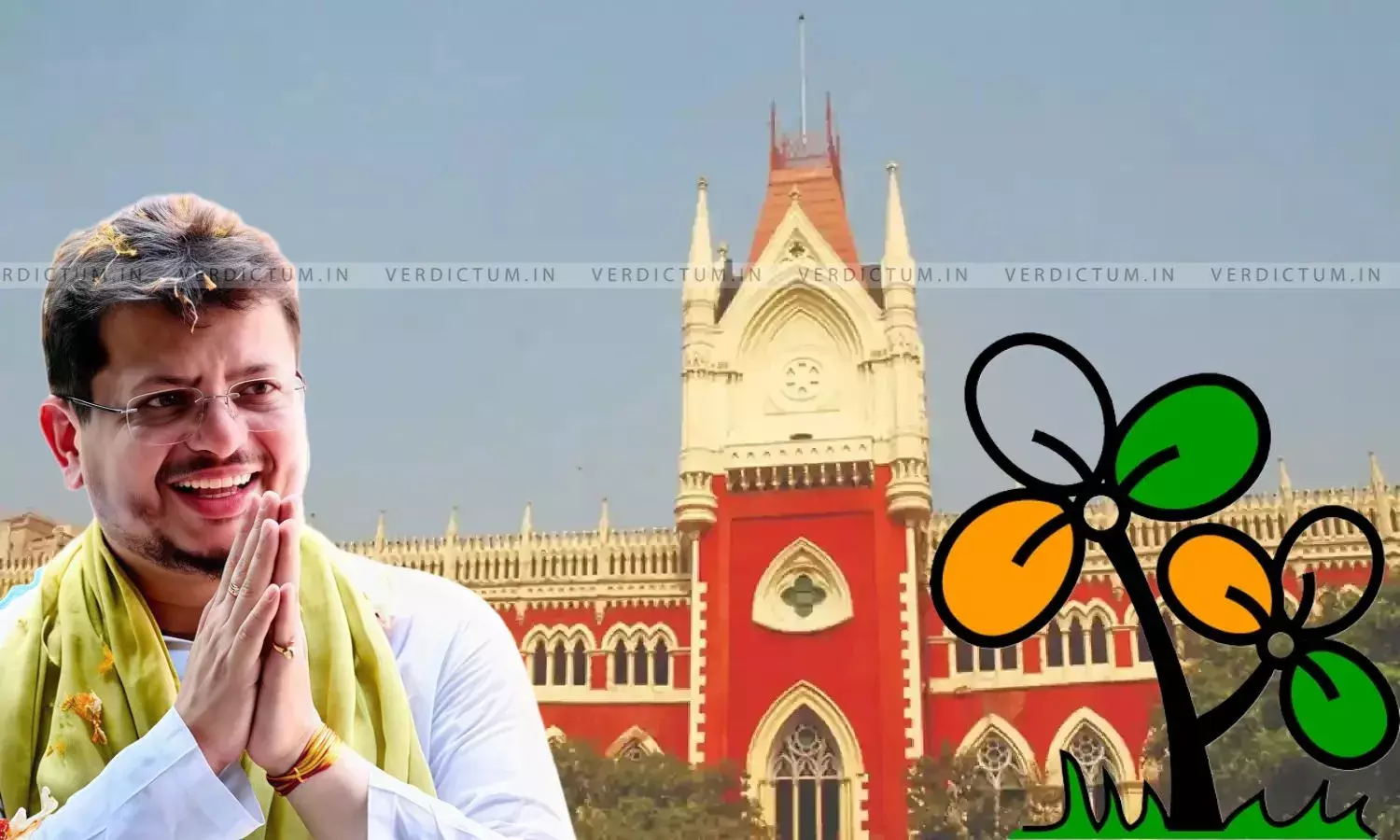
The Calcutta High Court has quashed the West Bengal Assembly Speaker's decision recognising Ritabrata Banerjee, an MLA expelled from the All India Trinamool Congress (AITC), as Leader of Opposition, and Akhruzzaman as Chief Opposition Whip, in the 18th West Bengal Legislative Assembly.
The Court held that the Speaker did not act impartially or neutrally.
It found that he held back the AITC's nomination of Sobhandeb Chattopadhyay for weeks and then accepted the rival faction's claim on the same day it was made, without any enquiry under the party constitution and without hearing the petitioner or the party.
The Bench of Justice Krishna Rao observed, "From the circumstances and sequences, it is crystal clear that the respondent no.1 has killed time to give an opportunity to the respondent no. 5 and once the respondent no.5 has placed the representation on 3rd June, 2026, with signatures of 58 members, has passed the impugned order on the same day without considering that the signature of 58 members are common to that of the signatures appearing in the Minutes/ Resolution dated 6th May, 2026. The respondent no.1 has given several opportunities to the respondent no. 5 but no opportunity was provided to the petitioner."
The Court further held, "Considering the above circumstances and the sequence of events, this Court has no hesitation to hold that the respondent no.1 has not acted impartial and neutral while deciding the issue for appointment of Leader of Opposition and given weightage to the respondent no. 5 and has not provided any opportunity to the petitioner or the AITC though several opportunities were provided to the respondent no.5."
Senior Advocate Kalyan Bandopadhyay appeared for the Petitioner, Additional Advocate General Billwadal Bhattacharya appeared for the Speaker and the Assembly Secretariat, and Senior Advocate Jaydip Kar appeared for Ritabrata Banerjee and Akhruzzaman.
Brief Facts
In the 18th West Bengal Legislative Assembly election, held for 294 seats, the BJP secured 207 seats and the AITC secured 80, making the AITC the second largest party.
The petitioner's case was that at a meeting of the AITC's elected members, attended by 70 MLAs including Banerjee and Akhruzzaman, his name was proposed for Leader of Opposition, Asima Patra and Nayna Bandyopadhyay for Deputy Leaders of Opposition, and Firhad Hakim for Chief Whip.
The party's National General Secretary communicated this to the Speaker on May 09, 2026, before the Speaker had taken the oath.
After taking oath, the Speaker's office called for the minutes and resolution with members' signatures, which the party supplied. The Secretariat informed the party that the Speaker's orders would be communicated "as soon as it is passed". Banerjee and Sandipan Saha then complained that they had been asked to sign the Resolution Book later and had never consented to the petitioner's election.
They also alleged that many signatures were in block letters. The Speaker forwarded the complaint to the police, and an FIR was registered at Hare Street Police Station. The AITC expelled Banerjee and Saha on June 01, 2026 and informed the Speaker.
On June 03, 2026, 58 AITC MLAs appeared before the Speaker in support of Banerjee. The same day, the Speaker recognised Banerjee as Leader of Opposition and Akhruzzaman as Chief Opposition Whip. The decision was neither communicated to the petitioner or the party nor uploaded on the Assembly's website.
The Single Judge had earlier refused interim relief. In appeal, the Division Bench declined an injunction "in order to prevent any disruption or disorderliness in the House", but made the Speaker's decision and the two appointments provisional. It framed issues for the Single Judge to decide, including the Speaker's delay, his neutrality and the absence of any enquiry.
Contentions of the Parties
The petitioner argued that, by long practice of the Assembly and Parliament, the Speaker recognises the Leader of Opposition on the recommendation of the second largest party in opposition. He submitted that he had escorted the newly elected Speaker to the Chair alongside the Chief Minister in keeping with that practice. He alleged that the Speaker showed "undue haste" in recognising the rebel faction while sitting on the party's official communication.
He further argued that a pending forgery investigation could not stall recognition, and that by acting on the representation of expelled members and a splinter group the Speaker interfered in the party's internal functioning. Relying on Subhash Desai v. Principal Secretary, Governor of Maharashtra, he argued that the Speaker must recognise the Whip and Leader duly authorised by the political party, after an enquiry. He also relied on Nabam Rebia and Shrimanth Balasaheb Patil on the Speaker's duty of neutrality.
The AAG, for the Speaker, argued that the Speaker had not acted mechanically. He had called for the minutes to verify individual support, and he was justified in declining to treat a resolution disputed for forgery as conclusive evidence of numbers. The AAG submitted that the petitioner had suppressed the fact that the resolution was signed on a later date.
He argued that 58 of 80 AITC MLAs met the quorum requirement under Article 189(3) and Direction 121(1)(c) of the Mavlankar Rules. Under Section 3 of the Bengal Legislative Assembly (Members' Emoluments) Act, 1937, he said, the Speaker's decision on doubts about the Leader of Opposition is "final and conclusive", and natural justice is not a "mantra" to be applied in a vacuum.
Senior Advocate Kar, for Banerjee and Akhruzzaman, argued that Subhash Desai was distinguishable because the AITC had itself left the choice of Leader of Opposition to its legislature party to decide "democratically". He pointed out that no disqualification petition had been filed against the 58 legislators. He submitted that any delay was explained by the Speaker being out of station, that the Speaker had considered all material on record, and that his decision was a plausible view the writ court should not substitute.
Observations/Findings of the Court
The Court noted that the Speaker received the party's request before he took oath, called for the minutes only four days after taking oath, and took no action on them once they were supplied. Instead, he "waited for the complaint of the respondent no.5". After referring that complaint to the police, he "waited till 3rd June, 2026, without any reason". The Court also recorded that the claim that the Speaker was on tour was not taken in any affidavit and was raised only at the hearing.
On the forgery allegation, the Court held that the complaint did not support the Speaker's stand. It observed, "From the complaint, it reveals that neither the respondent no.5 nor Mr. Sandipan Saha has disputed their signatures and on the other hand, they have admitted their signatures. Thus there is no allegation by the respondent no.5 and Mr. Sandipan Saha that their signatures are forged." No complaint from any other member was placed on record.
The Court said the Speaker "ought to have enquired the matter amongst all the members whose signatures appearing in the Minutes Book". It also rejected the suppression plea, since the date of signing was admitted in Banerjee's own complaint.
On natural justice, the Court held, "It is true that there is no provisions of opportunity of hearing but once the respondent no.1 has given an opportunity of hearing to the respondent nos. 5 and 58 Members, the respondent no.1 ought to have given an opportunity to the petitioner also."
On the expulsion, the Court noted that the Speaker knew Banerjee had been expelled from the AITC on June 01, 2026, and himself recorded that he had to decide "who is the Leader of the Opposition of the Legislative Party, i.e., All India Trinamool Congress".
The Court asked, "Once the respondent no.1 had the knowledge that the respondent no.5 has been expelled by the AITC from its primary Membership on 1st June, 2026 and on 3rd June, 2026, the respondent no.5 was not the Member of the AITC, how the respondent no.5 can be the Leader of Opposition of the Legislature Party i.e. the AITC."
Following Subhash Desai, the Court held that the Speaker "ought to have conducted an enquiry with reference to the provisions of the party constitution" before recognising Banerjee and Akhruzzaman. He had also not examined whether the 58 members could give a separate consent under the party constitution, or whether they could be treated as the political party.
The Court rejected the quorum argument, noting that neither the Article 189(3) argument nor the Mavlankar Rules argument appeared in the impugned order or in the affidavits.
It observed, "Why the respondent no.1 has not called all the elected members of the AITC to decide the issue of majority whether it is with the petitioner or with the respondent nos. 5 and 6. The order of the Speaker is founded on the proposition that only the faction of the respondent no.5 has the numbers to sustain quorum, the same is misconception."
The Court added that Lal Bihari Yadav Judgment dealt with the numerical strength of an entire political party, not a faction. Since the "split" provision was deleted from the Tenth Schedule in 2003, it held, the Speaker "has to take into consideration of the entire political party and not the faction or split group."
The Court, however, rejected the petitioner's claim that escorting the Speaker to the Chair amounted to recognition as Leader of Opposition. It found that no rule or verbatim record had been placed before it, and held that the gesture "cannot be the ground to recognize the petitioner as Leader of Opposition unless the Speaker passes an order in accordance with law after due inquiry."
The Court quashed the Speaker's decision recognising Banerjee as Leader of Opposition and Akhruzzaman as Chief Whip. It directed the Speaker to reconsider the appointments afresh, in accordance with law, within 10 days of receiving the order. The writ petition was allowed.
Cause Title: Sobhandeb Chattopadhyay v. Hon'ble Speaker, West Bengal Legislative Assembly & Ors. (W.P.O. No. 276 of 2026)
Appearances:
Petitioner: Sr. Adv. Kalyan Bandopadhyay, Adv. Suman Sengupta, Adv. Anit Kumar Das, Adv. Sirsanya Bandopadhyay, Adv. Rahul Kumar Singh, Adv. Sneha Sarkar, Adv. Suhotro Roy
Respondents: AAG Billwadal Bhattacharya, Sr. Adv. Jaydip Kar, Adv. Pijush Biswas, Adv. Abhishek Baran Das, Adv. Suryaneel Das, Adv. Aditya Mondal, Adv. Arka Kumar Nag, Adv. Ashish Dutta, Adv. Aashutosh Bhattacharyya, Adv. Md. Danish Farooqui