Matrimonial Disputes Cannot Be Converted Into Mala Fide Criminal Prosecutions Through Exaggerated Sexual Offence Allegations: Bombay High Court
The High Court quashed three connected criminal proceedings between estranged family members, holding that Section 482 CrPC must be invoked when criminal law is used as a coercive tactic in matrimonial and financial disputes.
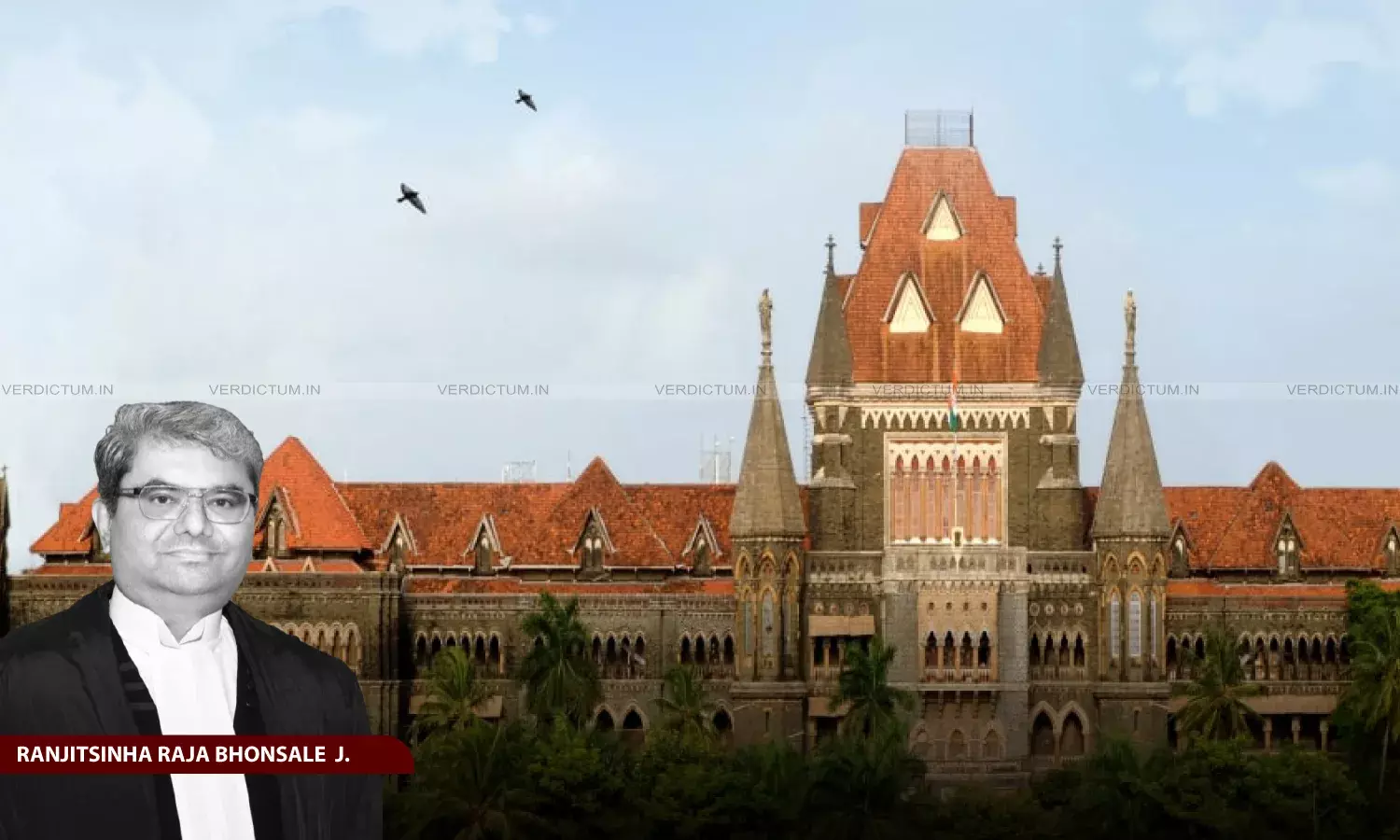
Bombay High Court, Justice Ranjitsinha Raja Bhonsale
The Bombay High Court has held that criminal prosecutions arising out of matrimonial and financial disputes cannot be permitted to continue where the allegations appear exaggerated, contradictory, mala fide, and intended to wreak vengeance.
The Court held that even serious allegations, including those under the POCSO Act and sexual offence provisions, must be tested against the surrounding circumstances when abuse of process is apparent from the record.
The Court was hearing three connected proceedings between a husband, wife and daughter/stepdaughter. One proceeding sought quashing of a POCSO and Juvenile Justice Act case against the wife/stepmother, while two others sought quashing of criminal cases filed by the wife against the husband.
A Bench of Justice Ranjitsinha Raja Bhonsale observed: “On the basis of such unrelated and exaggerated versions and evidence to allow this kind of serious and grave criminal prosecutions to be filed and/or continued, which essentially arise out of matrimonial disputes and financial issues ought not to be permitted. Allowing such criminal prosecutions to continue after such material is available on record would clear amount to a gross abuse of the process of law and harassment to the individual which is metted out due to personal vendetta and grudges and only with an object to spite the individual and wreck vengeance. In my considered view it would be nothing less than pure injustice and a sheer abuse of process of law and the legal system to permit this kind of prosecution to proceed any further”.
Petitiner-wife appeared in person. Advocate Niranjan Mundargi appeared for the husband, APP Yogesh Nakhwa appeared for the State, and Advocate Sujit Sahoo appeared for the daughter.
Background
The wife/stepmother sought the quashing of an FIR and chargesheet alleging offences under Sections 354, 323, 504, and 506 of the IPC, Sections 8 and 12 of the POCSO Act, and Section 75 of the Juvenile Justice Act. The case was filed by the daughter/stepdaughter.
The husband separately sought the quashing of two FIRs filed by the wife. One concerned allegations of assault and attempted spread of COVID-19 infection. The other involved allegations under Sections 377, 376(2)(n), 328, 324, 506, and 504 of the IPC.
The wife/stepmother argued that the POCSO case was a counterblast to other proceedings and that the record showed material contradictions, delay, absence of allegations before NGO workers, and a chequered history of matrimonial and financial disputes. The daughter and the State opposed quashing, arguing that the FIR and later statements disclosed a prima facie case and that the Court should not conduct a mini-trial under Section 482 CrPC.
The husband argued that the cases against him were belated, mutually contradictory and filed with mala fide intent. The wife opposed the petitions and contended that the allegations disclosed cognizable offences requiring trial.
Court’s Observations
The Court first examined the scope of inherent powers under Section 482 CrPC and the principles governing quashing of criminal proceedings. It referred to Supreme Court precedents including R.P. Kapur v. State of Punjab (1960), State of Haryana v. Bhajan Lal (1992), Mahmood Ali v. State of U.P. (2023), Manik B. v. Kadapala Sreyes Reddy (2023), Central Bureau of Investigation v. Aryan Singh (2023), and State v. M. Maridoss (2023).
The Court observed: “While exercising the powers under Section 482 of CrPC, the Court is duty-bound to ensure that the criminal courts or the criminal law system of a country should not be used as a weapon of harassment or an arm-twisting tactic. The underlying object, the surrounding/attending circumstances are more so required to and ought to be considered and taken into account when a case of malicious or vexatious prosecution or vendetta litigation is alleged and when is borne out by the facts of the case.”
It added: “When proceedings are manifestly attended with mala fide or maliciously instituted with ulterior motives for wreaking vengeance, the exercise of power under Section 482 of CrPC should be immediate and the same should be exercised after considering the entire factual background and the attending circumstances.”
On the daughter’s case under the POCSO Act, the Court considered the argument that Sections 29 and 30 created statutory presumptions. It held that the presumption cannot be treated as absolute and would arise only where foundational facts are established by credible material.
The Court stated: “The presumption under Section 29 cannot be considered to be an absolute presumption and would come into operation and play only when the foundational facts are established to draw the said presumption. The foundational facts would mean the essential basic facts, based on relevant and credible material.”
The Court further held that the facts before it constituted an exceptional case where surrounding circumstances could be considered at the quashing stage.
The Bench remarked: “Considering the peculiar facts of the case the nature of the allegations and the chequered history of matrimonial disputes and financial issues, further the various criminal proceedings, the exaggerated and contradictory versions in my considered view this case is an exceptional and rare case where the Court ought to exercise the power to entertain the defenses also look at all the attending circumstances in the case and litigations between the parties.”
The Court found that independent NGO workers and the home visit report did not support the later allegations of sexual abuse. It also noted contradictions between the FIR, supplementary statement and statement under Section 164 CrPC.
The Court remarked: “In Criminal Application No. 427 of 2023, the independent third party, i.e., the NGO workers, have categorically stated that 'X' did not complain or inform them of any act or conduct of 'Y' which would be or amount to an offence under the POCSO Act. The Home Visit Report dated 13th August 2021 does not refer to any allegation of sexual abuse.”
The Court also found the timing and surrounding circumstances relevant, noting that the allegations appeared to emerge in the backdrop of matrimonial and financial disputes.
In the case arising from the wife’s allegation that the husband attempted to spread COVID-19 infection, the Court noted that the first version and later versions were materially different.
The Court held: “In the subsequent complaints there is material variance in the manner in which the allegations are made and in fact the allegations are to large extent different and distinct. In the email dated 10th April 2021 ‘Y’ has referred to the fact of an amount of Rs. 50,000/-, jewellery, expensive perfumes, watches, sarees and footwear being in the room. There is reference to making duplicate keys.”
It concluded that the case appeared to be one of over-implication.
The court stated: “Prima facie considering the peculiar facts and circumstances of this case, it appears that the FIR is a classic case of over implication. If one takes into consideration, the multiple litigation filed and the allegations made therein, the possibility of over implication and/or exaggeration cannot be ruled out.”
In the other case against the husband, the Court noted that the FIR was filed after an inordinate unexplained delay and contained allegations inconsistent with an earlier FIR filed by the wife.
The Court observed: “The very foundation of the allegation and the alleged reason for the threat and duress is negated when one reads, both the FIR’s filed by ‘Y’, together.”
It further stated: “It cannot be that, the same facts are twisted, statements blatantly contradicted only to initiate and make out a case in different criminal prosecutions.”
The Court found that the allegations appeared improbable, incorrect or materially exaggerated when read with the earlier record.
The Court made broader observations on the misuse of criminal law in matrimonial disputes, especially where multiple proceedings are used as pressure tactics.
The Court underscored: “In the recent times, the strategy of arm twisting by instituting multiple cases, exagerrated criminal complaints for seeking a global settlement or getting lucrative settlements has increased manyfold. The courts exercising the jurisdiction under Section 482 of the CrPC are flooded with such cases which encroach into the time that would have been available for genuine cases.”
It further observed: “The criminal law system is heavily misused by parties at their own convenience and used as a defense mechanism or for mounting a dishonest attack. When the criminal laws and criminal justice system is misused it involves serious consequences. The consequences have a far reaching impact on the individual, his social standing and well being.”
The Court added that malicious prosecutions must be “obliterated at the inception” once mala fides are prima facie shown.
Conclusion
The Court held that continuation of the three prosecutions would lead to manifest injustice and amount to abuse of process. It allowed all three proceedings and quashed the criminal cases, while clarifying that its findings were limited to the cases before it and would not affect connected proceedings.
The Court also noted that mediation had failed, but said it remained in the best interest of the parties and the daughters that the matrimonial and financial disputes be resolved amicably.
Cause Title: Y v. State Of Maharashtra
Appearances
Petitioner: Y appeared in person; Advocate Niranjan Mundargi with Advocates Keral Mehta and Kajal, instructed by Himanshu Nagarkar
Respondents: APP Yogesh Nakhwa for the State; Advocate Sujit Sahoo with Advocate Reeta Sharma for the private respondent