

Right In Inheritance Vests Immediately On Death Of Estate Leaver; Inventory Proceedings Only Crystallise Shares: Bombay High Court Upholds Amendments To Goa Succession & Inventory Act
The Bench validated the retroactive succession amendments while clarifying the distinction between vesting and crystallisation of rights.

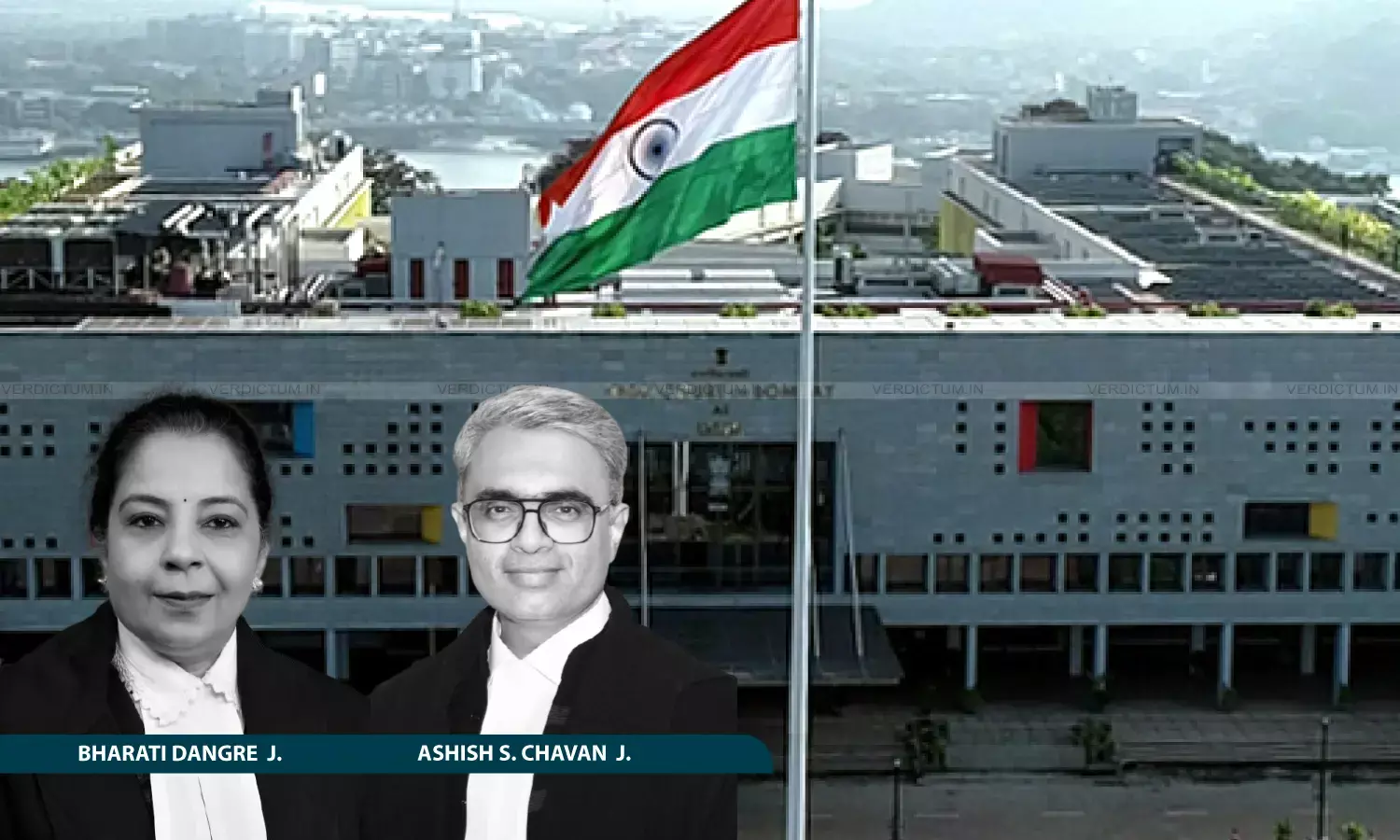
The Bombay High Court, Goa Bench has held that inheritance rights vest in legal heirs the moment succession opens upon the death of an estate leaver, regardless of whether inventory proceedings have commenced. While the Court upheld the constitutional validity of the Goa Succession, Special Notaries and Inventory Proceedings (Amendment) Acts of 2022 and 2023, it clarified that inventory proceedings serve only to demarcate and identify specific individual shares, rather than acting as a prerequisite for the vesting of ownership.
In the matter, this distinction was central to the Court’s analysis of the 2023 Amendment, which retroactively reordered the succession hierarchy to prioritise the surviving spouse over ascendants and siblings. The Court held that while inheritance rights vest immediately upon death, they attain finality or ‘crystallisation’ only upon a final decree or registered partition. Consequently, the legislature can validly apply revised succession rules to pending proceedings where rights, though vested, have not yet crystallised.
A Division Bench comprising Justice Bharati Dangre and Justice Ashish S. Chavan observed, “Under the Act of 2012, the succession opens upon the death of the estate leaver as per Section 8. Every person, who is born or conceived at the time of opening of succession is competent to succeed unless specifically prohibited. Under the Act, the moment the estate leaver dies, the ownership and possession of the inheritance is transmitted to the heir. Heir is the person who inherits or succeeds to the totality of the estate of the estate leaver or to an undefined share thereof without specifying the assets constituting it. Once there is transmission of inheritance on death of the estate leaver and if there are more than one person who has claim of inheritance, their rights remain indefeasible, both in respect of ownership and possession, till the partition is effected…”
Advocate Ashwin Ramani appeared for the petitioner and Devidas Pangam, Advocate General appeared for the respondent.
The two petitions challenged the Goa Succession, Special Notaries and Inventory Proceedings (Amendment) Act, 2022, and the Goa Succession, Special Notaries and Inventory Proceedings (Amendment) Act, 2023, which resulted in amending and substituting Section 52, 72, 76, 77 and 83 of the Goa Succession, Special Notaries and Inventory Proceedings Act, 2012.
The petitions involved families where the death of an individual intestate occurred prior to the 2022 and 2023 amendments. Under the original 2012 Act, siblings and parents held precedence or distinct positions in the order of succession. Following the amendments, surviving spouses in these families claimed exclusive entitlement to the estates, leading to the dismissal or removal of the original heirs from ongoing inventory proceedings.
The petitioners challenged the amendments after lower courts rejected inventory proceedings or dropped interested parties based on the retroactive application of the 2023 Act. The High Court was moved to declare the amendments ultra vires, with petitioners arguing that the law arbitrarily stripped them of "vested rights" that had accrued at the moment of the estate leaver's death.
The Court rejected the State's argument that rights do not vest until the completion of inventory proceedings, affirming that Section 13 of the Act ensures transmission of ownership immediately upon death.
On the argument that unless and until the inventory proceedings reach at this stage, no right is vested in a legal heir, the Bench observed, “We do not subscribe to the said submission, as we find that the statutory indication is otherwise. As per the Scheme of Chapter II the succession opens upon the death of the estate leaver and the moment the estate leaver dies, the ownership and possession of inheritance is transmitted to the heirs. This inheritance may be partitioned by a mandatory inventory or optional inventory. When an estate leaver leaves behind the surviving spouse or an heir any of whom is an interdict, absent person unknown or a minor, then the inheritance shall be partitioned only through the inventory proceedings which are mandatory inventory proceedings. But in absence of any such heir, the Parties may institute optional inventory proceedings. The inventory proceedings under the Act of 1962 can be initiated by a legal heir, a moiety holder (spouse), executor of a Will or, legatee or an usufruct”.
“The legislature, by the amendment has therefore, clarified that the rights which are crystallized i.e. which have become clear and fixed will not disturbed by the Amending Act i.e. change in the order of succession, but those rights which are still open on account of pendency of the cases/appeals before different Courts in contrast to the rights beings crystallized would continue to be governed by the new Act. Though the Amending Act provide that it shall be deemed to come into force on 21st Day of December, 2016, the explanation has saved it from being entirely restrospective, as it provide that before the enactment of the Act of 2023, if the rights are crystallized i.e. taken a concrete form, they shall not be disturbed, but those which are not yet crystallized and are pending for adjudication before the competent court i.e. in form of cases or appeals on the date of enactment of the Act of 2023, then such rights shall be governed by the new order of succession”, the Bench further observed,
However, it ruled that the legislature is competent to modify these vested statutory rights retrospectively. The Court found the prioritisation of the surviving spouse to be a reasonable policy choice aligned with Goa's communion of assets regime. It further held that the Explanation in Section 52 adequately protected the finality of the law by exempting only those rights already "crystallised" through final partition.
The Court dismissed the writ petitions and discharged the rule, and confirmed that the amended order of succession applies to all pending inventory proceedings and appeals, provided that rights finalized by decree or registered deed prior to the 2023 Act remain undisturbed.
Cause Title: Xavier Agnelo Minguel Jose Gracias v. State of Goa & Anr. with Shantaram Jaywant Chanekar & Anr. v. Rushina Siddesh Chanekar & Anr. (Neutral Citation: 2026:BHC-GOA:1046-DB)
Appearances:
Petitioners: Ashwin Ramani and Nigel Da Costa Frias, Advoctaes.
Respondents: Devidas Pangam, Advocate General, Rohit Bras De Sa, Somnath Karpe, N. Vernekar, Additional Government, S. Vaigankar, Siddhi Parodkar, Advocates.
Click here to read/download the Judgment