

Sexual Harassment Charge U/S 75 BNS Sustainable Where Victim Is Transgender Person Identifying As Woman: Bombay High Court
The Court upheld the refusal to discharge an Agniveer, holding that the absence of a transgender identity certificate at the time of the alleged offence does not bar prosecution under the Transgender Persons Act.

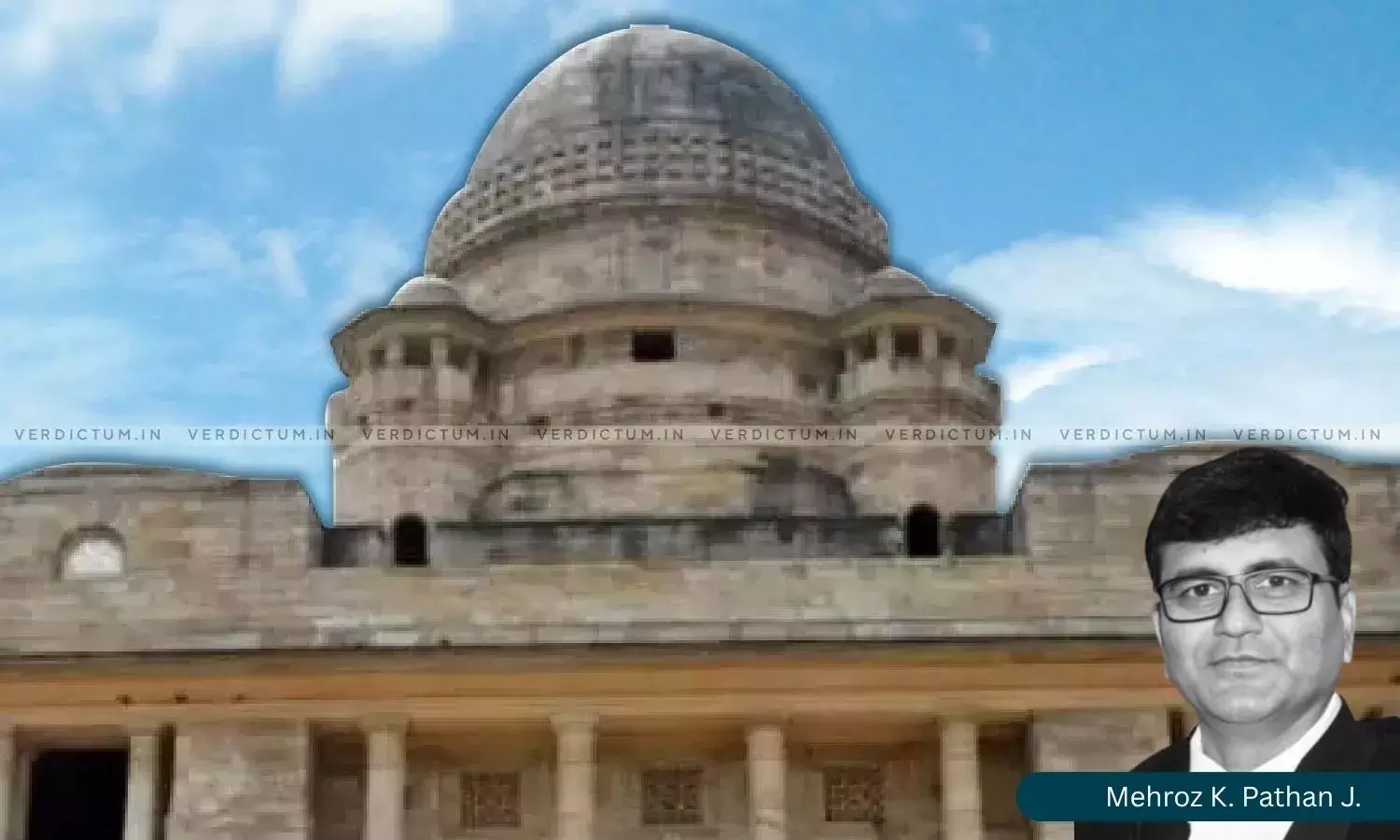
The Bombay High Court, Nagpur Bench has held that allegations of assault and outraging the modesty of a woman can be sustained even where the victim is a transgender person who identifies herself as a woman. Rejecting the contention that Section 75 of the Bharatiya Nyaya Sanhita, 2023 applies only to a “woman” as defined in Section 2(35), it held that the complainant’s self-determination of gender cannot be questioned at the stage of discharge.
The Court held that merely because the complainant did not possess a certificate of identity under the Transgender Persons (Protection of Rights) Act, 2019 on the date of the alleged incidents, invocation of the Act’s penal provisions is not precluded. It noted that Section 4(2) of the Act, recognising the right to self-perceived gender identity, was in force at the relevant time, though since omitted by the 2026 Amendment Act.
A Single Judge Bench of Justice Mehroz K. Pathan observed, “In my considered opinion, therefore, the allegations of assault and outraging the modesty of a woman can be sustained even where the victim is a transgender person who identi2es herself as a woman…”.
“…merely because the Complainant did not possess a certi2cate of identity under Section 6 of the Act of 2019 at the time of the alleged commission of the offence by the Applicant would not, by itself, preclude the invocation of the penal provisions of the Transgender Act of 2019. A perusal of the FIR would show that Section 18(D) of the Transgender Act of 2019 have been rightly invoked, and the allegations therein prima facie attract the provisions invoked against the Applicant”, it noted further.
Advocate Anil Thakkar appeared for the applicant and Swati V. Kolhe, APP appeared for the respondent.
The complainant, a transgender person who had undergone hormonal treatment since 2015 and dressed as a woman from 2021, alleged that the applicant, an Agniveer in the Indian Army, befriended her and proposed marriage.
She alleged that he committed forcible sexual intercourse with her on October 28, 2025, and again on October 30, 2025 at a flat, while abusing her in filthy language. An FIR was registered on November 1, 2025 under Sections 75, 296 and 351(2) of the BNS read with Section 18(d) of the 2019 Act.
The Additional Sessions Judge, rejected the applicant’s discharge application under Section 250 of the BNSS on July 6, 2026. The applicant contended that the complainant was not a woman, that the identity certificate was issued only on February 12, 2026, and that the relationship was consensual and on a promise of marriage. The State contended that Section 75(1) does not expressly stipulate that the victim must be a woman and that transgender persons are entitled to self-identify.
The Court noted that Section 2(k) of the 2019 Act defines a transgender person to include transgender women irrespective of any therapy undergone, and that a person may so identify even without a certificate, Section 5 being only an enabling mechanism.
The Bench referring to National Legal Services Authority v. Union of India (2014), held that self-determination of gender cannot be questioned by others. It found that the acts constituted an offence under the law as it stood when committed, and that the FIR contained direct allegations of outraging the modesty of the complainant, prima facie attracting Section 75 of the BNS and Section 18(d) of the 2019 Act.
Holding that the plea of consent is a matter for trial and that the charge-sheet disclosed sufficient material, the Court dismissed the revision application.
Cause Title: Vishal Sunil Ingle v. State of Maharashtra (Neutral Citation: 2026:BHC-NAG:15063)
Appearances:
Applicant: Advocate Anil Thakkar
Respondent: APP Swati V. Kolhe