

One-Year Imprisonment Requirement For Grant Of Parole Under Rule 14(1) Maharashtra Prisons Rules Unconstitutional: Bombay High Court
The Court held that the one-year actual imprisonment condition imposed under Rule 14 of the Maharashtra Prisons (Furlough and Parole) Rules, 2024, had no nexus with the objectives of parole and operated in a manifestly arbitrary manner against convicted prisoners seeking temporary release for family emergencies and humanitarian reasons.
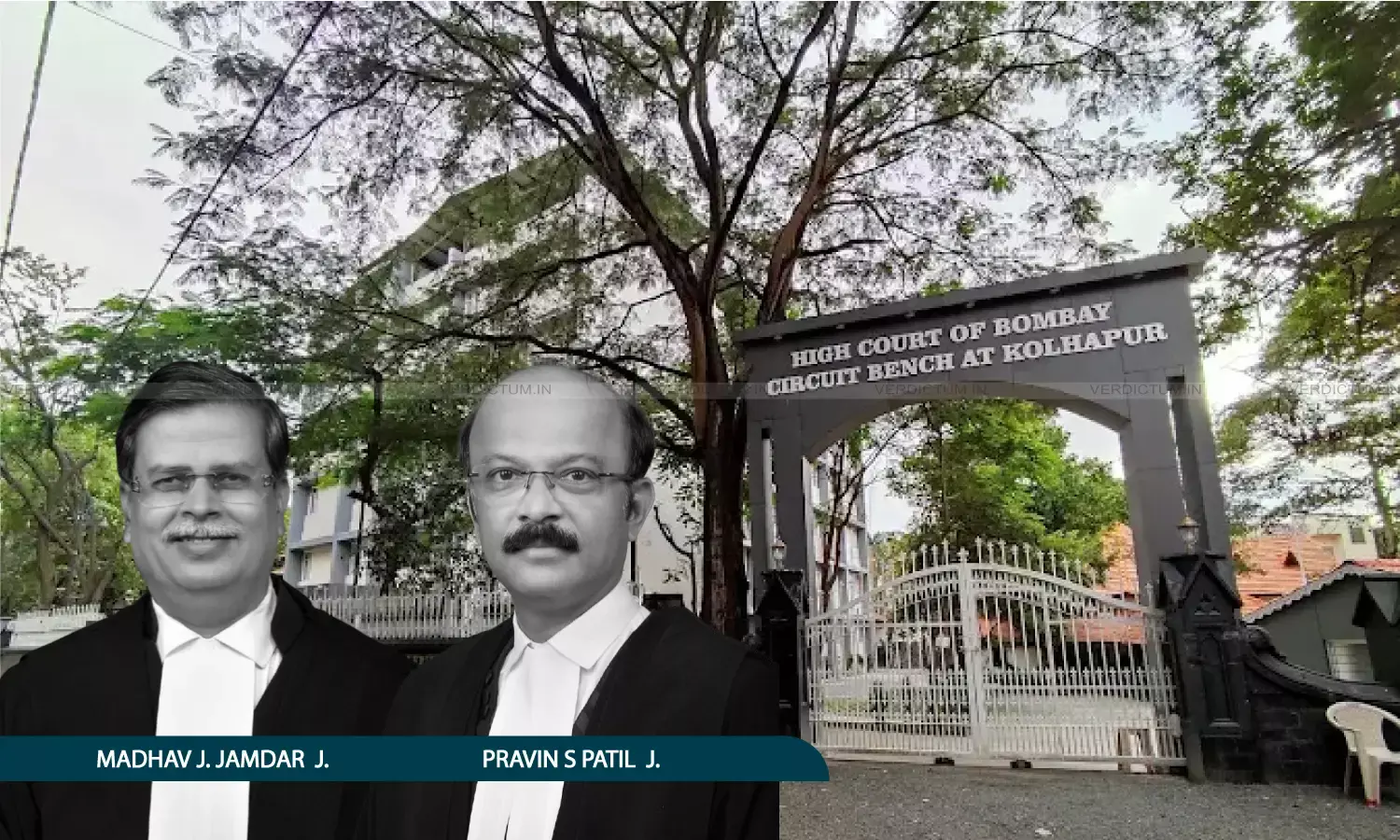
The Bombay High Court has struck down the portion of Rule 14(1) of the Maharashtra Prisons (Furlough and Parole) Rules, 2024, which mandated completion of one year of actual imprisonment before a convicted prisoner could become eligible for regular parole.
The Court held that the restriction violated Articles 14 and 21 of the Constitution of India and was ultra vires the very objectives underlying the parole framework.
The Court was hearing a writ petition filed by a convict lodged at Kolhapur Central Prison seeking directions to the prison authorities to consider his parole application.
The petitioner had been convicted under Section 138 of the Negotiable Instruments Act, 1881 and sentenced to one year’s simple imprisonment. His parole application was not entertained because he had not completed one year of actual imprisonment as required under Rule 14 of the Rules of 2024.
The Division Bench of Justice Madhav J. Jamdar and Justice Pravin S. Patil observed: “We hold that the prohibition of one year of actual imprisonment provided in Rule 14 of the Rules of 2024 is violative of Articles 14 and 21 of the Constitution of India and is ultra vires the grounds / objectives stated in Rule 14 of the Rules of 2024.”
Accordingly, the Bench "struck down" the “on completion of one year of actual imprisonment” portion of Rule 14(1) of the Rules of 2024.
Advocate Muralidhar P. Kharat appeared for the petitioner. Advocate Rupesh Jaiswal assisted the Court as amicus curiae. APP A.A. Naik appeared for the State.
Background
The petitioner approached the High Court under Article 226 of the Constitution seeking directions to the prison authorities to decide his parole application and release him on parole for thirty days.
The State opposed the plea by relying upon Rule 14 of the Maharashtra Prisons (Furlough and Parole) Rules, 2024, which stipulated that all prisoners, except certain excluded categories, would become eligible for regular parole only “on completion of one year of actual imprisonment.”
The petitioner had surrendered before prison authorities on 3 May 2025 and sought parole on 23 March 2026. However, owing to the one-year eligibility requirement, he was asked to withdraw the application.
The amicus curiae and counsel for the petitioner challenged the constitutional validity of Rule 14, contending that the one-year imprisonment condition was arbitrary and contrary to the settled jurisprudence governing parole.
Court’s Observation
The Court examined the scheme of the Maharashtra Prisons (Furlough and Parole) Rules, 2024 and noted that parole could be granted for specific humanitarian reasons, including serious illness of close relatives, childbirth, natural calamities affecting the prisoner’s home, marriage of children or siblings, and death-related rituals.
The Bench relied extensively upon the Larger Bench judgment of the Bombay High Court in Kantilal Nadlal Jaiswal v. Divisional Commissioner (2020), wherein parole was recognised as a limited legal right available to prisoners subject to statutory conditions.
Referring to the Larger Bench decision, the Court reiterated: “Parole is not a mere administrative decision dictated only by the administrative policy of the State, but it is a limited legal right available to the convict or prisoner.”
The Court observed that once such a limited statutory right is recognised, the State is obligated to administer it in a non-arbitrary manner consistent with constitutional guarantees under Articles 14 and 21.
The Bench held that the one-year actual imprisonment condition bore no rational connection with the grounds on which parole could be sought.
The Court noted that parole exists to enable prisoners to respond to urgent family situations and humanitarian exigencies. Preventing a prisoner from seeking parole merely because one year had not elapsed since imprisonment defeated the very purpose of the parole framework.
The Court observed that after conviction, a prisoner ordinarily has no remedy except parole leave in order to attend such family emergencies.
The Bench further held that the impugned restriction had “nothing to do with the grounds specified for the grant of parole leave.”
The Court also relied upon the Supreme Court judgment in Asfaq v. State of Rajasthan (2017), which recognised the rehabilitative and humanistic objectives underlying parole and furlough.
Quoting the Supreme Court, the Bench observed: “The provisions of parole and furlough, thus, provide for a humanistic approach towards those lodged in jails.”
The Court further noted that parole enables prisoners to maintain links with society, solve personal and family problems, and facilitate reintegration into society upon release.
The Bench held that the one-year embargo operated in a manifestly arbitrary and discriminatory manner against convicted prisoners.
The Court observed that prisoners cannot be denied parole in situations involving serious illness of close relatives, natural calamities, or marriages within the family, merely because they had not completed one year in prison.
The Court further held that such a restriction violated the prisoner’s right to dignity under Article 21 and failed the constitutional test of non-arbitrariness under Article 14.
Conclusion
The Bombay High Court held that the phrase “on completion of one year of actual imprisonment” contained in Rule 14(1) of the Maharashtra Prisons (Furlough and Parole) Rules, 2024 was unconstitutional, manifestly arbitrary, violative of Articles 14 and 21 of the Constitution of India, and ultra vires the objectives underlying the parole framework.
Accordingly, the Court struck down the said portion of Rule 14(1) and directed the Deputy Inspector General of Prisons (West), Yerwada, Pune to decide the petitioner’s parole application in accordance with law on or before 15 May 2026.
Cause Title: Vinodkumar Chellappan Pillai v. The State of Maharashtra & Ors. (Neutral Citation: 2026:BHC-KOL:3781-DB)
