

Misconceived And Misdirected: Bombay High Court Quashes 13-Year-Old Case Against Man Accused Of Charging ₹1 Extra For Pepsi Bottle
The Court found that the complainant’s own letter showed that the soft drink was sold from the wife’s shop by the wife, while the husband had only prepared the bill on her instructions, and held that criminal proceedings could not be set into motion on a misconception that he had conducted the sale.
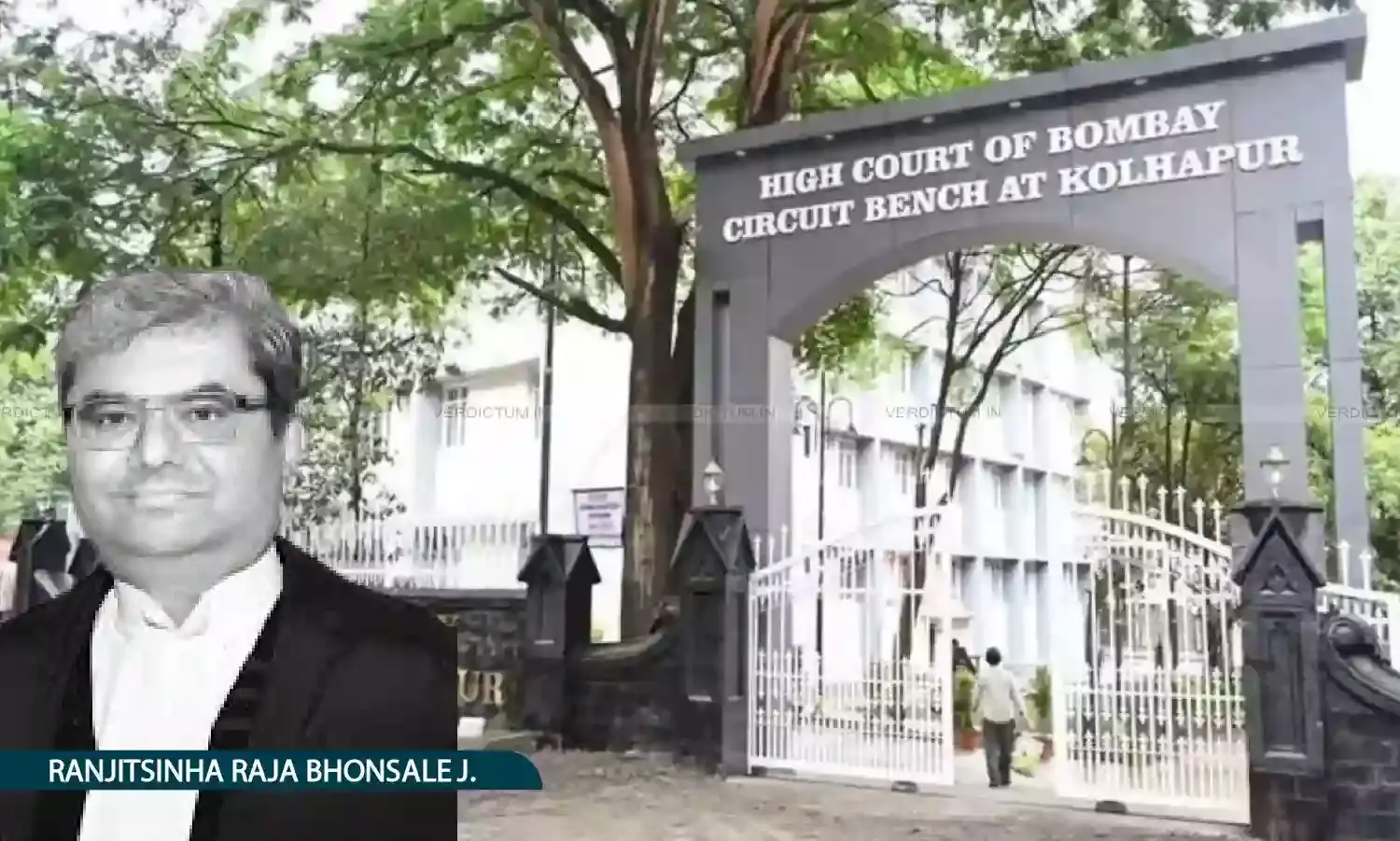
The Bombay High Court has quashed 13-year-old criminal proceedings against a man accused of charging ₹1 extra for a Pepsi bottle, after finding that the prosecution was “misconceived and misdirected” and had proceeded against him on the erroneous assumption that he had made the sale.
The High Court held that merely preparing a bill on the instructions of one’s wife cannot be treated as conducting a “sale” under Section 2(r) of the Legal Metrology Act, 2009, where the material showed that the sale itself had already been concluded by the wife from her shop.
The Court was hearing a petition challenging the order issuing process against the petitioner for an alleged offence under Rule 18(2) read with Rule 32(2) of the Legal Metrology (Packaged Commodities) Rules, 2011, as well as the revisional order refusing to interfere with it.
A Bench of Justice Ranjitsinha Raja Bhonsale observed that the complainant’s own letter indicated that the sale was made by the wife, while the petitioner had only prepared the bill on her instructions.
The Bench held: “The act of making a bill cannot be termed as conducting a sale, as making a bill would only occur after concluding the sale, which is already been concluded. The complaint has proceeded on a totally erroneous assumption or misunderstanding that the sale is made by the Petitioner. It appears that as the Petitioner is the husband, he has been made accused on some misconception or misunderstanding. Criminal proceedings have serious consequences and cannot be set into motion as a matter of course.”
Advocate Atharva RB appeared for the petitioner. S.N. Deshmukh, APP, appeared for the State.
Background
The prosecution's case was that an Inspector of Legal Metrology visited the shop and found that a Pepsi bottle of 600 ml, bearing an MRP of ₹25, was allegedly sold for ₹26. A bill of ₹26 was also allegedly given.
On that basis, a complaint was filed before the Judicial Magistrate First Class, Lanja, and process was issued for alleged contravention of Rule 18(2), punishable under Rule 32(2) of the Legal Metrology (Packaged Commodities) Rules, 2011. The petitioner’s revision before the Sessions Court was dismissed, after which he approached the High Court under Article 227 of the Constitution and Section 482 CrPC.
The petitioner argued that the shop was run by his wife, that she held the required licence and permit, and that he had only prepared a bill after the alleged sale on her instructions. He also alleged mala fides against the complainant and pointed to overwriting on the bill.
The State opposed the petition, submitting that the petitioner had issued and signed the bill, that the sale above MRP violated Rule 18(2), and that the Legal Metrology Act and Rules were beneficial provisions meant to protect consumers. It also argued that an alternate appellate remedy was available under Section 50(d) of the Legal Metrology Act.
Court’s Observations
The Court first examined the complainant’s letter and found that it indicated the incident had taken place at the shop of the petitioner’s wife, where she was selling items.
The Court noted: “Perusal of the letter dated 15th July 2013, would indicate that the incident took place on 29th March 2013 at the shop, of the wife of the Petitioner, where she was selling some items. In the said letter dated 15th July 2013, Respondent No.2 has himself admitted that the sale of the Pepsi bottle was undertaken, by the wife of the Petitioner and from her shop. The record indicates that, the sale was done by the wife and at her directions the bill was prepared by the Petitioner.”
The Court also found that there was overwriting on the bill regarding the month of the date.
It observed: “Perusal of the bill which is issued for the said Pepsi bottle indicates that, there is a overwriting on the bill in respect of the month in as much as the date of 29 th March 2013 is shown to be as 29th June 2013. The correct date is 29th March 2013 as is evident from the letter dated 15th July 2013. In my opinion the overwriting even otherwise makes the entire case doubtful.”
The Bench further noted that the wife, who according to the material had made the sale, had not been prosecuted.
The Court stated: “Considering the contents of the said letter, it is clear that the sale was conducted by the wife of the Petitioner. The complaint has been filed only against the Petitioner. The wife of the Petitioner is not made accused nor are any proceeding initiated against her.”
The Court then examined Rule 18(2) of the Legal Metrology (Packaged Commodities) Rules, 2011, and held that it applies to a retail dealer or person making the sale of a packaged commodity above the retail sale price.
The Court observed: “That, the Rule 18(2) of the Legal Metrology (Packaged Commodities Rule, 2011) would indicate that, no retail dealer or other person including the manufacturer, packer, importer or wholesale dealer shall make a sale of any packaging form at a price exceeding the retail sale price thereof. Rule 18(2) is applicable only to a retail dealer or person making the said sale. Admittedly as per the stand of Respondent No.2, the sale has been conducted by the wife of the Petitioner.”
The Court then referred to the definition of “sale” under Section 2(r) of the Legal Metrology Act, 2009, and held that the transfer of property in goods for consideration is the sale. In the facts of the case, the sale was by the wife and the bill was merely prepared by the husband after the sale had already been concluded.
The Court stated: “A perusal of the definition of “sale’ as defined under Section 2(r) of the Legal Metrology Act, 2009, indicates that, “Sale”, with its grammatical variations and cognate expressions, means transfer of property in any weight, measure or other goods by one person to another for cash or for deferred payment or for any other valuable consideration and includes a transfer of any weight, measure or other goods on the hire-purchase system or any other system of payment by installments, but does not include a mortgage or hypothecation of, or a charge or pledge on, such weight, measure or other goods.”
Applying the definition to the facts, the Court added: “The case of Respondent No.2 in letter dated 15th July 2013 is that, the sale was by the wife of the Petitioner. It appears that, only the bill was made by the Petitioner on the instructions of his wife. The act of making a bill cannot be termed as conducting a sale, as making a bill would only occur after concluding the sale, which is already been concluded.”
The Court found that the prosecution was based on a misconception. It held: “The complaint has proceeded on a totally erroneous assumption or misunderstanding that the sale is made by the Petitioner. It appears that as the Petitioner is the husband, he has been made accused on some misconception or misunderstanding. Criminal proceedings have serious consequences and cannot be set into motion as a matter of course.”
The State argued that the petitioner had an alternate remedy of appeal under Section 50(d) of the Legal Metrology Act. The Court rejected the objection in the peculiar facts of the case, holding that the rule of exhausting alternate remedy is one of self-restraint, policy, convenience and discretion, not an absolute bar.
The Court observed: “Having an alternate remedy is not an absolute bar, and in special circumstances or for good reasons, the Petition can be entertained in exceptional circumstances. The role of exhausting the alternate statutory remedy is a rule of self restraint, policy, convenience and discretion.”
The Court found that the person who allegedly sold the soft drink had not been prosecuted and that the husband appeared to have been proceeded against only because his wife owned the shop.
The Bench stated: “In the present case, the facts indicate that, the person who sold the soft drink i.e. the wife of the Petitioner has not been prosecuted and not made an accused. The Petitioner appears to be prosecuted only because his wife owns the shop. It is not the case of Respondent No. 2 that, the shop was run by the Petitioner. Such prosecution is not supported by Rule 18(2) of the rules nor by Section 2(r) of the Legal Metrology Act.”
It concluded on this issue: “In my view the prosecution is misconceived and misdirected, especially when even the complainant admits that, the sale is made by the wife. In such circumstances, it would be only in the interest of justice to entertain the petition. In the peculiar facts of the present case, the petition ought not to be rejected only on the ground of a alternative remedy being available.”
The Court found that the case warranted exercise of inherent powers under Section 482 CrPC, now Section 528 BNSS, having regard to the alleged mala fides, overwriting on the bill, and the complainant’s own admission in the letter.
The Court held: “Considering the peculiar facts of the present case that, the Petitioner has alleged mala fide against Respondent No.2, there is overwriting on the bill, and most importantly the contents/admission of the Respondent No.2 in the letter dated 15th July 2013, this would be a fit and proper case to invoke the powers under Section 482 of the Code of Criminal Procedure (now Section 528 of BNSS).”
The Court accordingly held that continuing the prosecution would amount to abuse of process.
It stated: “It would only be in the interest of justice and to prevent the abuse of the process of law that the order of issuance of process dated 24th July 2013 and the Order dated 18th September 2014 passed by the learned Additional Sessions Judge, Ratnagiri in Criminal Revision Application No. 25 of 2013 are quashed and set aside.”
Conclusion
The High Court allowed the petition and quashed the order issuing process as well as the revisional order. It held that the prosecution was misconceived and misdirected because the complainant’s own material showed that the sale had been made by the wife, while the husband had only prepared the bill after the sale on her instructions.
Cause Title: Vasudeo Tanaji Narvekar v. The State of Maharashtra and Another
Appearances
Petitioner: Advocate Atharva R.B., instructed by Advocate Saniya Patki
Respondent: S.N. Deshmukh, APP
