

TDS Deductions Impermissible From Compensation Awarded Under Section 3G(5) National Highways Act: Bombay High Court
The Court held that compensation awarded under the National Highways Act, 1956, is protected by the exemption contained in Section 96 of the Right to Fair Compensation and Transparency in Land Acquisition, Rehabilitation and Resettlement Act, 2013.
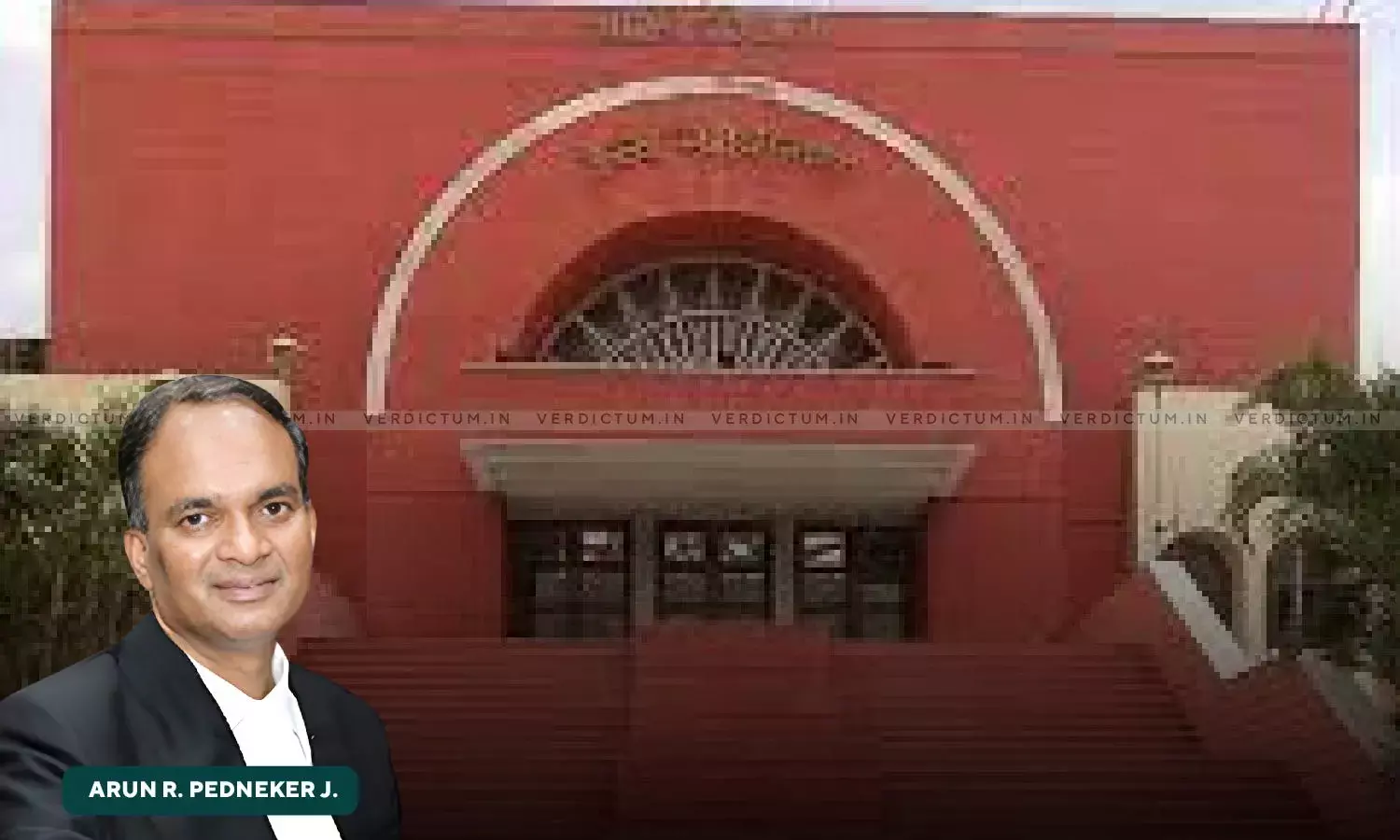
Justice Arun R. Pedneker, Bombay High Court, Aurangabad Bench
The Bombay High Court has held that no deduction of tax deducted at source (TDS) can be made from compensation awarded under an arbitral award passed under Section 3G(5) of the National Highways Act, 1956, observing that Section 96 of the Right to Fair Compensation and Transparency in Land Acquisition, Rehabilitation and Resettlement Act, 2013, expressly exempts such compensation from levy of income tax.
The Court was hearing a batch of writ petitions challenging orders passed by the executing court directing the deduction of 10% TDS while permitting the withdrawal of compensation amounts deposited pursuant to arbitral awards passed under Section 3G(5) of the National Highways Act.
A Bench of Justice Arun R. Pednekar observed: “No deduction of TDS is permissible from the compensation awarded under the arbitral award passed under Section 3G(5) of the National Highways Act, 1956, having regard to the provisions of Section 96 of the Right to Fair Compensation and Transparency in Land Acquisition, Rehabilitation and Resettlement Act, 2013.”
Advocate Chandrakant P. Patil appeared for the appellant, while Advocate S.J. Rahate appeared for the respondents.
Background
The petitions arose from the acquisition of agricultural lands for the widening of a national highway under the provisions of the National Highways Act, 1956. The Competent Authority for Land Acquisition passed awards under Section 3G(1) of the Act. Dissatisfied with the compensation, the landowners invoked arbitration under Section 3G(5) of the Act.
The arbitral awards enhanced compensation and also granted compensation towards easementary rights. Thereafter, execution proceedings were initiated before the District Court for the withdrawal of deposited amounts.
While permitting withdrawal of the deposited compensation, the executing court directed deduction of 10% TDS and further directed that the deducted amount be credited to the account of the Competent Authority for Land Acquisition.
The landowners challenged the said direction before the High Court, contending that Section 96 of the 2013 Act expressly prohibited the levy of income tax on awards made under the Act.
Court’s Observation
The High Court first examined Section 96 of the Right to Fair Compensation and Transparency in Land Acquisition, Rehabilitation and Resettlement Act, 2013, which provides that “no income-tax or stamp duty shall be levied on any award or agreement made under this Act”.
The Court observed that the arbitral awards in the present case were passed after the coming into force of the 2013 Act and therefore the beneficial provision contained in Section 96 squarely applied to the compensation awarded under the National Highways Act in view of the notification issued under Section 105(3) of the 2013 Act.
Referring to the Andhra Pradesh High Court judgment in C. Nanda Kumar v. Union of India (2017), the Court observed that the 2013 Act is a welfare legislation intended not merely to provide fair compensation but also to ensure rehabilitation and resettlement of affected families.
The Court further observed that compelling land losers to first suffer TDS deduction and thereafter seek refunds from income tax authorities would defeat the very object of the beneficial legislation. The Bench observed: “Such an approach, which forces farmers and land losers to move from one authority to another, is clearly contrary to the objects and reasons of the 2013 Act.”
The Court also relied upon the Division Bench judgment in Seema Jagdish Patil v. National Hi-Speed Rail Corporation Ltd. (2022), wherein it was held that no deduction of tax at source can be made where compensation is determined and paid under the provisions of the 2013 Act.
The Bench further referred to CBDT Circular No.36/2016 dated October 25, 2016, clarifying that compensation received under an award made under the 2013 Act is exempt from income tax.
Examining Section 194LA of the Income Tax Act, 1961, the Court observed that the provision itself excludes agricultural land from its ambit and further incorporates a proviso exempting awards protected under Section 96 of the 2013 Act from TDS deduction.
The Court held that the interpretation adopted by the executing court was erroneous. The Bench observed: “The exemption from tax liability is statutory and existed from the inception of the 2013 Act.”
The High Court further held that once compensation crystallises into an arbitral award and is deposited before the executing court, it assumes the character of a decretal debt or “judgment debt”.
Relying upon All India Reporter Ltd. v. Ramchandra D. Datar (1961), the Court observed that once a claim merges into a decree, the amount loses its original character and there is no provision enabling deduction of income tax at source from a decretal amount in the absence of a specific direction in the decree itself.
The Court observed: “Once the compensation is crystallised in the form of an arbitral award, it partakes the character of a ‘Judgment Debt’ and must be paid in its entirety, without any deduction towards TDS.”
Conclusion
The Bombay High Court held that compensation awarded under arbitral awards passed under Section 3G(5) of the National Highways Act, 1956, is exempt from deduction of TDS in view of Section 96 of the Right to Fair Compensation and Transparency in Land Acquisition, Rehabilitation and Resettlement Act, 2013.
Accordingly, the Court quashed the impugned orders passed by the executing court directing the deduction of 10% TDS from the compensation amounts.
The Court further directed the Competent Authority for Land Acquisition to redeposit the amounts already deducted towards TDS before the executing court within four weeks and directed the executing court to disburse the entire decretal amount along with accrued interest to the claimants without any deduction.
Cause Title: Tukaram Kana Pawara (Deceased) Through Legal Heirs v. The Project Director Project Implementation Unit & Anr. and connected matters (2026:BHC-AUG:20365)
Appearances
Petitioners: Advocate Chandrakant P. Patil
Respondents: Advocates S.J. Rahate, Rahul Bagul, D.P. Madkar h/f D.S. Manorkar, Suresh Walmikrao Munde, N.T. Bhagat, Akshay Kulkarni, R.D. Sanap, U.B. Bondar, Assisting Counsel, Chandak
