

Surrogacy Act- Collective Age Of Intending Couple Can Be Considered; No Bar Where One Spouse Is Within Age Limit: Bombay High Court
The Court directed Eligibility Certificate for a couple where the wife is 54 and husband is 53 years old.

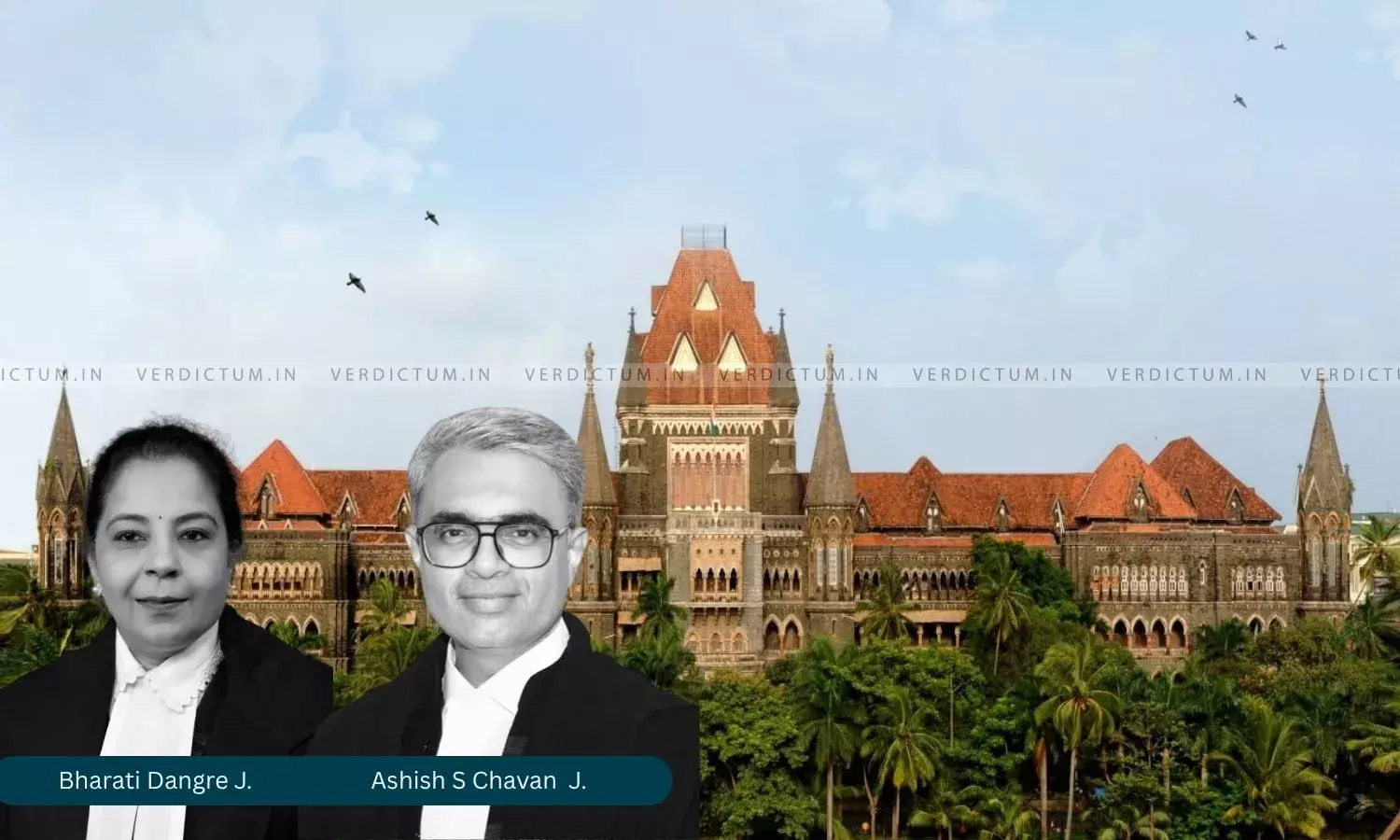
The Bombay High Court has held that the collective age of the intending couple can be considered when one of the couple has crossed the age limit under the Surrogacy (Regulation) Act, 2021 and the other has not.
The Court held that the Surrogacy (Regulation) Act, 2021 and the Assisted Reproductive Technology (Regulation) Act, 2021 are allied and cognate statutes forming a single code and hence the principles laid down by other High Courts in the context of the ART Act can be applied to the Surrogacy Act as well.
Reading Section 4(iii)(c)(I) of the Surrogacy Act purposively, it held that an intending couple is not barred from surrogacy where the wife has crossed the upper age limit of 50 years but the husband is within the permitted bracket.
The Court directed the Appropriate Authority to issue an Eligibility Certificate to a couple aged 54 and 53 and clarified that it had not ruled on the validity of the age limit. It rejected the Union’s request for a stay of the judgment, made to challenge it before the Supreme Court.
A Division Bench of Justice Bharati Dangre and Justice Ashish S. Chavan observed, “...the course adopted by different High Courts in accepting the collective age of the ‘commissioning couple’ under the ART Act, we see no reason why the said principle shall not be made applicable to the Petitioners before us”.
The Court further held, “Thus, reading of the two statutes would lead to an inference that they are to be read together, as the Surrogacy Act necessarily involves the Assisted Reproductive Technology even for a surrogate mother. The Surrogacy (Regulation) Rules, 2022 framed in exercise of the powers conferred by Section 50 of the Surrogacy (Regulation) Act, 2021, by Rule 14 suggests as to when a woman may opt for surrogacy and this include an intended parent or woman, who has repeatedly failed to conceive after multiple In vitro fertilization or Intracytoplasmic sperm injection attempts, which are nothing but assisted reproductive techniques and if this attempt is not successful, then a woman may opt for surrogacy”, the Bench further noted.
Advocate Utkarsh R. Pondkule appeared for the petitioners and Anil C. Singh, Additional Solicitor General, appeared for the respondent.
The petitioners, a married couple identified as X-1 and X-2, had undergone multiple unsuccessful IVF cycles. An IVF specialist in Nashik recommended gestational surrogacy, and they applied to the Appropriate Authority of the Nashik Municipal Corporation for an Eligibility Certificate under Section 4(iii)(c). On July 14, 2026, the authority rejected the application solely because X-1 was above 50.
The petitioners invoked Articles 14 and 21 of the Constitution of India, seeking a purposive reading of the provision or, alternatively, a declaration that it is unconstitutional to the extent of its inflexibility. On September 1, 2026, the Court appointed Senior Advocate Sharan Jagtiani as amicus curiae.
The Union opposed the petition, on the basis of the Parliamentary Select Committee report, the National Board’s views and an Expert Committee report on advanced parental age. It also cited Delhi and Kerala High Court rulings upholding the age restriction.
The Bench noted that both statutes came into force on the same day, are administered through a common Board, and that surrogacy necessarily involves assisted reproductive technology. It followed High Court rulings under Section 21(g) of the ART Act, including Sanchita Ghosh v. Union of India, which treat a couple as a unit where one spouse is within the age limit. It observed that the age limit was not based on a scientific study when the Bill was presented, and that the Expert Committee report, dated January 21, 2026, was recent. It added that the psychological and caregiving concerns apply equally to children born through ART.
“The psychological and caregiving implications of advanced parental age, apply with equal force to a child born out of surrogacy or a child born through the use of assisted reproductive technology. What is highlighted by the Report of the Expert Committee equally applies in both cases, if the rationale in prescribing the age limit is the inhibition on part of the parents, on account of their age, and which may impair their active caregiving, emotional availability and parenting capacity during the child’s formative years, and by considering an important aspect that children require stable guardianship for at least two decades, but we fail to understand as how this factor can be made applicable only to a child born through surrogacy to an intending couple, and not be applied to a child born through the use of ART techniques to a commissioning couple”, it said.
The Court quashed the July 14 order and issued a writ of mandamus to the Appropriate Authority to issue the certificate, declaring that X-1 having crossed 50 shall not pose an embargo to surrogacy and, if required, the ART procedure. It also directed the District Medical Board, Nashik, to issue the Certificate of Medical Indication if the medical requirements are otherwise satisfied.
Cause Title: X-1 & Anr v. Union of India through the Secretary, Ministry of Health and Family Welfare & Ors (Neutral Citation: 2026:BHC-AS:45246-DB)
Appearances:
Petitioner: Advocates Utkarsh R. Pondkule, Jagdish Deore, Akshay Desai.
Respondent: Additional Solicitor General Anil C. Singh, Advocates Savita Ganoo, Krishnakant Deshmukh and Aadarsh Vyas, for the Union; Senior Advocate Sharan Jagtiani, Amicus Curiae, with Advocates Surabhi Agrawal, Siddharth Joshi and Avanti Divan; Panel Counsel Ketan V. Joshi, with AGP A.A. Alaspurkar, Advocate Chaitrali Deshmukh.