

Subscription To Trade Association To Persuade Authorities To Favour Endosulfan Manufacture Not Deductible U/S 37(1) IT Act: Bombay High Court
The Bench held that Endosulfan-linked contributions, absent proof of expenditure or links to the Supreme Court proceedings, weren't incidental to the business.

The Bombay High Court has held that "subscription" charges paid to a trade association formed by Endosulfan manufacturers, to persuade government authorities to support manufacture of the pesticide after the Supreme Court's interim ban, are not deductible as business expenditure under Section 37(1) of the Income-tax Act, 1961. It held that such expenditure could not be said to be incidental to the assessee's business and had a "direct and proximate connection" with an act in contravention of law.
The Bench found that the contribution was computed per kilogram of Endosulfan produced, that no document proved the expenditure, and that nothing showed it was incurred to resist the Supreme Court proceedings. It observed that after the interim ban "no amount of favourable publicity or canvassing of public authorities could have affected" them.
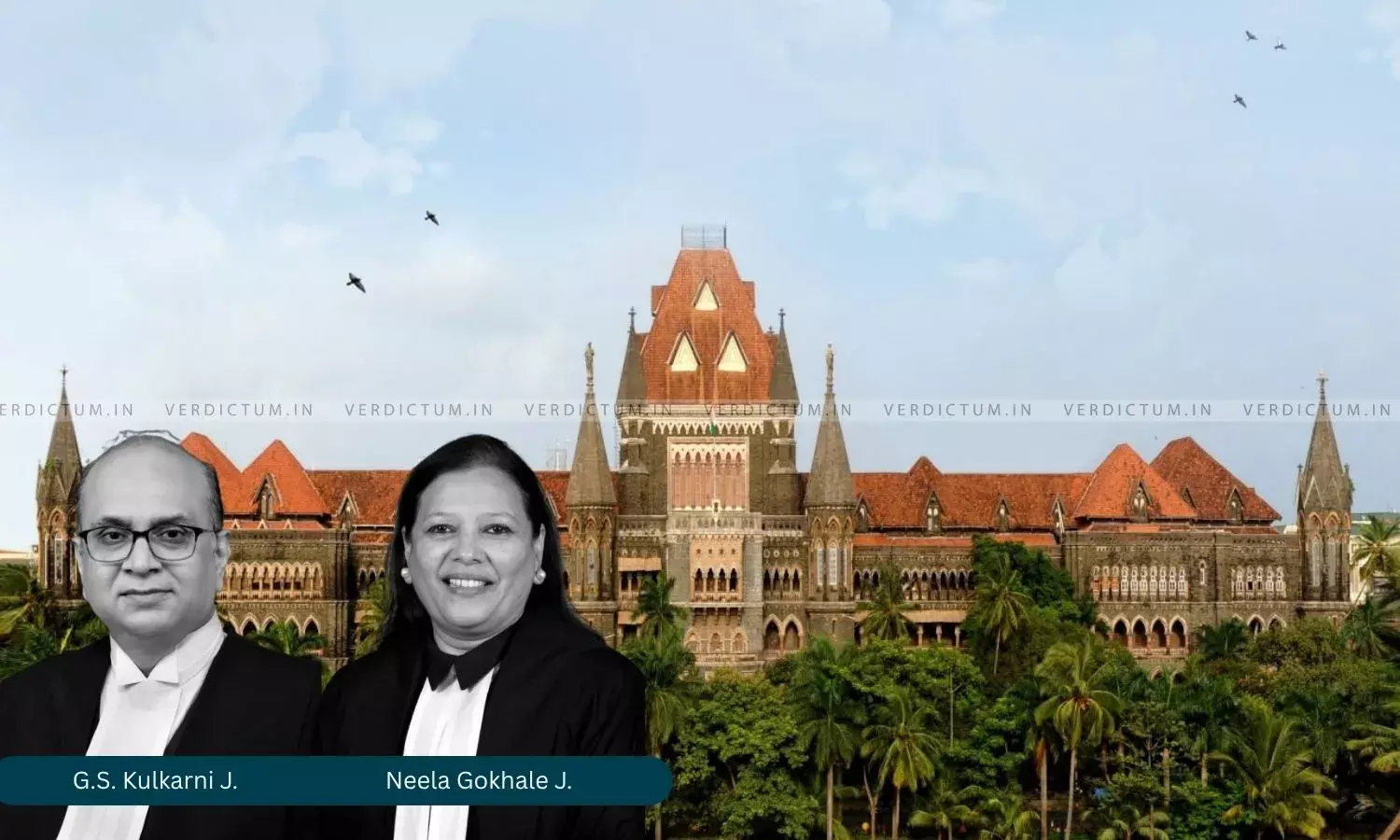
A Division Bench of Justice G. S. Kulkarni and Justice Dr. Neela Gokhale observed, “…the expenditure purportedly labelled by the Appellant as ‘Subscription’ viewed from any perspective cannot be said to be incidental to the Appellant’s business. The true position appears to be that the expenses which are claimed as deductions have a direct and proximate connection with an act which is in contravention of the law”.
“It is pertinent to note that neither the Memorandum of Association of the assessee company, which states that building public opinion in favour of the manufacture of its products and/or persuading public authorities in that regard is the object of the company, nor any other document proving expenditure made towards the pro-Endosulfan campaign was placed before the AO. There was also nothing on record to indicate that the expenditure was incurred to resist or contest the proceedings before the Supreme Court. In these circumstances, the AO was justified in refusing to allow the expenditure under the provisions of law”, it said.
Advocate Dharan V. Gandhi appeared for the appellant, and Advocate Suresh Kumar appeared for the Revenue.
Sumitomo Chemical India Limited is the successor of Excel Crop Care Limited, which manufactured agrochemicals, with Endosulfan contributing at least 40 per cent of its business. Manufacturers of Endosulfan formed the Endosulfan Manufacturers and Formulators Welfare Association (EMFW Association), to which the company paid subscription charges of Rs. 28,59,772 (Assessment Year 2009-10), Rs. 3,45,71,462 (2010-11) and Rs. 28,58,620 (2011-12). For 2009-10, Rs. 16,24,529 of the first amount went to other trade bodies.
The Assessing Officer disallowed the entire expenditure, holding it was incurred to "convince" government officials and amounted to lobbying. The Commissioner (Appeals) allowed it, holding that the Association, and not the company, dealt with the authorities and that the spending preserved the company's business. By its order of January 9, 2023, the Income-tax Appellate Tribunal reversed this, holding that expenditure promoting a product the Supreme Court had held to be a threat to human life could not be allowed. The company then filed appeals under Section 260A.
The company argued that the test under Section 37(1) is commercial expediency and not the desirability of the product. It said Endosulfan was lawfully sold in the relevant years, that the 2011 ban could not retrospectively alter earlier expenditure, and that Explanation 1 was inapplicable. It also said the Tribunal disallowed the Rs. 16,24,529 paid to unrelated bodies without any finding. The Revenue relied on the company's own note of January 8, 2013 and argued that spending to persuade government servants is never deductible.
The Court first noted that the company furnished no proof of the expenditure to the Assessing Officer, which "itself was a sufficient enough reason" to disallow it. Applying Sree Meenakshi Mills Ltd. v. CIT 1 and CIT v. Malayalam Plantations Ltd (1964), it asked whether there was a direct connection between the contribution and the business, and likened the purpose to donations to political parties. It did not decide whether such donations are deductible, but held that a nexus between contribution and business must be established.
“…the distinction drawn by the CIT between the Appellant and members of the Association, on the one hand, and the EMFW Association, on the other, is superficial. The CIT’s observation that it is not the Appellant but the association that is meeting and convincing government officials to counter adverse publicity against Endosulfan is unacceptable. Furthermore, the quantum of the contribution is also quite unconscionable which speaks volumes about the object to be achieved”, the Bench said.
It found the promotional campaign appeared to be against public policy given the Supreme Court's observations. It noted that neither the company's Memorandum of Association nor any document supporting a pro-Endosulfan campaign was produced. It called the distinction between the company and the Association "superficial" and the quantum "unconscionable".
The question on the disallowance was answered against the assessee. The question on Rs. 1,60,50,728 claimed as a prior-period expense became academic. The appeals were dismissed with no order as to costs.
Cause Title: Sumitomo Chemical India Limited (successor in interest of M/s Excel Crop Care Limited) v. The Deputy Commissioner of Income Tax (Neutral Citation: 2026:BHC-OS:24966-DB)
Click here to read/download the Judgment