Police Cannot Investigate Alleged Professional Misconduct Of An Advocate; Such Powers Vest With Bar Council: Bombay High Court
The Court held that allegations relating to professional misconduct by an advocate enrolled with the Bar Council of Maharashtra and Goa cannot be investigated by the police at the instance of a private complainant, since disciplinary jurisdiction over advocates exclusively vests with the Bar Council under law.
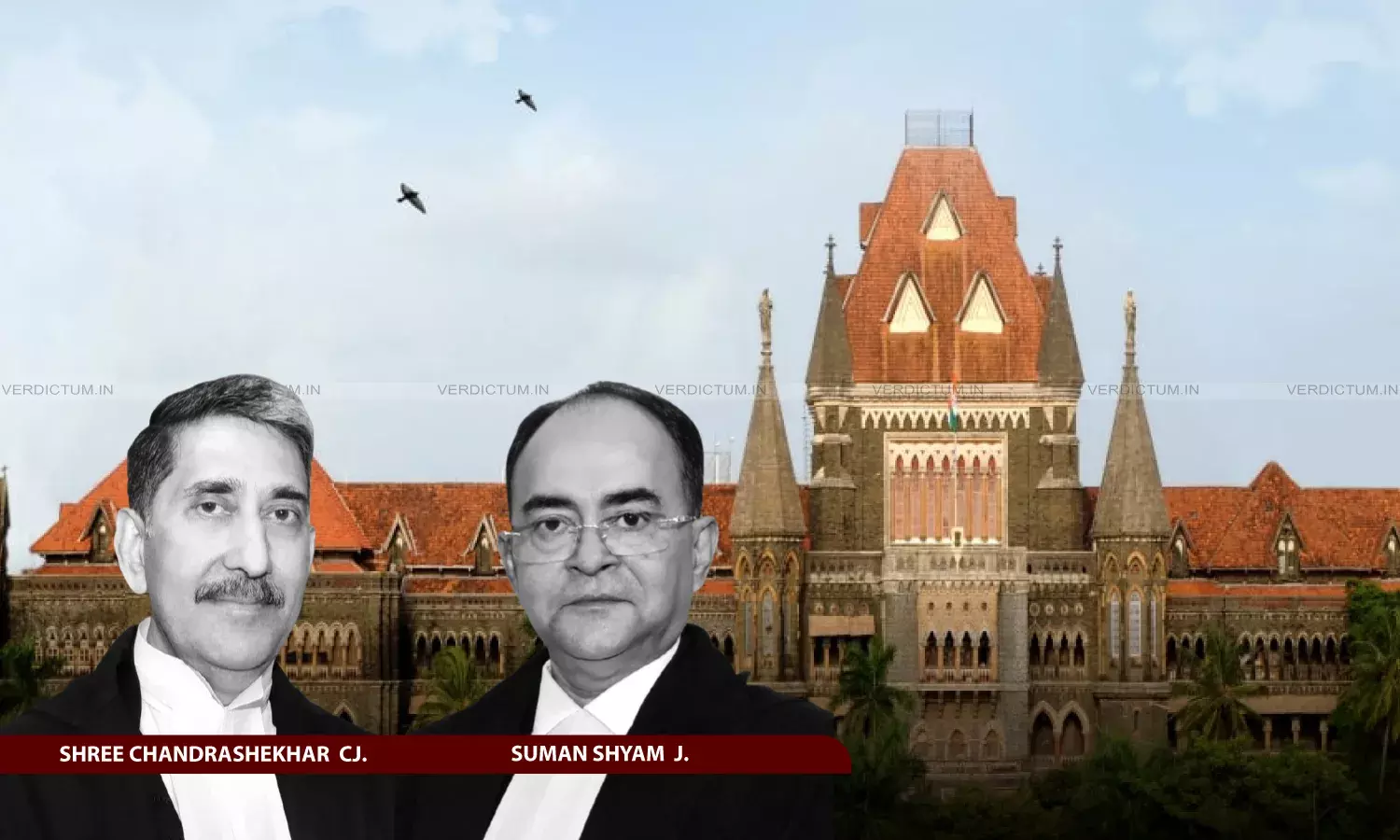
The Bombay High Court has quashed multiple FIRs registered against an Advocate, holding that allegations relating to professional misconduct by an advocate cannot be investigated by the police since such disciplinary jurisdiction exclusively vests with the Bar Council.
The Court was hearing a batch of writ petitions and a criminal application seeking quashing of FIRs registered at Thane Nagar Police Station and Colaba Police Station, alleging offences including criminal conspiracy, forgery, impersonation and intimidation against an advocate, police officers and several private individuals.
A Division Bench comprising Chief Justice Shree Chandrashekhar and Justice Suman Shyam observed: “The Bar Council of Maharashtra and Goa is the body empowered to initiate a disciplinary proceeding against the advocates who commit misconduct and are enrolled with it. The instances of misconduct projected by the second respondent cannot be looked into by the police in the course of the investigation.”
The Court further observed: “Any inquiry or investigation into the alleged misconduct ..shall impinge upon the powers of the Bar Council of Maharashtra and Goa. The investigation by the police into the alleged misconduct …is not permissible in law.”
Senior Advocates Rajiv Shakdher, Mihir Desai & Manoj Mohite appeared for the petitioners. Sudeep Pasbola, Senior Advocate and Special Public Prosecutor, appeared for the respondents.
Background
The complainant alleged that the Advocate represented himself as a Special Public Prosecutor in several criminal proceedings involving disputes between the complainant and certain businessmen and police officers. It was alleged that forged appointment letters had been used for such appearances and that multiple criminal proceedings had been initiated against the complainant as part of a larger conspiracy.
The complainant further alleged that false criminal cases had been registered to coerce him into making statements against senior police officials and political leaders. Allegations were also made regarding the manipulation of investigations and misuse of police machinery.
The accused persons approached the High Court contending that the FIRs were malicious, motivated by personal grudge and did not disclose the commission of any cognizable offence.
Court’s Observation
The High Court observed that the central allegation was that he had appeared in proceedings against the complainant as Special Public Prosecutor based on allegedly forged or non-existent appointment orders.
However, the Court noted that official communications, appointment letters, notifications and recommendations from senior police officers supporting his appointment had been placed on record. The Court observed that a mere communication from a Desk Officer stating that a copy of one appointment order was unavailable in departmental records could not outweigh multiple official documents affirming his appointment.
The Bench observed: “There is no reason to suspect the genuineness of the communications, orders and appointment letters. The appointment of Shekhar Jagtap as a Special Public Prosecutor was preceded by recommendations and communications from senior police officers.”
The Court further noted that the complainant appeared to harbour resentment because adverse judicial orders had been passed against him in proceedings where he had appeared as Special Public Prosecutor.
The Court invoked the presumption under Section 114 illustration (e) of the Indian Evidence Act, 1872, regarding regularity of official acts and referred to the maxim omnia praesumuntur rite esse acta.
The Bench observed that official orders and notifications, technically correct on their face, carry a presumption of validity unless disproved by cogent material.
The Court also held that the functioning and legal opinions of a Public Prosecutor cannot become the basis for a criminal investigation merely because one of the litigants is dissatisfied with judicial outcomes.
The Court also dealt with the limits of police powers in relation to disciplinary issues concerning advocates. The Court noted that the complainant had already approached the Bar Council of Maharashtra and Goa by filing a complaint alleging professional misconduct against the advocate, which was dismissed after a preliminary inquiry.
The Bench categorically held that disciplinary jurisdiction over advocates enrolled with the Bar Council lies exclusively with the Bar Council and not with the police.
The Court clarified that while the legality of the appointment of a Special Public Prosecutor may be examined by a constitutional court in writ jurisdiction, the same cannot become the subject matter of a criminal investigation initiated by a private complainant.
The High Court examined the long-standing disputes between the complainant and various accused persons and noted the existence of multiple criminal proceedings lodged by and against the parties over several years.
The Court observed that the allegations of conspiracy were unsupported by any cogent material and remained entirely speculative. Relying upon State v. Nalini (1999), the Court reiterated the principles governing criminal conspiracy and emphasised the need for cogent evidence establishing agreement between alleged conspirators.
The Court further noted that many of the incidents relied upon by the complainant had occurred nearly three years earlier, and there was no satisfactory explanation for the inordinate delay in lodging the FIRs.
The Bench observed: “The allegations in both the crimes registered vide CR Nos. 742 of 2024 and 46 of 2024 are outcome of a desperate and vengeful mind and the second respondent seeks a fishing inquiry into a matter which does not require any inquiry at all.”
Relying upon State of Haryana v. Bhajan Lal (1992), R.P. Kapur v. State of Punjab (1960) and Golconda Linga Swamy (2004), the Court reiterated that criminal proceedings may be quashed where continuation of the investigation would amount to abuse of the process of the court or where proceedings are manifestly attended with mala fides.
The Court observed that even assuming the allegations disclosed “some offence”, investigation could not be permitted to continue when the principal allegations themselves were legally non-maintainable and inherently malicious.
Conclusion
The Bombay High Court held that the FIRs registered against the petitioners were manifestly malicious, legally unsustainable and constituted an abuse of the process of law.
Accordingly, the Court allowed all the writ petitions and criminal applications and quashed all criminal proceedings arising out of the impugned FIRs.
Cause Title: Shekhar Kakasaheb Jagtap v. State of Maharashtra & Anr. and Connected Matters
Appearances
Petitioners: Senior Advocates Rajiv Shakdher, Mihir Desai, Manoj Mohite, with Other Advocates
Respondents: Sudeep Pasbola, Senior Advocate and Special Public Prosecutor with J. P. Yagnik, APP, Advocates Rizwan Merchant and Dilip H. Shukla