

Bombay High Court Issues Guidelines On Renewal & Re-Issue Of Passports Of Persons Facing Pending Criminal Proceedings
The Court held that the Passports Act framework does not require routine court permission for renewal, and procedural safeguards cannot restrict the right to travel under Article 21.
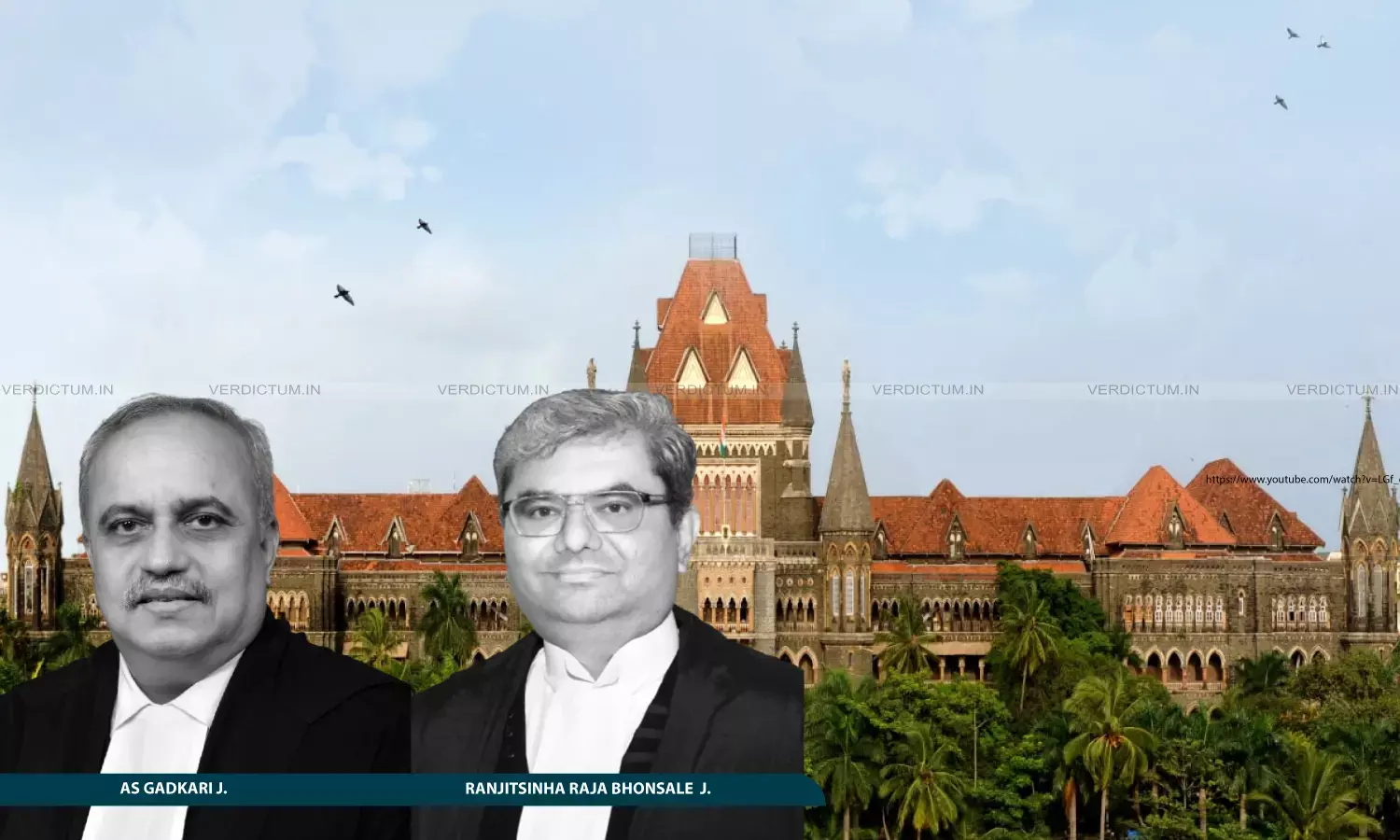
The Bombay High Court has issued a detailed set of guidelines governing renewal and re-issue of passports for citizens against whom criminal proceedings are pending, addressing recurring difficulties faced by applicants and inconsistencies in administrative practice.
The Court was hearing a batch of writ petitions seeking directions for renewal of passports where criminal cases were pending, including cases where even cognisance had not been taken, or summons had not been issued.
A Division Bench of Justice A.S. Gadkari and Justice Ranjitsinha Raja Bhonsale observed: “… in various matters, the citizens by way of an application, approach the concerned Court, in whose jurisdiction the criminal action/prosecution is initiated, to seek a NOC/permission to renew the passport. This is, irrespective of the fact whether cognisance is taken or not, the nature of offence alleged, the seriousness and gravity of the offence or the role/overt act assigned to the individual accused”.
The Bench further remarked: “… many a time the criminal proceedings are only filed, without notice or summons issued, … In some cases, even the cognisance of the criminal complaint/proceeding is not taken by the concerned criminal Court, still the applicants/accused are required to make an application for NOC/permission to the concerned Court”.
The Court referred to the constitutional framework governing the right to travel and personal liberty, relying upon the observations of the Supreme Court in Mahesh Kumar Agarwal v. Union of India (2025). The Court noted that “Liberty, in our constitutional scheme, is not a gift of the State but its first obligation. The freedom of a citizen to move, to travel, to pursue livelihood and opportunity, subject to law, is an essential part of the guarantee under Article 21 of the Constitution of India.”
It further recorded that any restriction imposed by the State must be “narrowly confined to what is necessary, proportionate to the object sought to be achieved, and clearly anchored in law,” thereby situating the issue of passport renewal within the broader constitutional protection of personal liberty.
The Court then adverted to the practical difficulties faced by applicants in cases where criminal proceedings are pending. It observed that “many a times the criminal proceedings are only filed, without notice or summons issued… still the applicants/accused are required to make the application for NOC/permission to the concerned Court,” despite the proceedings being at a preliminary stage.
The Court noted that such insistence results in “unnecessary delay and inconvenience to the concerned Applicant and consumes significant judicial time of the Court,” thereby highlighting the procedural inefficiencies that prompted the issuance of the present guidelines.
The Court also undertook an extensive examination of the Passports Act, 1967, including Sections 5, 6, 7, 10 and 22, and the Passport Rules, 1980. It noted that under Section 6(2)(f), refusal of a passport may arise where criminal proceedings are pending, but emphasised that the said provision stands diluted by notifications issued under Section 22, particularly the Notification dated 25 August 1993 and the Office Memorandum dated 10 October 2019.
The Court observed that the statutory framework balances the right to travel with regulatory safeguards, noting that “the grounds for refusal of a passport are restricted, keeping in mind that the right to travel is an essential and integral part of the right to life and personal liberty under Article 21.”
It also relied upon precedents such as Narendra K. Ambwani v. Union of India (2014) and Abbas Hatimbhai Kagalwala v. State of Maharashtra (2022) to hold that insistence on court permission in all cases is unwarranted. The Court noted that “procedural safeguards are converted into rigid barriers… temporary disabilities are allowed to harden into indefinite exclusions,” which disturbs the constitutional balance.
It further clarified that the role of the passport authority must be exercised within statutory limits and in accordance with notifications and rules, and that unnecessary insistence on NOC leads to delay and administrative inconsistency. The Court also observed that where courts issue directions permitting renewal, Rule 12 of the Passport Rules would apply, entitling applicants to passports for the prescribed duration unless specifically restricted.
Directions/Guidelines Issued
Having analysed the statutory framework, notifications, and judicial precedents, the Court issued the following guidelines:
(i) The passport should be issued and or renewed in accordance with Rule 12 of the Passport Rules 1980, unless otherwise directed by the Court by a reasoned order.
(ii) On the Applicant filing the required undertaking and Affidavit duly verified by the concerned criminal Court, the Passport Authority should not insist/raise objection for renewal of passport on the sole ground that the Order of the Court is not produced. One needs to keep in mind that the verified undertaking and Affidavit are issued under the supervision of the Court.
(iii) The application seeking NOC/permission for renewal of the passport/travel document be made to and issued by the concerned criminal Court. The said NOC/permission should state all the important and relevant details/information of the case/cases as available on the Court record, the status and stage of the trial, the total number of witnesses to be examined, the witnesses already examined, and the sections under which the criminal prosecution has been lodged and initiated.
(iv) The NOC/permission so issued should specifically state and attach the copies of all the relevant Orders passed by the concerned Court, before whom the criminal proceedings are pending, which impose conditions, and/or restrictions, if any. A statement made by the Applicant regarding compliance with the terms and conditions of the said order is to be cross-verified from the concerned department of the court and/or the Police Station. The NOC/permission shall be conditional upon the accused complying with the terms and conditions imposed by the concerned criminal Court.
(v) NOC/permission should state whether the accused is regularly attending or not the trial, if commenced, and the Court, as and when required and called upon by the Court.
(vi) The office of the Public Prosecutor of the concerned Court, through the Investigating Officer/concerned Police Station, shall confirm the antecedents of the accused and whether any fresh FIR/complaint has been filed or any criminal proceedings have been initiated. The information regarding FIRs is to be placed only for the purpose of information.
(vii) Cases involving serious and grievous offences, financial frauds, or offences against the State or the economy, or any other matter which, in the opinion of the court, is serious or there is a likelihood or possibility of impacting society at large, shall be placed before the concerned criminal Court, which shall consider the application for NOC/permission on its judicial side.
(viii) In case of a fresh passport application/applications made for the first time/new passport, the Passport Authority shall not insist on a NOC/permission from the Court and shall follow the procedure, process and scrutiny strictly as provided by the Passport Act.
(ix) In case where the applicant has a valid passport and visa therein, and the pages/leaflets of the passport have been exhausted due to usage, the Passport Authority shall issued/renew a passport in accordance with the Passport Act without insisting on a permission/NOC and shall be subject to the further orders of the concerned criminal Court.
Cause Title: Sagar Pradeep Oak v. State of Maharashtra & Ors. (Neutral Citation: 2026:BHC-AS:20892)
Appearances
Petitioners: Advocates Niranjan Mundargi, Keral Mehta, Tushar Ajinkya, Sahil Bijliwala, Bhavai Shah; Yugandhara Khanvilkar; Advocates Swapna Kode, Divya Kakkar
Respondents: Amit Palkar, APP; Ajay Patil, APP; Neha Patil, SPP; Advocate Manisha Jagtap
