

Filing Lawful Proceedings Without Intention To Instigate Cannot Constitute Abetment Of Suicide: Bombay High Court
The Court held that merely naming a person in a suicide note is insufficient without supporting circumstances showing that the person’s conduct would have driven an ordinary individual to commit suicide.
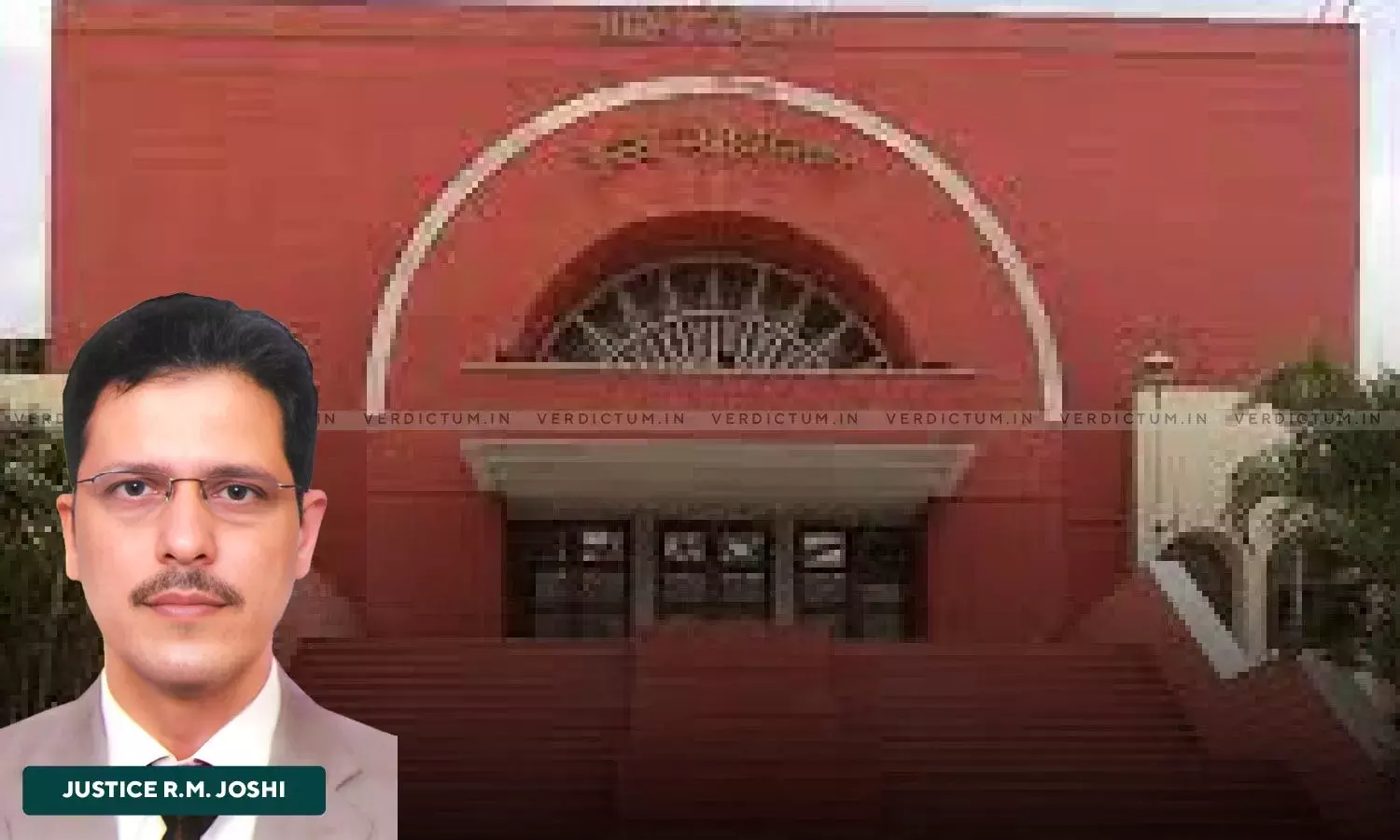
The Bombay High Court has held that initiating lawful complaints or proceedings against a person cannot constitute abetment of suicide unless the material shows malicious conduct and an intention to instigate or drive that person to end their life.
The Court consequently quashed proceedings under Section 306 read with Section 34 of the Indian Penal Code against a member of a district cooperative bank who was named in the suicide note of his political rival.
The Court was hearing a petition under Section 482 of the Code of Criminal Procedure, 1973, seeking the quashing of the First Information Report and consequent criminal proceedings for abetment of suicide.
A Bench of Justice R.M. Joshi observed: “In case the contention of learned Senior Counsel for informant is accepted that filing of number of proceedings as per law, would amount to abetment to suicide committed by person against whom such proceedings are initiated, would lead to a situation that any person who consistently is involved in the criminal activities or violation of the provisions of law either in individual capacity or in the capacity of post held by him, could never be prosecuted. There would be thus license to such person to commit illegality as the complainants would be held responsible in case he commits suicide in future. This may appear hypothetical situation but it is not wholly imaginary.”
The Bench further added: “Thus, on the basis of documents placed on record by prosecution itself it can be said that there is no evidence to show the knowledge of the deceased with regard to filing of complaint by Petitioner with police, muchless any complaint against him. Therefore, the act of filing of complaint by the Petitioner on fateful day can not be considered as an act of instigation to commit suicide. In any case, it was constitutional right of the Petitioner to report the incident happened with him to police. Since there is record to support occurrence of such incident, no malafides can be attributed in that regard against the Petitioner. Right to justice under Article 21 of the Constitution of India, is indefeasible right of a victim, i.e. Petitioner. Thus, his act to approach police station to record his complaint, by no stretch of imagination could be termed as offence by connecting the same with death of deceased.”
Advocate S.G. Ladda appeared for the petitioner; Additional Public Prosecutor S.B. Narwade appeared for the State; Senior Counsel R.S. Deshmukh appeared for the informant.
Background
The deceased, a former Member of Parliament and the then Chairman of a district cooperative bank, died by suicide after allegedly consuming poison. A handwritten note attributed his death to continuous mental harassment by the petitioner and a co-accused through proceedings allegedly instituted against him over approximately 20 years.
The petitioner and the deceased were political rivals. The petitioner was a member of the cooperative bank and had initiated proceedings under the Maharashtra Co-operative Societies Act concerning alleged non-compliance, irregularities and misappropriation connected with the bank’s affairs.
Following the suicide, the deceased’s son lodged a complaint. An FIR was registered against the petitioner and another person for abetment of suicide with common intention. A charge sheet was subsequently filed and the case was committed to the Sessions Court.
The petitioner contended that the proceedings instituted by him concerned acts performed by the deceased and others in their official capacities at the bank. He argued that no court or authority had found those proceedings malicious or an abuse of process.
The petitioner further contended that the complaint lodged by him on the day of the suicide concerned an incident involving him and did not initially name the deceased. According to him, there was no material showing that the deceased knew of the complaint before his death.
The State and the informant opposed the petition, contending that the repeated proceedings caused prolonged harassment and that the final police complaint acted as the immediate trigger. They also relied on the suicide note naming the petitioner.
The High Court clarified that it would not decide disputed questions such as the authenticity of the suicide note while exercising jurisdiction under Section 482 of the Code. It proceeded by accepting the charge-sheet material as presented.
Court’s Observations
The Court observed that Sections 306 and 107 of the Indian Penal Code require an act or omission accompanied by an intention to drive the deceased to commit suicide. The Bench added that the alleged act must involve instigation, conspiracy or intentional aid.
The Court stated: “Having regard to the nature of offence, what is relevant is what accused intends or seeks to achieve by his acts rather than what is perceived by the deceased. Unless there is material to indicate such intention on the part of accused, essential ingredients of Section 306 r/w Section 107 of Indian Penal Code would not get attracted.”
The Bench noted that the proceedings initiated by the petitioner principally concerned the administration of the cooperative bank and the acts of its office-bearers in their official capacities. The Court further observed that no judicial or administrative authority had previously described those proceedings as malicious or an abuse of process.
The Court observed that a member or other competent person was entitled to initiate proceedings where irregularities, misconduct or statutory violations were alleged. The Bench added that prosecuting a person merely for legitimately invoking legal remedies would impermissibly penalise the exercise of a legal right.
The Court held: “In considered view of this Court, it could not be done so except only in case of malicious or vexatious litigation in an appropriate case, wherein allegations regarding abetment may sustain. As discussed above there is absolutely no material on record to hold so in the instant case.”
The Bench noted that the petitioner and the deceased had previously been acquitted in counter-cases after receiving the benefit of doubt. The Court added that those decisions contained no finding that the petitioner’s complaint was mala fide, mischievous or intended to falsely implicate the deceased.
The Court further observed that although the police had filed a summary concerning the final complaint, the record supported the occurrence of the underlying incident. The Bench stated that the summary had been filed because the persons responsible could not be found, rather than because the reported incident was false.
The Court found that the earlier disputes and proceedings extended over approximately two decades and lacked temporal proximity to the suicide. The Bench held that they could not, by themselves, be treated as positive acts of incitement connected with the deceased’s decision.
The Court observed: “Here in this case, by no stretch of imagination it could be said that the earlier proceedings have any connection with the act of deceased to commit suicide.”
The Bench referred to Mohit Singhal v. State of Uttarakhand (2024), where the Supreme Court held that alleged acts lacking proximity to the suicide could not amount to instigation. The Court also referred to Amalendu Pal v. State of West Bengal (2010), which required proof of direct or indirect incitement and a positive act proximate to the suicide.
The Court added that despite the proceedings continuing for approximately 20 years, there was no material showing that the deceased had invoked the Maharashtra Vexatious Litigation (Prevention) Act, 1971 against the petitioner.
The Court examined the prosecution’s contention that the complaint lodged by the petitioner on the day of the suicide was the immediate trigger. The Bench noted that the initial complaint did not name the deceased and that his name appeared only when the FIR was registered after his death.
The Court stated: “However, there is absolutely no material on record to indicate that deceased had any knowledge with regard to any complaint being made against him before he committed suicide.”
The Bench therefore found no evidentiary connection between the petitioner approaching the police and the deceased’s decision to end his life. The Court added that the petitioner had a constitutional right under Article 21 to report an incident in which he claimed to be the victim.
The Court relied on Patel Joshnaben Pravinkumar Patel v. State of Gujarat (2026), where the Supreme Court held that lodging an FIR, even if false, does not by itself amount to instigating a person to commit suicide. The Bench added that a court must consider the surrounding circumstances instead of relying exclusively upon accusations in a suicide note.
The Court held: “Mere naming of Petitioner in suicide note without any supporting material would not be enough to accept his complicity in crime nor he could be made to undergo rigors of trial for that sole reason.”
The Bench further observed: “Therefore, factum of naming the Petitioner and putting blame on him in the suicide note is not enough to hold him liable for abetment to commit suicide unless there are surrounding facts supporting such blame so also the conduct of the accused is of the extent which would drive an ordinary person to commit suicide, which are absent here.”
The Court found that the petitioner’s conduct appeared bona fide and directed towards protecting his rights and the interests of the cooperative bank. The Bench added that the record disclosed no positive act intended to cause the deceased to end his life and therefore did not establish the necessary mens rea.
Conclusion
The Court held that no offence of abetment of suicide was made out against the petitioner because the record did not establish an intention to drive the deceased to commit suicide or conduct capable of producing that result.
The High Court allowed the petition and quashed the FIR and consequent criminal proceedings for the offence under Section 306 read with Section 34 of the Indian Penal Code insofar as they concerned the petitioner.
Cause Title: Sadashiv Ambadasrao Gayake v. State of Maharashtra & Another
Appearances
Petitioner: Advocate S.G. Ladda
Respondents: Additional Public Prosecutor S.B. Narwade; Senior Counsel R.S. Deshmukh, with Advocates Meenal Deshmukh and R.R. Jaiswal, instructed by Advocate V.A. Chavan
