Administration Of Tramadol Raises Serious Doubt About Dying Declaration: Bombay High Court Acquits Man Accused Of Wife's Murder
The Court held that the administration of painkillers and sedatives, including Tramadol, to a woman who had suffered 96% burn injuries created serious doubt regarding the voluntariness and reliability of her dying declarations.
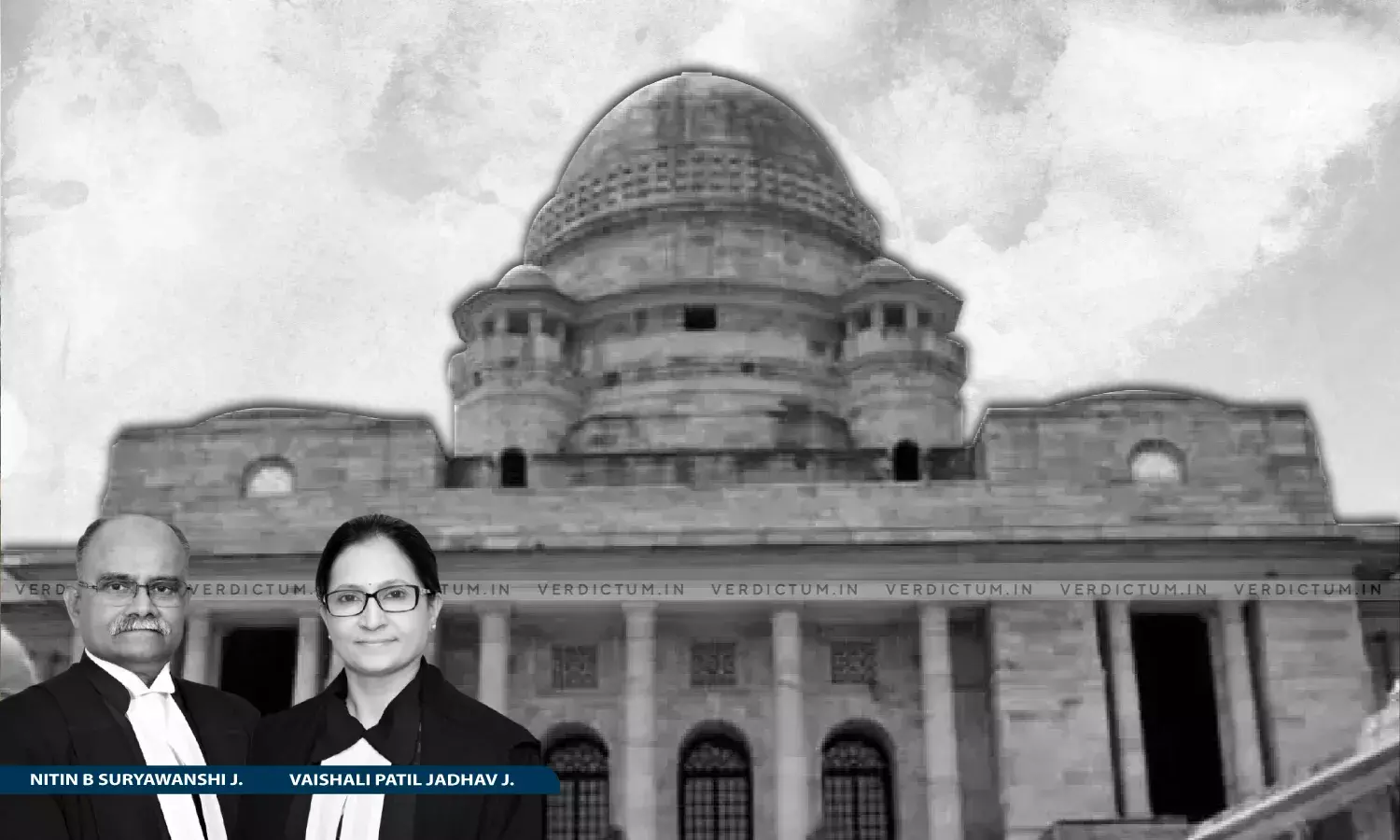
The Bombay High Court acquitted a man convicted for allegedly setting his wife ablaze, holding that the dying declarations forming the sole basis of conviction were rendered doubtful in view of the deceased’s medical condition, extensive burn injuries, and administration of medicines, including Tramadol and Cefsula.
The Court observed that the deceased had sustained 96% burns, was in poor general condition, and witnesses had consistently stated that she was groaning, whining and unable to move properly at the relevant time.
A Division Bench of Justice Nitin B. Suryawanshi and Justice Vaishali Patil-Jadhav observed: “Further, Cefsula 1.5 gm and Tramadol, which are sedatives and painkillers, were administered to the patient. These drugs are bound to affect the mental condition of the deceased. This also raises serious doubt about the voluntariness and reliability of both dying declarations.”
The Bench further observed: “In such a state, the lengthy dying declaration is highly improbable, when all the witnesses deposed that the patient was groaning and whining and her movement was blanching, which means that her condition was serious and she was in pain.”
Advocate U.B. Bilolikar appeared for the appellant. APP M.K. Goyanka appeared for the State.
Background
According to the prosecution, the deceased sustained burn injuries at her matrimonial home after the appellant allegedly poured kerosene on her and set her on fire following a domestic dispute. She later succumbed to the injuries during treatment.
The prosecution's case primarily relied upon two dying declarations allegedly recorded by a Naib Tahsildar and a Police Head Constable at the hospital. Based on those statements, the Sessions Court convicted the appellant under Section 302 IPC.
Before the High Court, the appellant argued that the dying declarations were inconsistent, procedurally defective and medically unreliable. It was contended that the deceased had suffered 96% burns, was under the influence of medicines and painkillers, and was not in a fit mental condition to make reliable statements.
Court’s Observation
The High Court examined the principles governing the evidentiary value of dying declarations and referred to Paniben v. State of Gujarat (1992), Uttam v. State of Maharashtra (2022), Sampat Babso Kale v. State of Maharashtra (2019), Ratan v. State of Maharashtra (2024) and other precedents.
The Court found several infirmities in the prosecution's case and noted material inconsistencies between the two dying declarations. In one statement, the incident was allegedly linked to a conversation involving the deceased’s sister-in-law, whereas in the second statement, the alleged quarrel related to household work and waking up late.
The Bench also noted procedural irregularities in recording the declarations. One of the recording officers admitted that the dying declaration was not in his handwriting, and the person who had actually written it was never examined before the Court.
The Court then closely examined the medical evidence and observed that the deceased had sustained 96% burn injuries and her “general condition was poor.”
The Bench noted that the Medical Officer admitted during cross-examination that the deceased had been administered Cefsula 1.5 gm and Tramadol. The Court observed that these medicines were painkillers and sedatives capable of affecting the mental condition of the patient.
The Court further noted that the deceased was described by witnesses as groaning and whining in pain, while one witness stated that her “movement was blink”, indicating a severely deteriorated condition.
The Bench also found contradictions regarding the presence of the doctor during the recording of the dying declarations. While the doctor initially claimed to have remained present throughout, cross-examination revealed that he had remained standing outside while the statements were recorded.
The Court observed: “These admissions by the Medical Officer, coupled with the fact that he was standing outside and he has not made an endorsement about the patient, about her fit mental condition to give a statement, create further doubt about the dying declarations.”
The High Court also noted that the mother of the deceased did not support the prosecution's case and stated that she had been informed that the deceased accidentally caught fire while cooking.
The Bench further observed that medical records relating to the deceased’s initial admission at the first hospital were not produced, and neighbours who allegedly shifted her to the hospital were also not examined.
Referring to Section 114(g) of the Evidence Act, the Court held that an adverse inference was liable to be drawn against the prosecution for withholding crucial medical evidence and failing to examine material witnesses.
The Court ultimately held that both dying declarations suffered from serious infirmities and could not form the sole basis of conviction in the absence of reliable corroboration.
Conclusion
The Bombay High Court held that the prosecution failed to establish the appellant’s guilt beyond a reasonable doubt as the dying declarations were unreliable and suffered from material inconsistencies, procedural irregularities and doubts regarding the deceased’s mental fitness.
The Court further held that the administration of Tramadol and other medicines, coupled with the deceased’s medical condition and absence of corroborative evidence, made it unsafe to sustain the conviction solely based on the dying declarations.
Accordingly, the Court allowed the appeal, quashed the conviction under Section 302 IPC and directed the release of the appellant.
Cause Title: Piraji Madhav Kumbhargave v. State of Maharashtra (Neutral Citation: 2026:BHC-AUG:20714-DB)