Court Must Expedite Trial Instead Of Granting Bail In UAPA Cases: Bombay High Court Sets Aside Sachin Waze's Bail In Antilia Bomb Scare Case
The Court found prima facie material connecting Waze to the alleged offences and held that prolonged incarceration could not, in the facts of the case, be the sole consideration for bail.
The Bombay High Court has held that once the statutory embargo under Section 43D(5) of the Unlawful Activities (Prevention) Act, 1967, applies because there are reasonable grounds to believe that the accusations are prima facie true, the judicial response should be to prioritise and expedite the trial rather than grant bail contrary to the statutory mandate.
Applying the principle, the Court allowed the National Investigation Agency's appeal and quashed the Special Court's order granting bail to former police officer Sachin Waze in the Antilia bomb-scare case.
The Court was hearing an appeal under Section 21 of the National Investigation Agency Act, 2008, against the Special Court's order granting bail. Waze is facing charges under Sections 16, 18 and 20 of the UAPA, along with offences under the Indian Penal Code, 1860, and the Arms Act, 1959.
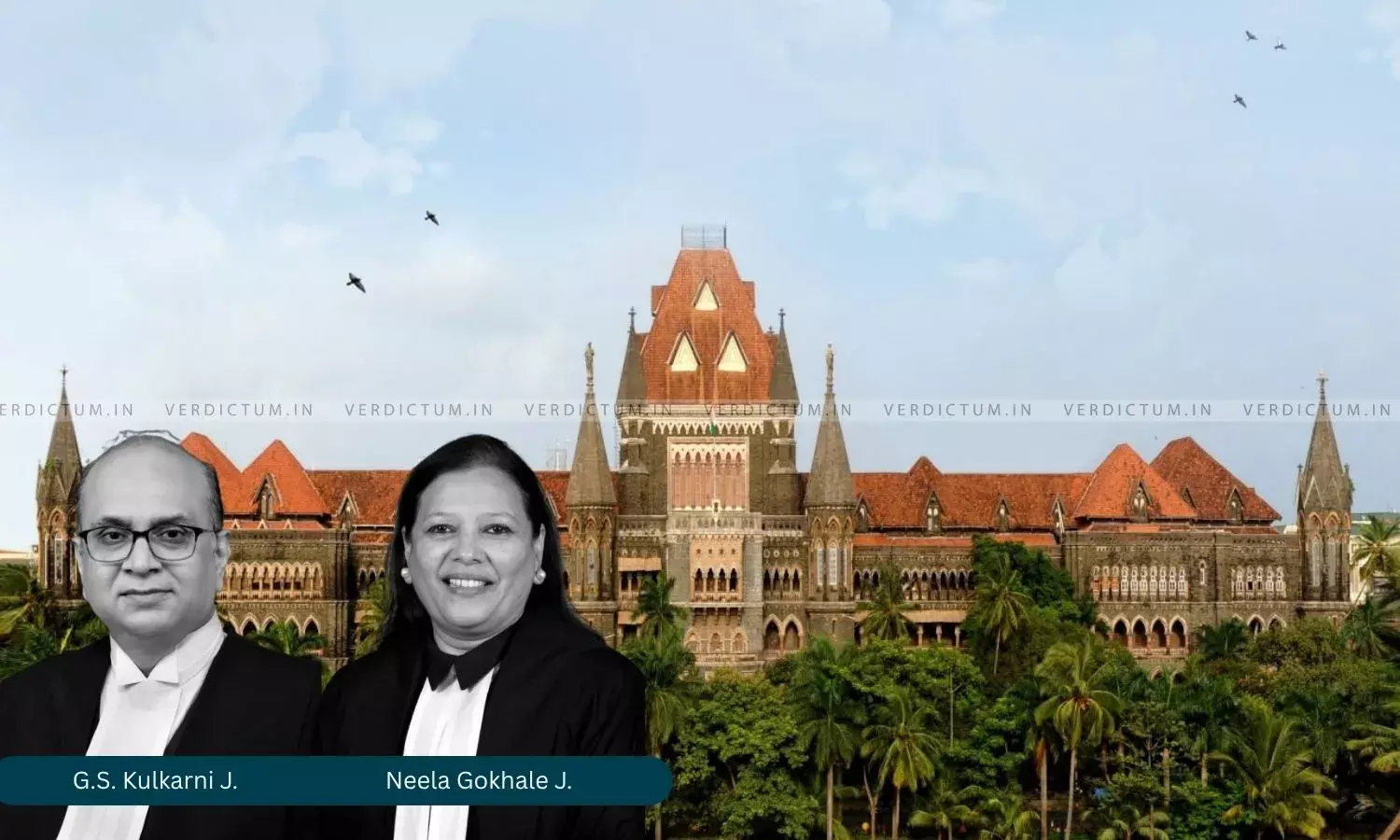
A Bench of Justice G.S. Kulkarni and Justice Dr Neela Gokhale observed: “As per the legal principles in relation to bail in offences under the UAPA as discussed hereinabove, the statutory mandate requires the Court to refuse bail in the face of existence of reasonable grounds to believe that the accusation is prima facie true. Once this threshold is crossed, the appropriate judicial response is to ensure prioritization and expedition of the case, not to grant bail in disregard of the statutory mandate. The offence carries a sentence of life imprisonment, and incarceration of 5 years cannot be said to be long incarceration in the facts of the present case.”
Additional Solicitor General Anil C. Singh appeared for the NIA. Advocate V.M. Thorat represented Waze.
Background
The prosecution alleged that Waze was involved in placing a vehicle containing gelatin sticks and a threat note near the Ambani family's residence. It also alleged a staged vehicle theft, pressure on its owner to accept responsibility, his subsequent murder and destruction of evidence.
An earlier bail application had been rejected. After the investigation and framing of charges, the High Court permitted a fresh application to be decided on its merits and in accordance with law. The Special Court subsequently granted bail.
The NIA argued that the Special Court ignored the embargo under Section 43D(5) of the UAPA, the alleged conspiracy and the material attributing a central role to Waze. It also cited risks to witnesses and evidence.
Waze relied on prolonged incarceration and likely trial delay. He disputed the ingredients of a terrorist act, noting that the gelatin sticks lacked a detonator or fuse, and sought parity with co-accused granted bail.
Court's Observations
Section 43D(5) Required A Limited Prima Facie Inquiry
Relying on National Investigation Agency v. Zahoor Ahmad Shah Watali (2019), Vernon v. State of Maharashtra (2023) and Gurwinder Singh v. State of Punjab (2024), the Court held that the prosecution material must be assessed as a whole without conducting a mini-trial.
Referring to the statutory restriction, the Court noted the following formulation from Gurwinder Singh: “It lays down that if the Court, ‘on perusal of the case diary or the report made under Section 173 of the Code of Criminal Procedure’, is of the opinion that there are reasonable grounds for believing that the accusation, against such person, as regards commission of offence or offences under Chapter IV and/or Chapter VI of the UAP Act is prima facie true, such Accused person shall not be released on bail or on his own bond. It is interesting to note that there is no analogous provision traceable in any other statute to the one found in Section 43-D(5) of the UAP Act. In that sense, the language of bail limitation adopted therein remains unique to the UAP Act.”
The Court found that the Special Judge had neither applied the settled criteria nor considered why the earlier bail request was rejected, as required by Prasad Shrikant Purohit v. State of Maharashtra (2018). It also rejected the conclusions that the High Court's permission to file afresh indicated merit in the request and that framing charges required a lesser degree of satisfaction than deciding the bail application.
Prosecution Material Crossed The Statutory Threshold
The Court found prima facie material concerning the alleged substitution of number plates, placement of the vehicle near Antilia, the threat note, pressure placed on the vehicle's owner and destruction of electronic material.
It held: “Against the backdrop of the relevant material pointing to the prima facie involvement of Accused No. 1 in the offences as charged, Mr Thorat has addressed at length a plea of delay in commencement of the trial and of prolonged incarceration. On these submissions, we do not agree with Mr Thorat. The material taken cumulatively reflects a clear role attributed to Accused No. 1, in his actions having a direct nexus to the unlawful activities attracting the said provisions under the UAPA. We are of the considered view that the prosecution material as it stands crosses the threshold and the statutory embargo prescribed under Section 43D(5) operates with full force.”
It also found a reasonable apprehension that his release could affect witnesses and trial integrity.
Prolonged Incarceration Was Not A Singular Consideration
Referring to Union of India v. K.A. Najeeb (2021) and Syed Iftikhar Andrabi v. National Investigation Agency (2026), the Court recognised the constitutional power to grant bail where prolonged incarceration and delay violate Article 21. However, time does not mechanically entitle an accused to bail.
In the present case, the Court observed: “Before parting, we may observe that the argument of prolonged pre-trial incarceration cannot be a singular factor or a sole consideration for bail in the facts of the present case. This, more particularly, in the context of several other considerations as discussed by us, which in our opinion, are germane in considering whether accused No.1 could at all sustain his plea for bail. Liberty as enshrined under Article 21 thus in the facts of the case, would be required to be viewed in a wider perspective in the context of the serious accusations involving offences under the UAPA and the manner in which the provisions of law would mandate such consideration. Further, as urged on behalf of the NIA, the trial is also set to commence.”
Conclusion
The High Court allowed the NIA's appeal and quashed and set aside the order granting bail. It held that the material crossed the prima facie threshold under Section 43D(5) of the UAPA and that the embargo operated with full force.
The Court also disposed of the NIA's interim application as not pressed.
Cause Title: National Investigation Agency v. State of Maharashtra and Another (Cause Title: 2026:BHC-AS:45322-DB)
Appearances
NIA: Anil C. Singh, Additional Solicitor General, assisted by Chintan Shah and Amogh Singh, Special Public Prosecutors, and others
Respondent: Advocate V.M. Thorat, assisted by Advocate Sajal Yadav and others