

Compensatory Afforestation Is Not Mere Numerical Replacement Of Trees: Bombay High Court While Permitting Mangrove Felling For Bullet Train Project
The Court permitted MSETCL to fell mangroves for bullet train sub-station as "exceptional measure", flags state's "continuing default" in complying with year-old monitoring directions.

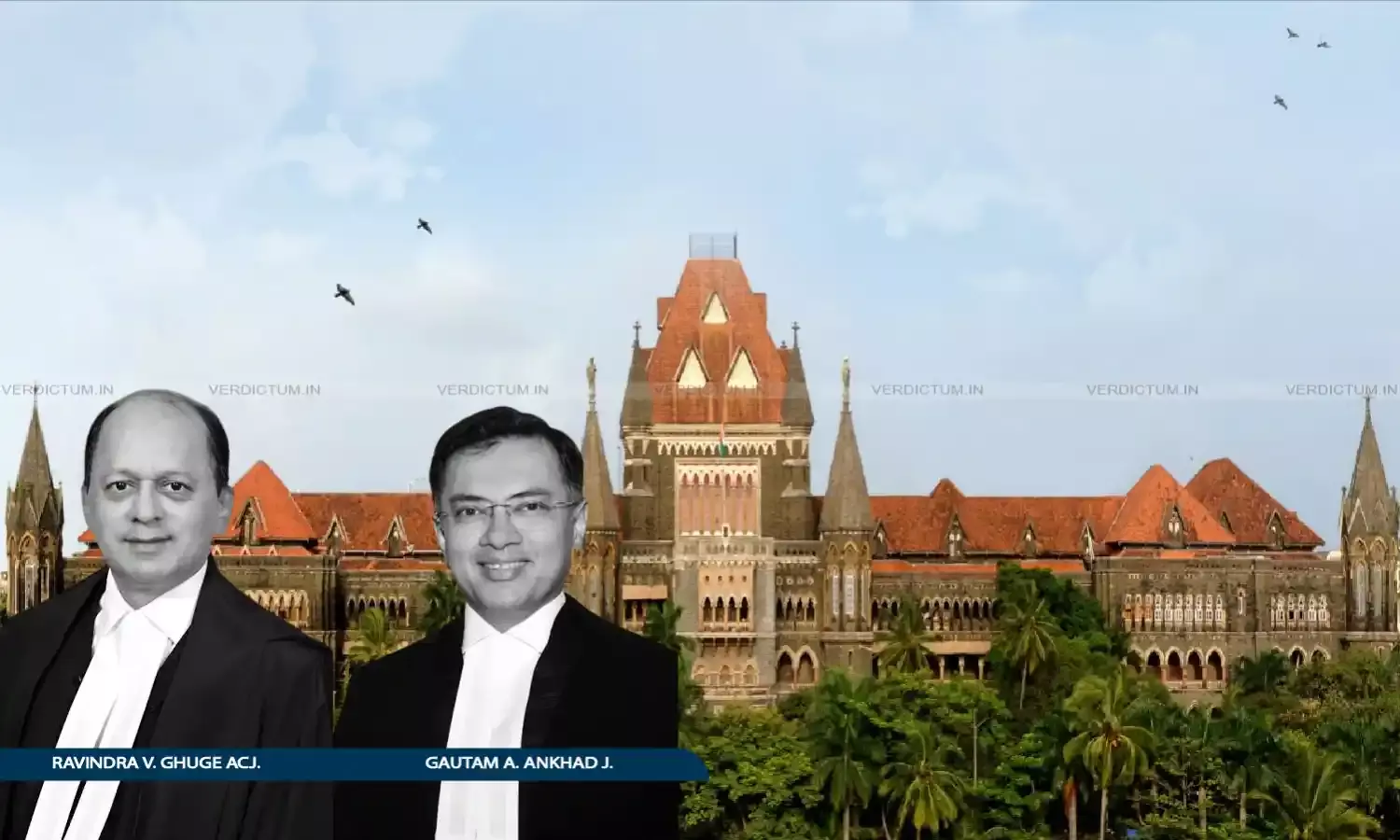
The Bombay High Court has held that compensatory afforestation cannot be treated as a mere numerical substitution of trees felled for a project, and that its true purpose is to achieve ecological restoration of the affected locality, while permitting the felling of mangroves for a transmission line linked to the Mumbai-Ahmedabad Bullet Train corridor.
The Bench also recorded that the State Government had failed, even after almost a year, to comply with its earlier directions on creation of land banks, publication of afforestation data on a public portal, and establishment of a transparent monitoring mechanism, terming this "continuing default and administrative apathy" as unacceptable.
A Division Bench comprising Acting Chief Justice Ravindra V. Ghuge, and Justice Gautam A. Ankhad observed, “…Compensatory afforestation is not intended to be a mere numerical replacement of trees felled for a project. Its purpose is ecological restoration. The same can be meaningful only if restoration is attempted in the same ecological region or, where that is demonstrably impossible, in the nearest adjoining area. Plantation undertaken hundreds of kilometres away may satisfy a statistical requirement, but fails to restore the environmental benefits of the affected locality…”.
“We make it clear that the present permission, insofar as it permits compensatory afforestation for non-mangrove trees at a distant location, is granted as an exceptional case and having regard to the national importance of the project. In future, this Court shall not grant permissions where compensatory afforestation is proposed at locations far remote from the area affected until Respondent No.1 complies with the directions issued by the Court issued almost a year ago”, the Bench further observed.
Dr. Milind Sathe, Advocate General appeared for the petitioner and Neha S. Bhide, Government Pleader appeared for the respondent.
Maharashtra State Electricity Transmission Company Limited (MSETCL) sought the Court's permission to construct a 13.06-km, 132 KV transmission line from Dahanu Sub-Station to the proposed Ambeserai Traction Sub-Station in Palghar district, intended to power the Ambeserai sub-station forming part of the Mumbai-Ahmedabad High Speed Rail Corridor. The project required diversion of 3.3561 hectares of forest land, including 1.9656 hectares of mangrove forest involving felling of 847 mangroves and 196 non-mangrove trees.
MSETCL had obtained Stage-I and Stage-II forest clearances and CRZ clearance, and proposed compensatory mangrove plantation near the project site alongside compensatory afforestation of non-mangrove trees at Solapur, roughly 500 km away. Respondent No. 3, Bombay Environmental Action Group, did not oppose the project but objected to the distant location chosen for non-mangrove compensatory afforestation, relying on the Supreme Court's order in M.C. Mehta v. Union of India and a Nagpur Bench ruling questioning such distant plantations.
The petition was filed seeking leave under the Court's 2018 judgment in Bombay Environmental Action Group v. State of Maharashtra, which governs permissions for mangrove diversion in the State. The matter was heard on July 22, 2026, with the Advocate General appearing for MSETCL, and counsel representing the State, Union of India, the objecting NGO, and the Mangrove Cell.
The Bench accepted that the project was of national importance and declined to interfere with the expert bodies' assessment underlying the statutory clearances already granted. However, it found merit in the NGO's objection regarding the Solapur plantation site, holding that restoration is meaningful only when undertaken in the same ecological region or, where demonstrably impossible, in the nearest adjoining area, and that plantation hundreds of kilometres away may satisfy a statistical requirement without restoring environmental benefits to the affected locality. The Court permitted the Solapur plantation only as an exceptional measure given the project's national significance, clarifying it would not be treated as precedent.
Separately, the Bench expressed "far greater concern" that the State had not implemented the comprehensive monitoring directions issued in its September 9, 2025 order in the MMRDA matter, including creation of land banks and a public compliance portal, and warned that future permissions for distant compensatory afforestation would not be granted until compliance was demonstrated.
“We find that even after almost a year, Respondent No.1 has not complied with the directions relating to creation of land banks, publication of the requisite information on the public portal and establishment of a transparent mechanism for monitoring compensatory afforestation of non-mangrove trees. This continuing default and administrative apathy displayed by the concerned authorities cannot be accepted. Unless effective monitoring mechanisms, transparent disclosure and properly identified land banks are put in place, compensatory afforestation would remain a theoretical exercise rather than an ecological restoration. Such a situation cannot be permitted to continue…”, the Bench said.
The Court allowed the petition, granting MSETCL permission to divert 3.3561 hectares of forest land and fell 847 mangrove and 196 non-mangrove trees, subject to conditions including simultaneous or prior completion of compensatory mangrove plantation by November 2026, ten-year maintenance and protection at the Petitioner's cost, and public disclosure of plantation data.
It directed the Chief Secretary, Principal Secretary (Forests), and Principal Chief Conservator of Forests to ensure compliance with the September 9, 2025 directions within four weeks and file project-specific compliance affidavits. The Petitioner was directed to file bi-annual status/audit reports on January 12 and July 12 every year for the next ten years, failing which proceedings would be treated as contempt of court.
Cause Title: Maharashtra State Electricity Transmission Company Limited v. The State of Maharashtra & Ors., Writ Petition No. 11256 of 2025
Appearances:
Petitioner: Dr. Milind Sathe, Advocate General, Amogh Singh, S.D. Shetty, Rakesh L. Singh, Aditya Mhase, Rasika Satone, Ashutosh Mishra, instructed by M.V. Kini & Co., Advocates.
Respondent: Neha S. Bhide, Government Pleader, O.A. Chandurkar, Additional Government Pleader, and G.R. Raghuwanshi, Assistant Government Pleader, Leena Patil, Aditya N. Mehta, instructed by Dipali Bagla, Jaya Bagwe with Srushti Parab, Advocates.
Click here to read/download the Judgment