

Can Delay In Landlord’s Revision Under Maharashtra Rent Control Act Can Be Condoned? Bombay High Court Refers Matter To Larger Bench
The Court observed that Chapter VIII of the Maharashtra Rent Control Act was enacted to confer special benefits upon categories of landlords, such as members of the Armed Forces, and that a harmonious interpretation of the statutory scheme may require recognition of the revisional authority’s power to condone delay in revisions filed by landlords.
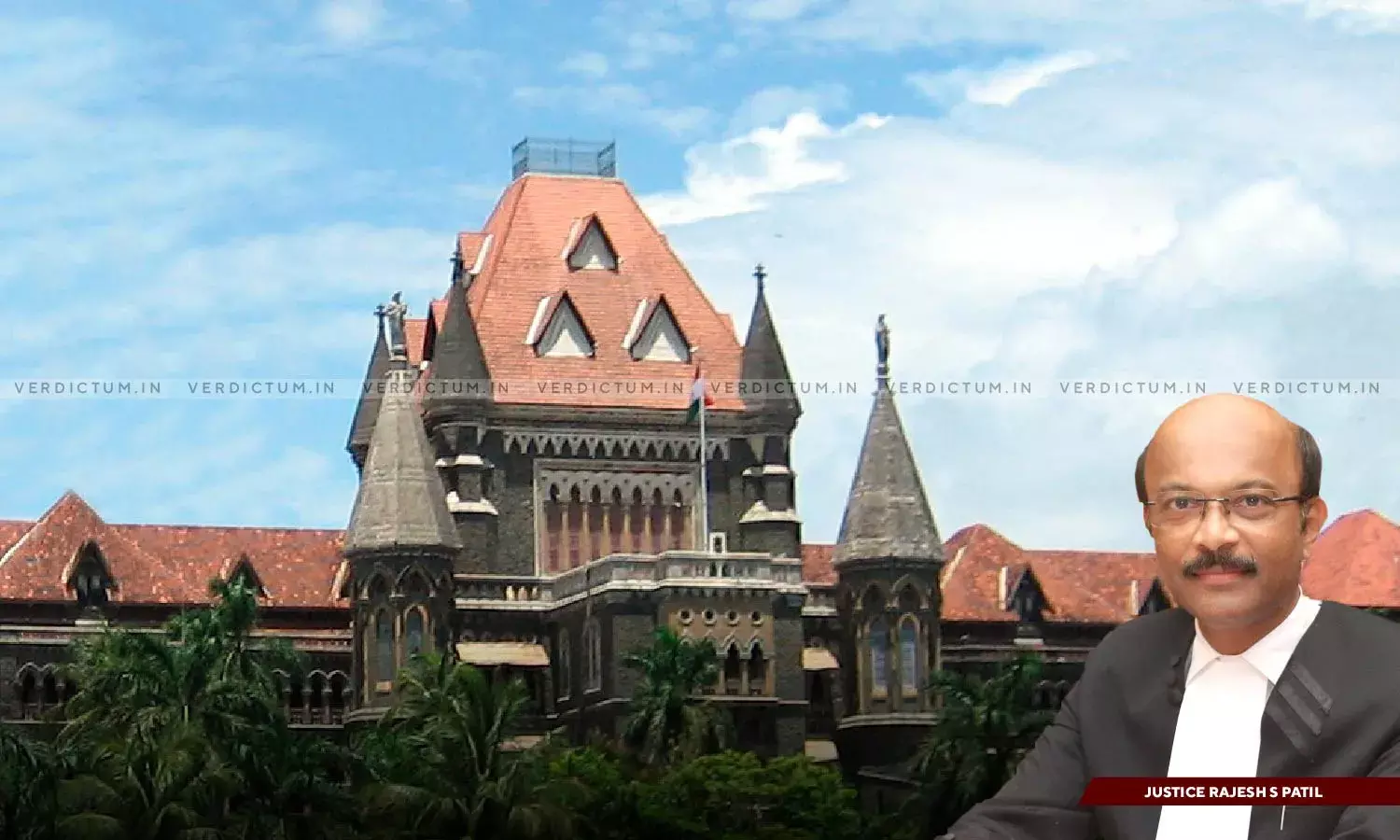
The Bombay High Court has referred to a Larger Bench the question whether the revisional authority under Section 44 of the Maharashtra Rent Control Act, 1999 possesses the power to condone delay where a revision filed by a landlord is instituted beyond the prescribed period of ninety days.
The Court observed that although existing precedents hold that the revisional authority under Chapter VIII of the Maharashtra Rent Control Act cannot invoke Section 5 of the Limitation Act, those judgments principally concerned revisions or proceedings instituted by tenants and did not specifically consider the position of special category landlords such as members of the Armed Forces.
The Court was hearing a writ petition filed by a retired Lieutenant Colonel challenging the rejection of his delay condonation application by the Additional Commissioner in proceedings arising out of an eviction application instituted under Section 23 of the Maharashtra Rent Control Act before the Competent Authority.
A Bench of Justice Rajesh S. Patil observed, “In view of the importance of the question involved, I am formulating a question for determination by an appropriate Bench of this Court.”
The Court formulated the following question for consideration by a Larger Bench: “Whether the revisional authority under Section 44 of the Maharashtra Rent Control Act, 1999 has power to condone a delay if the revision is filed by a landlord beyond a period of 90 days?”
Advocate J.S. Sarkhot appeared for the petitioner. Advocate V.B. Tapkir appeared for the respondents. Senior Advocate Girish Godbole appeared as Amicus Curiae.
Background
The petitioner, a retired Army officer, had instituted eviction proceedings under Section 23(A) of the Maharashtra Rent Control Act before the Competent Authority seeking eviction and possession of residential premises from the respondent tenant.
The Competent Authority dismissed the eviction proceedings while holding that the petitioner had failed to obtain the certificate contemplated under Section 23(A)(a) and had not established maintainability of the proceedings, although the issue of bona fide requirement was answered in favour of the petitioner.
Aggrieved thereby, the petitioner filed a revision under Section 44 of the Maharashtra Rent Control Act before the Additional Commissioner. Since the revision was delayed by twelve days, a delay condonation application accompanied the revision petition.
The Additional Commissioner rejected the delay condonation application, holding that Section 44 did not confer power upon the revisional authority to condone delay. The petitioner thereafter approached the High Court under Article 227 of the Constitution.
Court’s Observation
The High Court undertook an extensive examination of the legislative history of the Bombay Rent Act and the Maharashtra Rent Control Act.
The Court observed that special provisions relating to Armed Forces personnel were introduced to address the unique difficulties faced by defence personnel who often leave their premises during service postings and later struggle to recover possession upon retirement or transfer.
The Bench reproduced the Objects and Reasons underlying the amendment introducing special protections for defence personnel and observed that the legislative intent behind Section 23 was to create an additional beneficial forum for specified categories of landlords.
The Court observed: “The case of Defence Services Personnel due to their special obligations and disabilities do need different treatment from that accorded to other landlords.”
The Court further held that Section 23 was enacted to relax the rigours ordinarily faced by landlords under rent control legislation and provide a special summary remedy in favour of members of the Armed Forces and similarly situated categories.
The High Court undertook a detailed examination of Section 44 of the Maharashtra Rent Control Act and noted the distinction between sub-sections (1) and (2) thereof.
The Court observed that while Section 44(1) bars appeals against orders of the Competent Authority, Section 44(2) confers revisional powers upon the State Government or authorised officers.
The Bench further noted that the second proviso to Section 44(2), which prescribes a limitation period of ninety days, appeared principally directed toward revisions instituted by tenants against eviction orders.
The Court observed: “Therefore, when an aggrieved party is a tenant, he can’t file an appeal. He can file Revision but Section 44 has put, a limitation to it by saying that the revision can be filed within 90 days.”
The Court also noted that if a landlord’s eviction application under Section 23 is dismissed and the revisional authority lacks power to condone delay, the landlord may effectively be rendered remediless.
The Court considered the judgments in Prakash Jain v. Marie Fernandes and Naranji Bhimji Family Trust v. Additional Commissioner, which held that authorities under Chapter VIII are not courts and therefore cannot invoke Section 5 of the Limitation Act.
However, the Court observed that those decisions arose in proceedings involving tenants and did not comprehensively examine the broader statutory scheme relating to special category landlords under Chapter VIII.
The Bench observed: “There is also one difference between the Bombay Rent Act and the Maharashtra Rent Control Act as far as revisional authority is concerned. Under the Bombay Rent Act, the revisional authority was the High Court and under the Maharashtra Rent Control Act, that power of revision is now given to an authority, which is the Additional Commissioner, who in real sense, can’t be called as a Court. Therefore, something which is available to a special category of landlord being into Armed Forces under the Bombay Rent Act, where this Court is to hear the Revisions. By the introduction of the Maharashtra Rent Control Act, that power can’t be taken away from that particular category of landlord of seeking an application to condone delay”.
The Court distinguished the position prevailing under the earlier Bombay Rent Act, under which the revisional authority was the High Court itself, whereas under the Maharashtra Rent Control Act, revisional jurisdiction is exercised by an Additional Commissioner.
The Court further noted that in the present case, the delay involved was only twelve days and concluded: “… the revisional authority considering the judgment of Naranji Trust of Nagpur and the judgment of the Supreme Court in Prakash Jain declined to condone the delay, … in my view, it can't be held that a revision filed by a landlord, the provisions of the Limitation Act can't be applied. In the judgment of Naranji Trust (supra) all the concerned provisions of the Maharashtra Rent Act are not considered. The judgments discussed by me in earlier paragraphs are not considered in the said judgment. Hence, it will be advantageous if the issue is heard by a Larger Bench”.
Conclusion
The Bombay High Court held that an important question of law arose regarding the power of the revisional authority under Section 44 of the Maharashtra Rent Control Act to condone delay in revisions instituted by landlords.
The Court accordingly directed the Registry to place the papers before the Chief Justice for the constitution of an appropriate Larger Bench to decide the formulated question of law.
Cause Title: Lt. Col. (Retd.) Jaigopal Nagarajan v. Mrs Vasudeva Mariwala & Ors. (Neutral Citation: 2026:BHC-AS:22809)
Appearances
Petitioner: Advocate J.S. Sarkhot & Megha Kulkarni
Respondents: Advocate V.B. Tapkir for the Respondents; Senior Advocate Girish Godbole (Amicus Curiae), Advocate Kaustubh Thipsay.
