

A Very Small Window Is Open: Bombay High Court Explains Scope Of Anticipatory Bail In Sexual Offences Against Minors
Ther Bench noted that the bar operates only if ingredients of Section 65 or 70(2) BNS are prima facie made out; rejected two accused’s pleas, says only “very small window” is open.

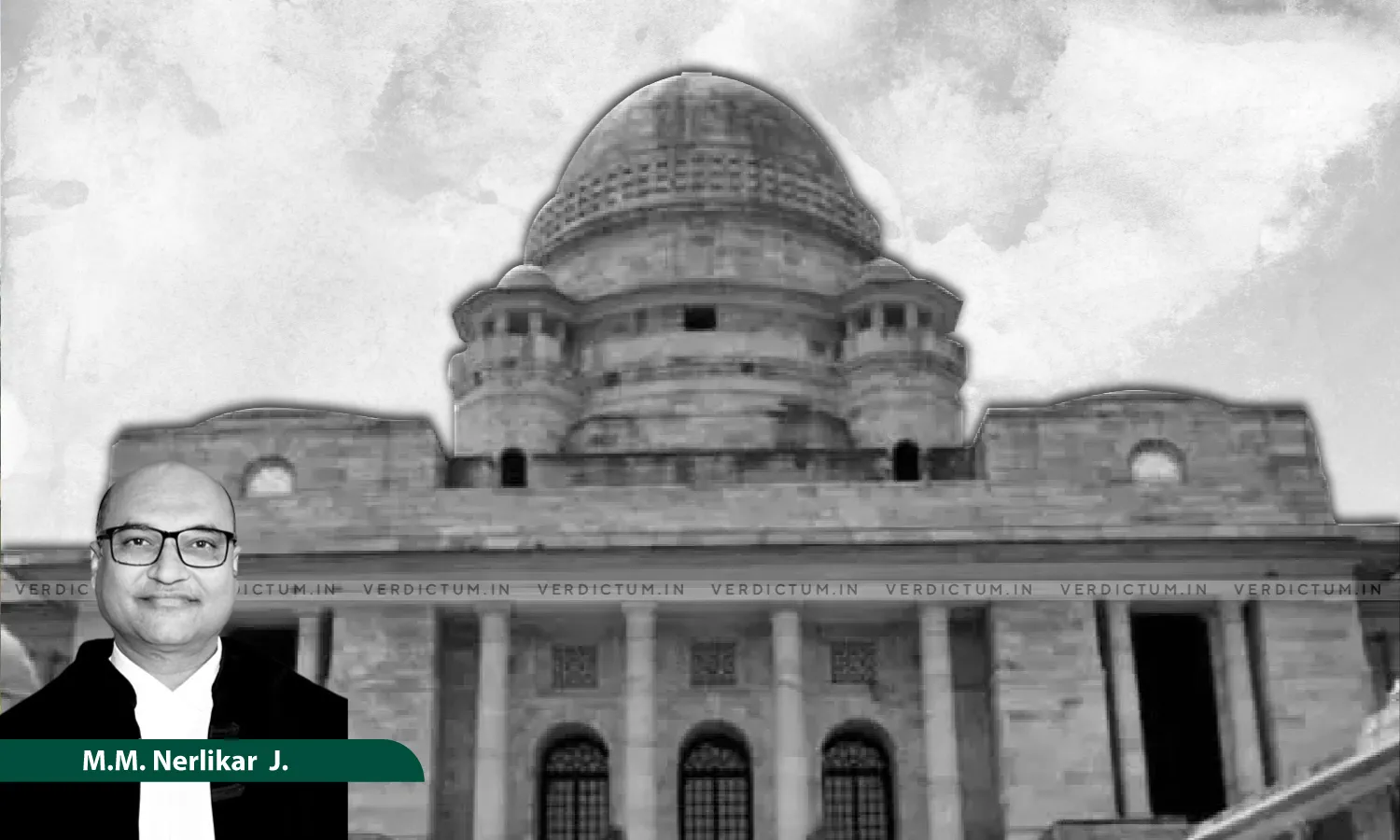
Justice M.M. Nerlikar, Bombay High Court, Nagpur Bench
The Bombay High Court, Nagpur Bench, explaining the scope of the statutory bar under Section 482(4) of the Bharatiya Nagarik Suraksha Sanhita, 2023 (BNSS), has held that the restriction on anticipatory bail in sexual offences against minors is not absolute. The Bench clarified that pre-arrest bail applications remain maintainable to the limited extent of testing whether a prima facie case under Section 65 or Section 70(2) of the Bharatiya Nyaya Sanhita, 2023 (BNS) is disclosed, adding that courts cannot examine the broader merits or claims of false implication once these core statutory ingredients are met.
The Court held that an anticipatory bail application in such cases can be entertained only to test maintainability, by checking whether the ingredients of those provisions are prima facie made out. Defences such as false implication or inconsistent statements cannot be examined at this stage. It found the ingredients of Section 65(1) satisfied in both matters and rejected the applications as not maintainable.
A Bench of Justice M.M. Nerlikar observed, “…it is clear that the legislature carved out special categories requiring stronger safeguards. Therefore, when considering anticipatory bail under Section 482, the Court must first examine whether the ingredients of Sections 65 or 70(2) are made out. If they are satisfied, the application for anticipatory bail is barred and cannot be entertained. If they are not satisfied, the application remains maintainable, and bail may be granted. Thus, Section482(4) does not impose an absolute bar. It only applies when prima facie allegations under Section 65 or Section 70(2) exist. Whether such allegations are made out depends on the facts of each case, and the Court must scrutinize the prima facie case before deciding. The Court is not expected to indulge in critical analysis of material on record. Therefore, a very small window is open for the accused persons to claim anticipatory bail under Section 482 of BNSS…”.
“…If the Courts starts enlarging the scope by entertaining the applications on merits by examining all the grounds available in ordinary anticipatory bail applications, then the very purpose of introduction of said provision would be frustrated and it would destroy the intent of the Legislature. The words “accusation of having committed” appearing in Section 482[4] of BNSS has significance to mean that if the victim claims that someone is guilty of doing something wrong, her claim will have to be accepted as prima facie satisfaction of facts. Therefore, this Court holds that the application for anticipatory bail can be entertained only to the extent to see its maintainability based on prima facie case to the extent of satisfaction of ingredients of Section 65 or Section 70[2] of the BNS.
Advocate V.N. Morande appeared for the applicant and Senior Advocate D.V. Chauhan appeared for the respondent.
In the matter, the accused was booked under Sections 4 and 6 of the POCSO Act and Sections 64(2)(i), 64(2)(m) and 65(1) of the BNS.
The victim, aged 15 years and 5 months, alleged repeated rape that resulted in pregnancy, thereafter the matter was registered under Section 137(2) of the BNS on a missing report. The victim, aged 14 years and 4 months, first said no assault had occurred but later alleged rape under threat of circulating obscene photographs and videos.
Both accused sought anticipatory bail, and the Court heard the applications together, taking up maintainability first. The applicants relied on Prathvi Raj Chauhan, Sahajan Sakeria and a Kerala High Court ruling on the identical Section 438(4) of the CrPC. The State and the victim’s counsel relied on Sushila Aggarwal and urged strict interpretation.
The Court first held that Section 482(4) is unambiguous. It then reasoned, drawing on the Supreme Court’s treatment of similar bars under the Atrocities Act, that the bar applies only when the ingredients are prima facie met. The words “accusation of having committed” mean the victim’s claim must be accepted as prima facie satisfaction, so the window for the accused is “very small”. In both matters the ingredients of rape and age under 16 were prima facie made out. In the first case, the earlier false naming of another person was attributed to the accused’s threats.
The Court rejected both applications and directed that the fees of the appointed counsel for the victim be paid as per the Rules.
Cause Title: Kasif Sahabuddin Khan v. State of Maharashtra & Ors. (Neutral Citation: 2026:BHC-NAG:13292)
Appearances:
Applicant: V.N. Morande, Advocate.
Respondent: D.V. Chauhan, Senior Advocate and PP, S.N. Thakur, APP, S.V. Bhandwalkar, Advocate.