

Merely Because State Has Power Over Liquor Business Does Not Make Every Demand Legal: Bombay High Court Sets Aside Excess Fee Demand
The Bench noted that the power to recover fees comes from the statute and therefore that power is also controlled by the statute.

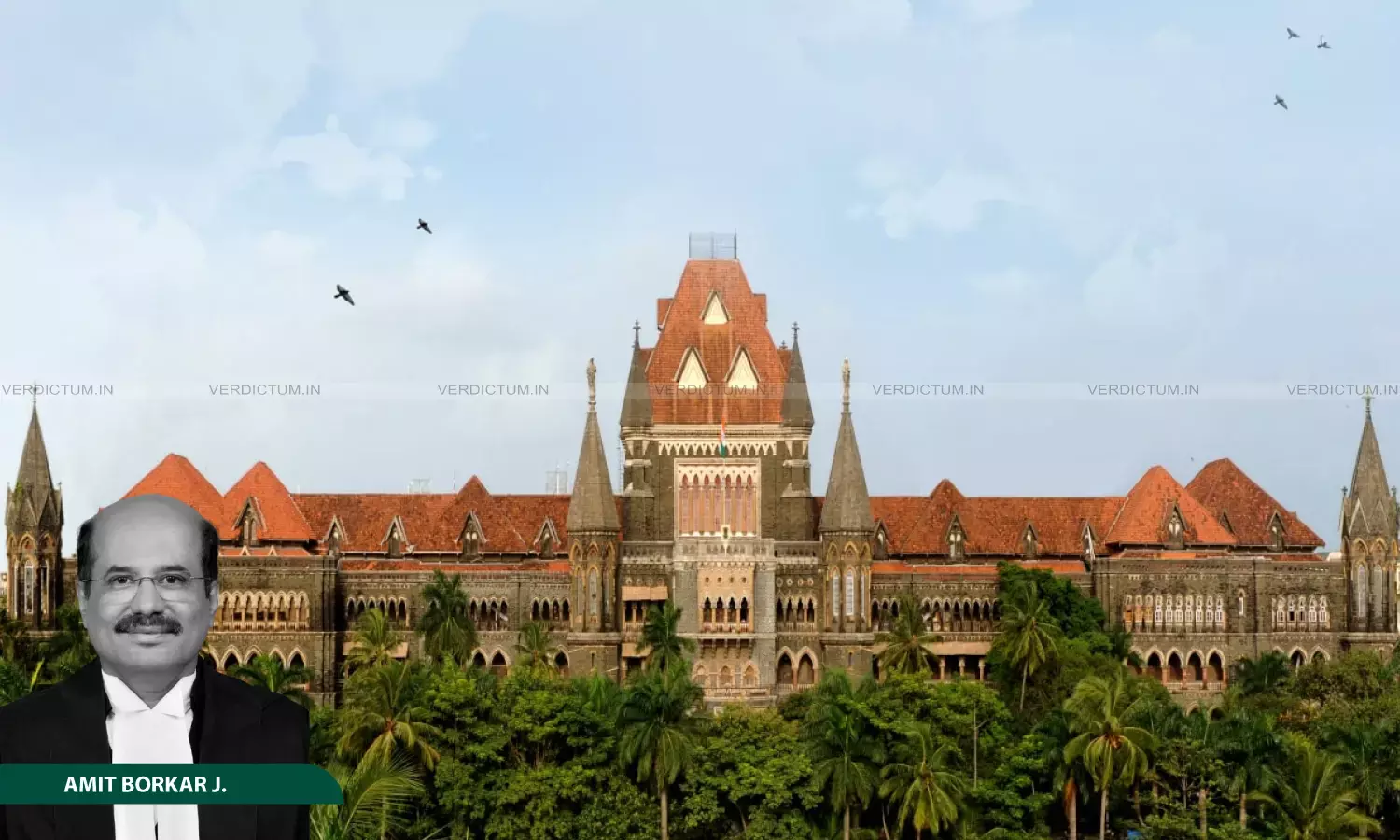
The Bombay High Court has held that merely because the State possesses regulatory power over the liquor business, it does not mean that every amount demanded by the authorities becomes legally recoverable. The Court said that the State’s power to regulate liquor trade must be exercised strictly within the limits prescribed by the statute and rules. It further noted that while privilege fees may be recoverable under the applicable rules, such recovery must satisfy the statutory conditions.
The Court partly allowed a writ petition filed by John Distilleries Private Limited, challenging a privilege fee demand raised by the State Excise authorities in connection with transfer of liquor licences from M/s Chitali Distillery Ltd. to the petitioner company. The Court upheld the levy of privilege fees for transfer of PLL and Form-I licences but set aside the demand of ₹10,000 towards transfer of the DS-I licence, holding that the recovery was not supported by the applicable statutory provision.
Justice Amit Borkar observed, “…Merely because the State has power over liquor business, it does not follow that amount demanded by the authority becomes legal. Even while exercising such power, the authority has to act within the limits of the statute. It cannot go beyond the Rule or recover an amount which the Rule does not permit. The power to recover fees comes from the statute and therefore that power is also controlled by the statute...”.
“…It is well settled that where the statute prescribes a fee, the authority cannot recover any amount beyond what is authorised by that statute. The authority to levy fees has to be found in the statutory provision. Therefore, unless the Rule permits recovery of a higher amount, such demand cannot be sustained merely because the authority considers recovery to be proper. No provision has been shown before this Court authorising recovery of Rs.10,000/- for transfer of the DS-I licence. Therefore, this part of the demand cannot be sustained. If the applicable Rule prescribed transfer fee of Rs.2,000/-, then the respondents were required to restrict their recovery to that amount”, it noted further.
Advocate Suraj Kaushik appeared for the petitioner and A.I. Patel, Additional G.P. appeared for the respondent.
For the facts, the dispute arose when John Distilleries acquired the shareholding of Chitali Distillery Ltd., which held licences for manufacture of potable liquor and distillation of spirit. Pursuant to a sanctioned Scheme of Arrangement, the petitioner sought change of name in the existing licences.
The State authorities permitted the change but demanded privilege fees, including a demand of ₹1,21,78,500 for one licence and ₹29,28,000 for another under Rule 5 of the Bombay Prohibition (Privileges Fees) Rules, 1954.
The Court said that the State was correct in contending that privilege fees could be recovered under the Rules; however, such recovery must strictly satisfy statutory requirements.
“…If the Rule prescribes a particular fee, then that fee can be recovered. If the Rule requires fulfilment of conditions, those conditions have to be complied with…Therefore, though the State has authority to regulate liquor business, such authority cannot be exercised independent of the provisions. Thus, the respondents are right in contending that privilege fees are recoverable under the Rules. At the same time, the petitioners are also justified in contending that such recovery must satisfy the provisions of the Rule”, it noted further.
The Court clarified that the respondents were justified in contending that privilege fees were recoverable under the Rules; however, the petitioners were equally justified in asserting that such recovery must conform to the statutory provisions.
“…Therefore, while the Scheme supports the petitioners on the question of vesting of licences, it does not decide the issue regarding liability to pay privilege fees under Rule 5. That issue is still required to be examined by considering the provisions of the Maharashtra Prohibition Act and the Rules framed”, it said.
Accordingly, the authorities were therefore directed to recover only the fee legally payable under the applicable Rules and refund any excess amount already collected.
Cause Title: John Distilleries Private Lilmited v. The State of Maharashtra & Ors. Writ Petition No.2391 Of 2019
Appearances:
Petitioner: Suraj Kaushik, Megha Jani, Vinayak Salokhe, Advocates.
Respondent: A.I. Patel, Additional G.P., S.S. Jadhav, AGP.
Click here to read/download the Judgment