

Issuance Of Notice U/S 21 Arbitration Act Necessary To Mark Commencement Of Fresh Arbitration & Compute Limitation After Award Is Set Aside: Bombay High Court
The Bench noted that a referral court is not a "monotonous automation" to blindly send non-signatories to arbitral tribunal where separate orbits exist.

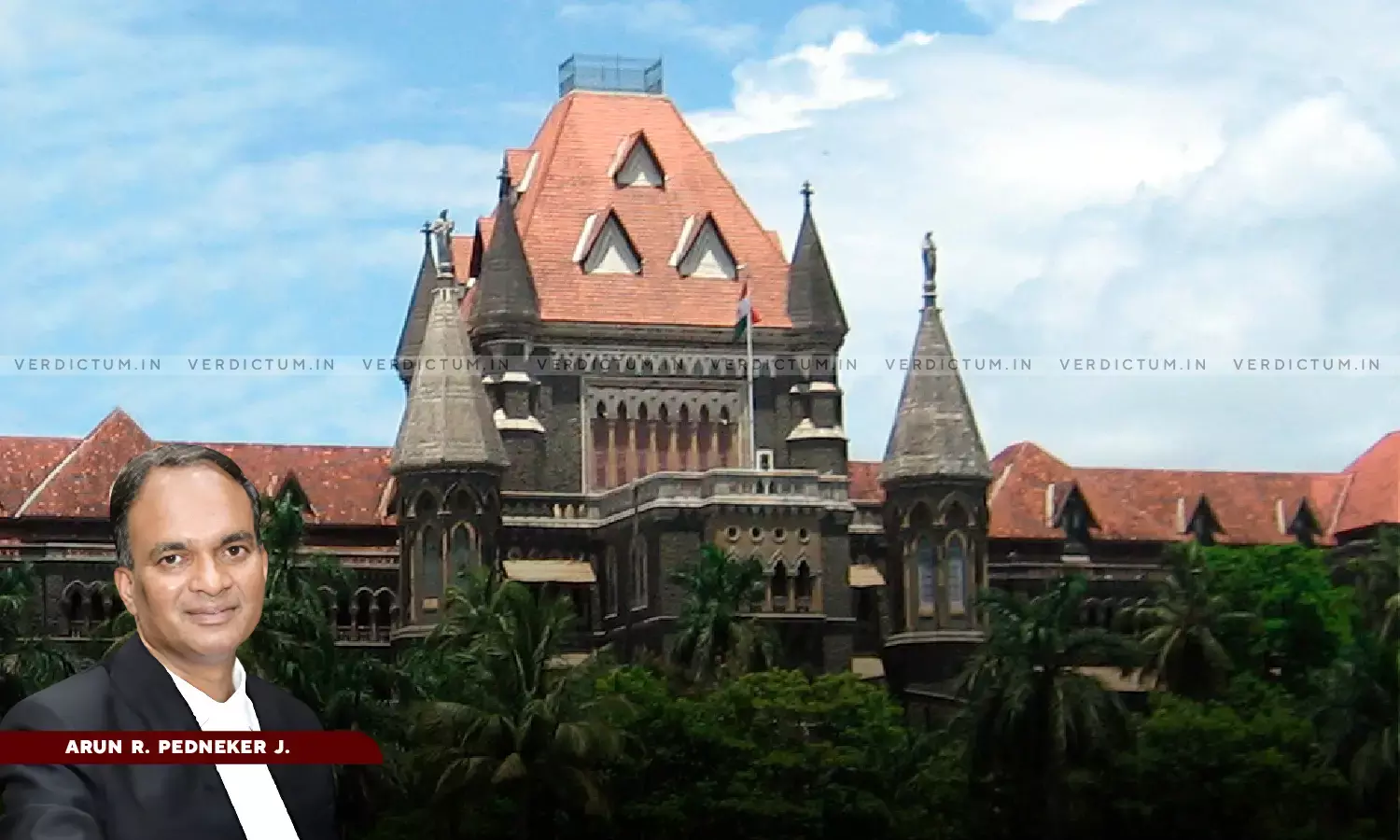
The Bombay High Court has held that following the setting aside of an arbitral award under Section 34 of the Arbitration and Conciliation Act, 1996, the issuance of a fresh notice invoking arbitration under Section 21 of the Act is a mandatory prerequisite to commence fresh arbitral proceedings and effectively stop the running of the limitation period.
The Court clarified that the benefit of exclusion of time under Section 43(4) of the Act is contingent upon the fresh invocation of arbitration via a Section 21 notice, rejecting the contention that a party must directly approach the High Court under Section 11 within three years of the setting aside of the earlier award without such invocation.
In a dual-issue adjudication, the Court further established that a referral court exercising jurisdiction under Section 11 cannot be relegated to the status of a monotonous automation by referring absolute strangers or non-signatories to an arbitral tribunal when they operate in completely separate orbits from the original agreement. The Court said that while the determination of whether a non-signatory is a veritable party can often be left to the tribunal, the referral court must be prima facie satisfied of the existence of an intent to effect a legal relationship, noting that considerations of equity, convenience, or the interests of justice cannot compel a party to arbitrate in the absence of its explicit or implied consent.
A Single-Judge Bench of Justice Arun R. Pedneker while adjudicating the commercial arbitration application, reiterating Harkisandas Tulshidas Pabari and Anr. v. Rajendra Anandrao Acharya & Ors (2025) 2 High Court Cases (Bom) 1, noted, “Section 21 provides that unless otherwise agreed by the parties, arbitral proceedings in respect of a particular dispute commence on the date on which the request for that dispute to be referred to arbitration is received by the respondent. In the instant case, it is not disputed that the notice received under Section 21 for the commencement of fresh arbitral proceedings is within the period of three years. The contention raised is that the application under Section 11 has to be filed within three years from the date of the earlier award being set aside cannot be accepted, as the fresh arbitral proceedings commence on the notice under Section 21…”.
“In the instant case, notice under Section 21 is issued within three years of the Arbitral Award being set aside. So also, the application under Section 11 of the Act is within 3 years of notice under Section 21 as such his application under Section 11 is within limitation”, the Bench noted.
Senior Advocate Nikhil Sakhardande appeared for the applicant and Senior Advocate Sharan Jagatiani appeared for the respondent.
The dispute arose out of a Deed of Partnership dated December 9, 1985, executed between the Applicants and Respondent Nos. 1 and 2. While the core partnership dispute led to an initial arbitral award dated April 15, 2016, that award was subsequently set aside by the Bombay High Court under Section 34 of the Act on October 15, 2019.
In the interim, Respondent Nos. 3 and 4 were inducted into a subsequent partnership under separate deeds executed in 2009, which utilized the same firm name and assets. The Applicants sought to initiate a second round of arbitration, issuing a fresh Section 21 notice on March 8, 2024, and subsequently filing the present Section 11 application on October 15, 2026, impleading the later-inducted partners as derivative parties.
In the matter, the primary respondents resisted the application on the ground of limitation, asserting that the cause of action accrued on the date the award was set aside and expired after three years, rendering the Section 11 application time-barred. Concurrently, Respondent Nos. 3 and 4 contested their joinder, highlighting that they were non-signatories to the 1985 deed, were expressly treated as third parties in the first round of proceedings, and that the applicants had previously undertaken that the initial award would not bind them.
Computing the period after deducting the Supreme Court's COVID-19 exclusion timeline, the Court found the Section 21 notice was served within 915 days of reckonable limitation, making the application timely. On the issue of non-signatories, the Court applied the principles of Cox and Kings and Hindustan Petroleum Corporation Limited, concluding that Respondent Nos. 3 and 4 did not participate in the 1985 partnership orbit, nor did they claim "through or under" the original partners in a derivative capacity that would saddle them with consensual liability.
The Court allowed the application against Respondent Nos. 1 and 2, referring the applicants and the original partners to arbitration, while dismissing the application against Respondent Nos. 3 and 4. Justice Sadhana Jadhav, Retired Judge of the Bombay High Court, was appointed as the sole Arbitrator to adjudicate the disputes, with the seat governed by the underlying agreement, and all contentions were expressly left open for the tribunal.
Cause Title: Hemant D. Shah HUF & Anr. v. Chittaranjan D. Shah HUF & Ors. Commercial Arbitration Application No. 184 of 2026
Appearances:
Applicants: Nikhil Sakhardande, Senior Advocate, Amrut Joshi, Ashish Venugopal, Saurish Shetye, Ajay Panicker, and Dhairya Sampat, Advocates.
Respondents: Rohan Savan, Aman Saraf, Counsels, Gobinda C. Mohanty, Sharan Jagatiani, Senior Counsel, Shanay Shah, Tushar Gujjar, Hamza Lakhani, and Gobinda C. Mohanty, Advocates.
Click here to read/download the Judgment