

Bombay High Court: Denial Of Police Clearance For Public Employment Due To Criminal Antecedents A Reasonable Restriction On Right To Livelihood
The Court held that denial of police clearance on account of serious criminal antecedents constitutes a reasonable restriction, balancing the right to livelihood with public safety and national security.
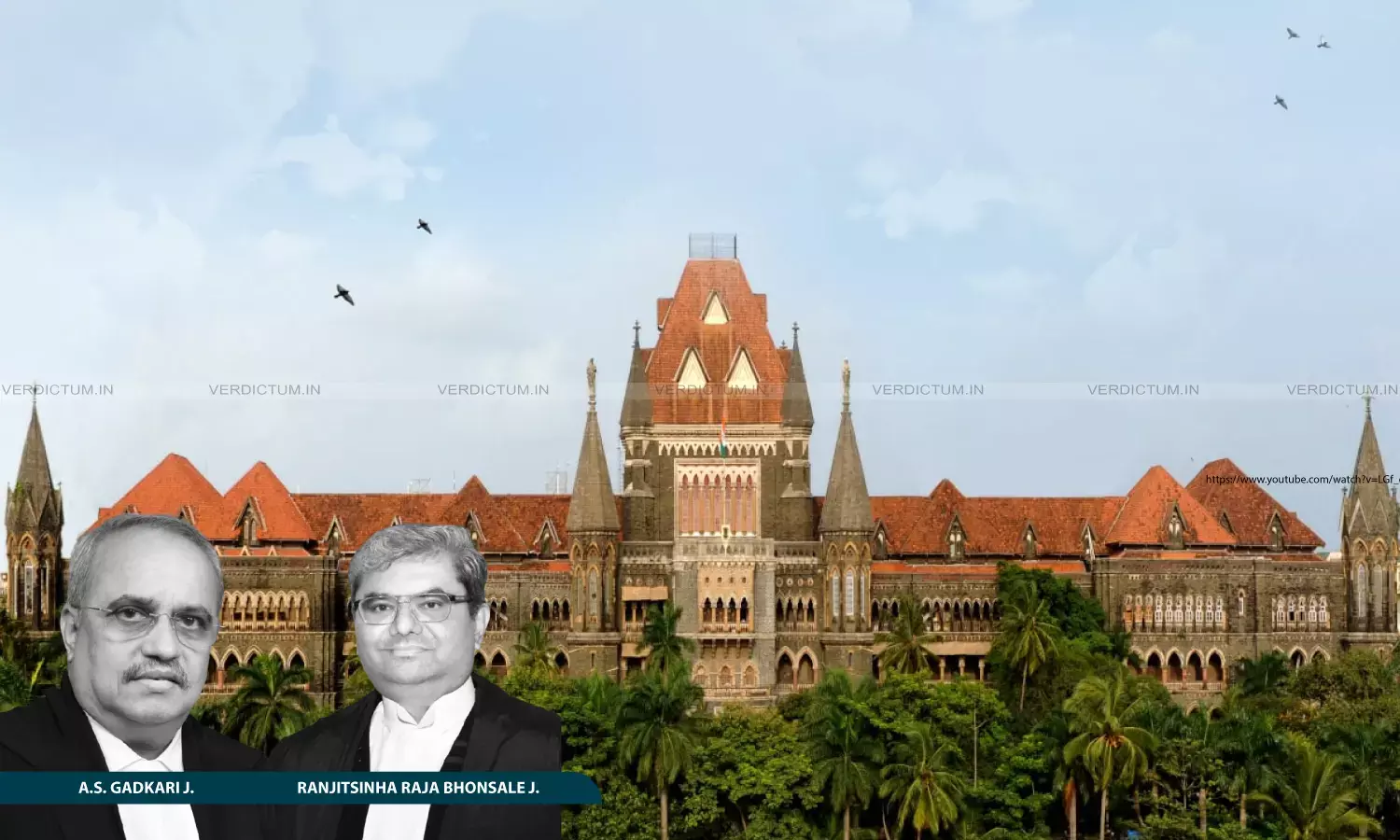
The Bombay High Court has held that refusal to grant a Police Clearance Certificate for issuance of a Public Service Vehicle (PSV) badge on the basis of criminal antecedents constitutes a reasonable restriction on the right to livelihood, when imposed in the larger interest of public safety and society.
The Court was hearing a writ petition under Article 226 seeking directions to grant a Police Clearance Certificate to the petitioner for the purpose of securing a PSV badge to drive an auto rickshaw commercially.
A Division Bench of Justice A.S. Gadkari and Justice Ranjitsinha Raja Bhonsale observed: “Perusal of the note would indicate that, considering the criminal antecedents and allegations and role attributed to the Petitioner in the previous criminal proceedings/matters, the Authorities have rightly given an adverse police clearance for issuance of the PSV badge. The Petitioner is free to avail of an alternate employment. The said restriction on the employment of the Petitioner or right to earn livelihood or carry out business and trade, according to us, is a reasonable restriction. The said restriction is being imposed by the Authorities after considering the record, the antecedents and more importantly, in the larger interest of the general public and society”.
Advocate Payoshi Roy appeared for the petitioner; M.M. Deshmukh, Acting Public Prosecutor, appeared for the State.
Background
The petitioner sought issuance of a Police Clearance Certificate, which is mandatory for obtaining a PSV badge required to operate an auto rickshaw for commercial purposes.
It was the petitioner’s case that the refusal to grant the certificate was based on stale and untenable grounds, as he had already undergone a sentence of 10 years in a prior criminal case and had also been acquitted in another case relating to the 2008 Mumbai attacks, with such acquittal having been upheld up to the Supreme Court.
The petitioner contended that the denial of the certificate effectively deprived him of his right to livelihood, as he was unable to pursue employment as a commercial driver.
The State, opposing the petition, submitted that the petitioner had a serious criminal background, including a conviction in a case involving an attack on CRPF personnel, the Mumbai Terror attack, and alleged association with a banned organisation, and that intelligence reports continued to indicate risk.
It was further submitted that, as per policy guidelines governing police character verification, applicants with serious criminal antecedents are required to be issued adverse remarks, particularly in cases involving sensitive or public-facing employment.
Court’s Observation
The Court examined the material placed on record, including intelligence inputs and the petitioner’s criminal history, and noted that the offences attributed to the petitioner were of a grave nature, involving national security concerns.
It observed that the police authorities had conducted due verification and had taken into account the petitioner’s antecedents, role attributed in prior cases, and intelligence assessments while denying the Police Clearance Certificate.
In this context, the Court observed that “the offences involved were extremely serious in nature and a threat to the security of the country,” and that the petitioner had been assessed as a “high potential risk” for certain categories of employment.
The Court further noted that issuance of police character verification certificates is governed by policy guidelines, which mandate adverse remarks in cases involving serious criminal background or prior convictions. It found that such a policy had been applied uniformly.
Significantly, the Court held that the restriction imposed was not absolute, as the petitioner was not barred from all forms of employment. It observed that “prospects of employment… are only restricted… to exclude certain jobs,” thereby maintaining a balance between individual rights and societal interest.
Addressing the challenge under the right to livelihood, the Court held that such a right is subject to reasonable restrictions, particularly where considerations of public safety and national security are involved.
The Court also took into account the opinion of intelligence agencies, which indicated that the possibility of the petitioner engaging in similar activities could not be ruled out, thereby justifying a precautionary approach.
It concluded that the decision of the authorities was based on relevant material, due application of mind, and legitimate public interest considerations.
Conclusion
The Court held that the refusal to grant the Police Clearance Certificate for issuance of a PSV badge was justified and constituted a reasonable restriction imposed in the larger interest of society and public safety.
Accordingly, the writ petition was dismissed, upholding the decision of the authorities.
Cause Title: Fahim Arshad Mohammed Yusuf Ansari v. State of Maharashtra & Ors. (Neutral Citation: 2026:BHC-AS:20585-DB)
Appearances
Petitioner: Advocates Payoshi Roy and Ulkesh Gangurde
Respondents: M.M. Deshmukh, Acting Public Prosecutor; Amit A. Palkar, A.P.P.
