

“Administrator Had No Authority To Promise": Bombay High Court Dismisses Hotel The Deltin Plea For Casino Licenses In Daman
The Bench noted that an Administrator could not have created rights when the Goa Public Gambling (Amendment) Act, 1992 was not brought into force.

The Bombay High Court has refused to permit installation of games of electronic amusement/slot machines at ‘The Deltin Hotel’, Varkund, Nani-Daman. Accordingly, the Court held that operation of casino could not be allowed, as it remained strictly prohibited in the Union Territory.
The Bench noted that the Administrator could not have created rights through a promise or no-objection certificate, when the enabling law, Section 13A Goa Public Gambling (Amendment) Act, 1992 was never formally brought into force. The Court emphasised that for any law to bind or provide a basis for administrative action, it must be promulgated in the manner ordained by the legislature, specifically through an official notification of its commencement.
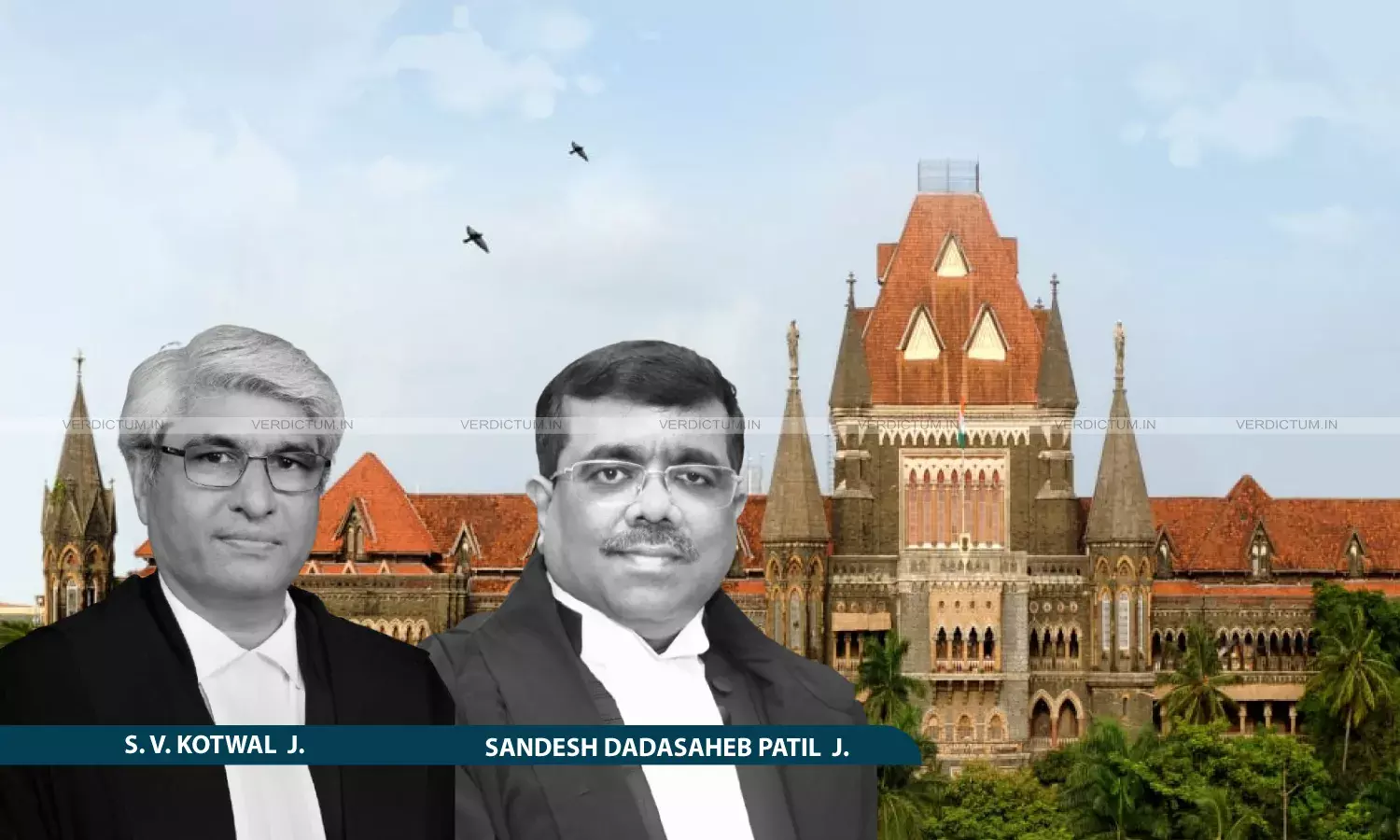
Justice Sarang V. Kotwal and Justice Sandesh D. Patil considering that an administrative no-objection letters and the publication of procedural rules do not equate to the legal commencement of a parent Act, observed,“…The amendment made by Goa in the year 1992 was extended to UT of Daman and Diu with certain modifications but the date for bringing these modifications in force was not notified and, therefore the UT Administration was not authorized to allow the operations of casino/electronic amusement/slot machines in the Union Territory…”.
“…the 1992 Goa Amendment Act was not brought into force. Consequently, Section 13A referred to hereinabove was not in operation and, therefore, the then Administrator had no authority to make that promise. Even otherwise, such promise had its life only for three years within which the Petitioners had to abide by the conditions…”, the Bench further noted.
Senior Advocates Janak Dwarkadas, Nikhil Sakhardande, and Cyrus Ardeshir appeared for the petitioners and Senior Advocate Anil Anturkar appeared for the respondent.
In the matter, Delta Corp Limited, operating 'The Deltin', a five-star hotel in Daman, sought a license to install 140 slot machines and electronic amusement games.
The company relied on an "in-principle" No Objection Certificate (NOC) issued by the Daman Administration in 2007 and procedural rules published in 2008. The petitioners argued they invested over ₹450 Crores based on the representation that such gaming was permissible under Section 13A of the Goa Public Gambling (Amendment) Act, 1992, as extended to Daman and Diu. However, their formal application in 2014 was ultimately rejected by the Administration in 2018.
The petitioners approached the High Court seeking a mandamus to compel the issuance of licenses and to set aside the rejection letters. They also challenged a 2014 notification that withdrew the 2008 procedural rules. During the pendency of the petition, the Union Territory of Dadra and Nagar Haveli and Daman and Diu (Merger) Act, 2019, and subsequent 2022 regulations came into effect, which notably omitted the enabling provision (Section 13A) for authorized games.
While the Act was extended to Daman in 1998, a specific modification required the Central Government to appoint a commencement date via the Official Gazette. Since no such date was ever notified, the enabling Section 13A, which would have exempted slot machines from the general prohibition on gambling, never attained the force of law.
The Court rejected the argument that the 2008 publication of "Rules" implied the Act was in force. Citing Section 22 of the General Clauses Act, the Bench noted that rules made in anticipation of an Act do not take effect until the Act itself commences.
“...the Petitioners cannot take recourse to the doctrine of promissory estoppel or legitimate expectation because rejection of the application for license is based on public policy. It was within the domain of the Legislature and the Administrator to consider what is the policy that serves the best interest of the people in the UT of Daman and Diu. It was their policy decision and in this case, the Court cannot interfere in the policy decision”, the Bench noted.
“…The Application for grant of license was made much later in the year 2014 which was beyond the period of three years from 2007 when the so called promise was made by the Administrator. Though there is correspondence between the MHA and the Petitioners and the MHA and the Administrator referring to the 1992 Goa Amendment Act, the existing rules, etc., the fact remains that the 1992 Goa Amendment Act was never brought into force for UT of Daman and Diu. As mentioned earlier, as of today, the operation of slot machines as per the 1992 Act is strictly prohibited and in fact would be an offence and therefore it is not possible to issue directions or writ of mandamus to the authorities directing them to grant license to operate those electronic amusement/slot machines in the Petitioners’ five-star hotel”, the Bench observed.
Cause Title: Delta Corp Limited and another v. U.T. Administration of Daman and Diu and others (Neutral Citation: 2026:BHC-AS:20375-DB)
Appearances:
Petitioners: Janak Dwarkadas, Nikhil Sakhardande, and Cyrus Ardeshir, Senior Counsels, Rohan Rajadhyaksha, Nooruddin Dhilla (Through VC), Rajendra Barot, Anusha Jacob, Deepti Prabhu and Himanshu Kalwani, Advocates instructed by AZB Partners.
Respondents: Anil Anturkar, Senior Counsel, Dr. Sanjay Jain, Aayush Kedia, Jugal Haria, Kashish Chelani, Atharva Date, Harshavardhan Suryawanshi, Deepam Upadhyay, Advocates.
Click here to read/download the Judgment