

Retrospective Reduction Of Promotion Age Limit Violates Legitimate Expectation Doctrine: Bombay High Court Strikes Down ICDS Rule 7(1)(c)
The Court held that reducing the maximum age for promotion to the post of Supervisor from 55 years to 45 years violated the legitimate expectation of Anganwadi Sevikas who had been awaiting promotion for nearly two decades and created unreasonable discrimination among similarly situated employees.
The Bombay High Court has declared unconstitutional Rule 7(1)(c) of the Maharashtra Integrated Child Development Services (ICDS) Service Entry Rules, 2021, which reduced the upper age limit for promotion of Anganwadi Sevikas to the post of Supervisor from 55 years to 45 years.
The Court held that the impugned rule violated the doctrine of legitimate expectation and was arbitrary and discriminatory in contravention of Articles 14 and 16 of the Constitution of India.
The Court was hearing a writ petition filed by Anganwadi Sevikas working under Zilla Parishad, Akola, challenging Rule 7(1)(c) of the Service Entry Rules, 2021, formulated through Government Notification dated 04.06.2021 by the Women and Child Development Department, State of Maharashtra. The petitioners also challenged consequential communications issued for filling posts of Supervisors under the amended Rules.
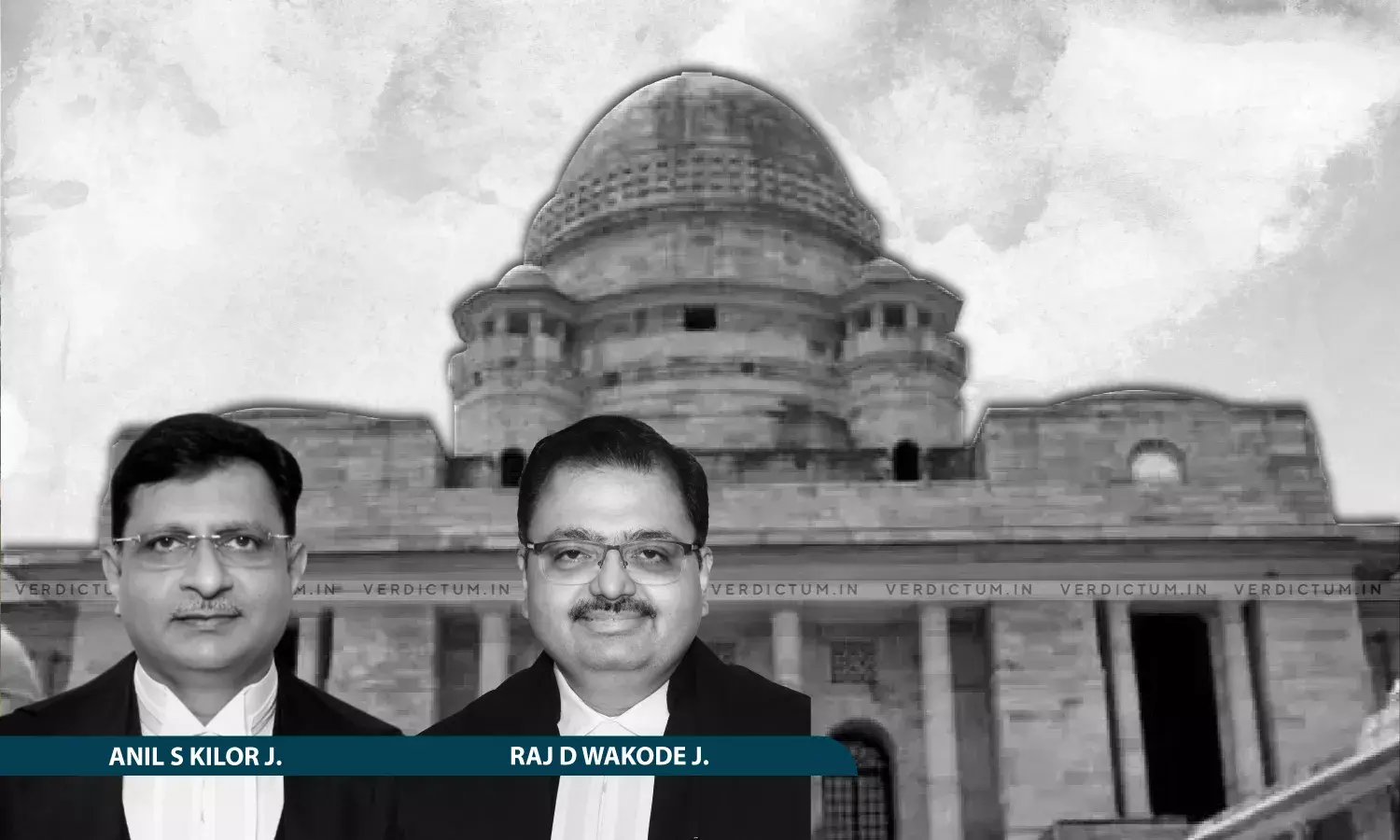
A Division Bench of Justice Anil S. Kilor and Justice Raj D. Wakode observed: “…respondent No.2, by issuing the Government Notification dated 04.06.2021 and more specifically the impugned Rule 7(1)(c) of the aforesaid Rules, has arbitrarily reduced the maximum qualifying age to 45 years and has thereby deprived the petitioners of their rightful promotion to the post of Supervisor. Thus, in our considered opinion, the impugned Rule 7(1)(c) of the aforesaid Rules is in violation of the doctrine of legitimate expectation as enunciated by the Hon’ble Supreme Court of India”.
The Bench further observed: “Thus, the impugned Rule 7(1)(c) of the aforesaid Rules has been made applicable retrospectively even to those Anganwadi Sevika who were already appointed. The petitioners have already crossed the age of 45 years and, therefore, the retrospective application of the aforesaid impugned Rule has caused serious prejudice to the petitioners, who were awaiting their promotion in view of the Corrigendum dated 07.12.2001 since 2004, when they became eligible for promotion in view of the existing parameters prevailing at the relevant time”.
Advocate Ved R. Deshpande appeared for the petitioners, while AGP A.V. Palshikar and Advocate Deeplata C. Pandey appeared for the respondents.
Background
The petitioners were working as Anganwadi Sevikas in different villages under Zilla Parishad, Akola, and had rendered more than 22 years of service. They possessed graduate qualifications and extensive experience under the Integrated Child Development Services Scheme (ICDS).
Under the Government Resolution dated 17.11.2001, 25% of posts of Supervisors were to be filled by promotion from Anganwadi Sevikas possessing matriculation qualification and 10 years of service experience. Initially, the maximum age for such promotion was fixed at 45 years.
Subsequently, by the Corrigendum dated 07.12.2001, the State Government enhanced the upper age limit for promotion to 55 years.
However, according to the petitioners, despite the issuance of the Corrigendum, no appointments to the post of Supervisor were made for Anganwadis under Zilla Parishad, Akola. The petitioners became eligible for promotion between 2004 and 2008 after completing 10 years of service.
In 2021, the State Government framed the Service Entry Rules, 2021, through Government Notification dated 04.06.2021. Rule 7(1)(c) reduced the maximum age for promotion to the post of Supervisor back to 45 years.
The petitioners contended that the retrospective application of the amended rule deprived them of their legitimate expectation of promotion after they had already crossed 45 years of age.
Court’s Observation
The High Court noted that the State Government had failed to controvert the petitioners’ contention that, despite the Corrigendum dated 07.12.2001, no promotions were made for nearly two decades.
The Court held that the petitioners had acquired a legitimate expectation of promotion in view of the Government Resolution dated 17.11.2001 and Corrigendum dated 07.12.2001.
Referring to the Supreme Court judgment in State of West Bengal v. Confederation of State Government Employees (2026), the Court reiterated that a legitimate expectation arises from established governmental practice and regularity in public administration. The Court further noted that the State Government itself admitted through an additional affidavit that the reduced age limit was being applied retrospectively even to existing Anganwadi Sevikas.
The Bench observed that retrospective application of the amended rule had caused serious prejudice to petitioners who had already crossed the age of 45 years while awaiting promotion under the earlier policy.
The Court also found merit in the petitioners’ argument that the impugned rule violated the principle of seniority. The Bench noted that under the amended rule, younger and less experienced Anganwadi Sevikas below 45 years could become Supervisors, while senior and more experienced Sevikas above 45 years would remain stagnated.
The State Government defended the age restriction by contending that candidates aged about 55 years would find it difficult to supervise approximately 25 Anganwadi Centres and complete reporting work efficiently.
Rejecting this justification, the Court held that the reasoning had no rational nexus with the object sought to be achieved.
The Bench observed that while Anganwadi Sevikas were considered fit to work till the age of 65 years, they were simultaneously being denied an opportunity to serve as Supervisors, whose retirement age was only 58 years.
The Court observed: “Such classification creates an unreasonable discrimination between Anganwadi Sevikas who are otherwise similarly situated and has no rational nexus with the effective discharge of duties attached to the supervisory post.”
Relying upon Supreme Court judgments, including Indravadan H. Shah v. State of Gujarat (1986) and D.S. Nakara v. Union of India (1983), the High Court reiterated that recruitment rules framed under Article 309 cannot be arbitrary or discriminatory and must satisfy the test of reasonable classification under Articles 14 and 16.
The Bench held that the classification introduced through Rule 7(1)(c) lacked any intelligible differentia or rational nexus and arbitrarily discriminated against similarly situated employees solely based on age.
Conclusion
The Bombay High Court held that Rule 7(1)(c) of the Service Entry Rules, 2021, reducing the maximum age for promotion to the post of Anganwadi Supervisor from 55 years to 45 years, was unconstitutional and violative of Articles 14 and 16 of the Constitution of India.
The Court allowed the writ petition and set aside Rule 7(1)(c) formulated through Government Notification dated 04.06.2021. The consequential communications dated 22.09.2021 and 19.12.2022 issued pursuant to the impugned rule were also quashed.
Cause Title: Chaya Tulshiram Kharat & Ors. v. State of Maharashtra & Ors. (Neutral Citation: 2026:BHC-NAG:7324-DB)
Click here to read/download Judgment
