

Attempted Suicide And False Corruption Allegations Constitute Misconduct: Bombay High Court Upholds Demotion of RPF Constable
In the matter, after his transfer request was rejected, he allegedly consumed rat poison while on duty and later emailed senior RPF officials threatening suicide and alleging bribery demands in the transfer process.

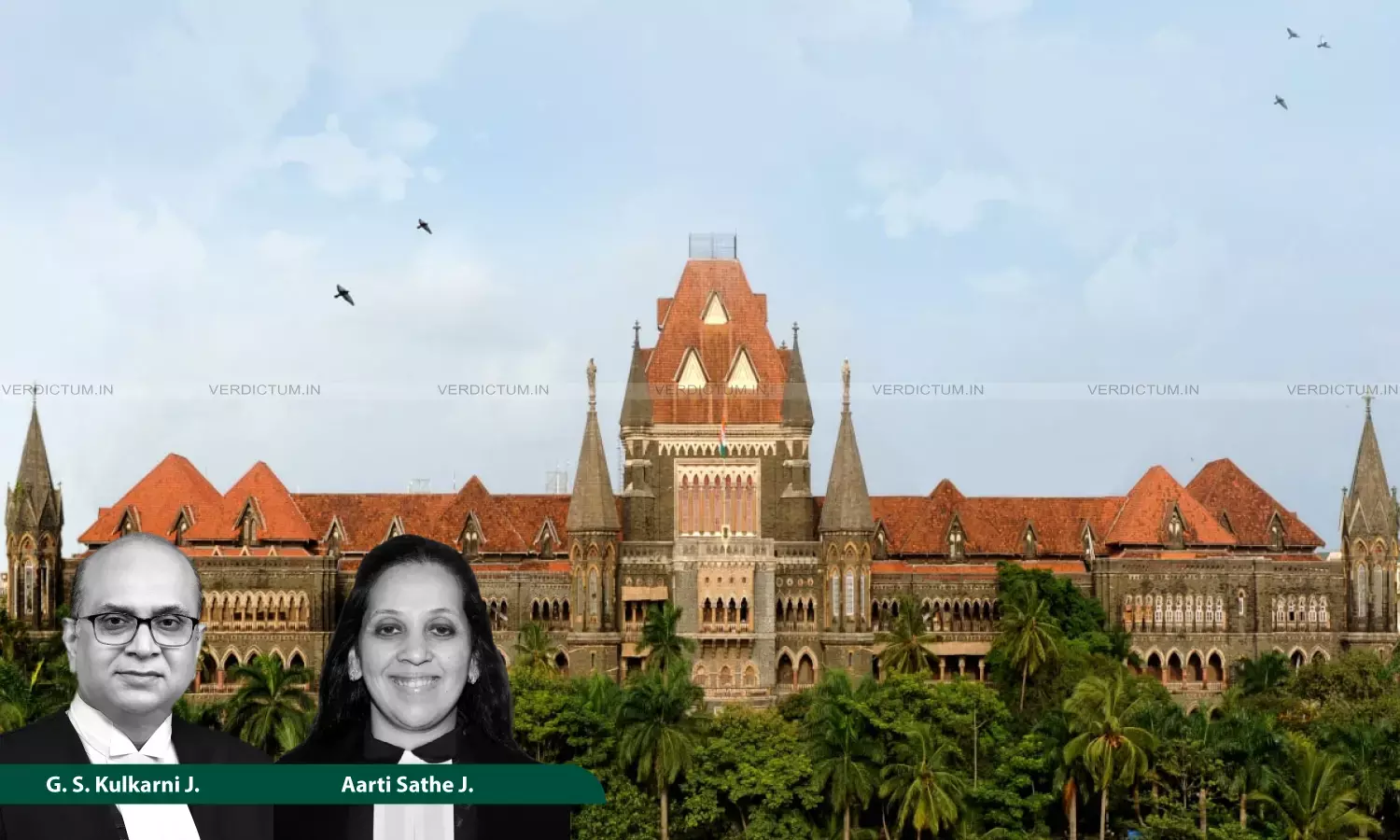
Justice G. S. Kulkarni, Justice Aarti Sathe, Bombay High Court
The Bombay High Court has dismissed a writ petition filed by a Railway Protection Force (RPF) constable challenging a disciplinary order that reduced his pay to the lowest stage for five years with cumulative effect.
The Bench held that personnel serving in an armed force of the Union are expected to maintain high standards of mental strength, discipline, and integrity, and that attempting self-harm or issuing threats to coerce administrative decisions constitutes grave misconduct.
A Division Bench of Justice G. S. Kulkarni and Justice Aarti Sathe observed, “We are further of the view that attempt to commit suicide by the Petitioner on 25th July 2020 and thereafter sending a suicide note on 18th September 2020 by e-mail to the Regional Manager/Railway Security Officer, New Delhi was definitely a pressure tactic to browbeat the higher authorities and this conduct of the Petitioner would definitely amount to breach of RPF Rules as alleged in the charge sheet dated 24th October 2020 and the show cause notice dated 23rd February 2021. The Petitioner, therefore, showed gross negligence and irresponsibility while on duty, which was not in consonance with the RPF Rules, and hence the charges framed against the Petitioner by way of chargesheet dated 24th October 2020 were correct and not arbitrary...we are also of the view that over and above the clear findings of fact in the present case which establish the misconduct on the part of the present Petitioner, the position of a person serving in any armed or police force requires a higher sense of responsibility and mental makeup, inasmuch as, the faith reposed by common citizens on ‘men in uniform’ is far higher, and they are looked upon as sentinels of the society at large…”.
Advocate Dr. Uday Warunjikar appeared for the petitioner and Advocate Mayuresh Lagu appeared for the respondent.
The petitioner, Brijesh Kumar, sought an administrative transfer, where following the rejection of his request, he allegedly consumed rat poison while on duty and was hospitalized. Subsequently, he issued email threats of suicide to senior RPF officials and alleged that bribery demands were made for processing his transfer.
The RPF initiated departmental disciplinary proceedings, framing five charges against him, which included attempting suicide while on duty, coercing the administration through suicide threats to secure a transfer, visiting senior officers' headquarters without required permission, submitting an invalid or forged medical certificate, and making unsubstantiated bribery allegations against superior officers. Following a departmental inquiry where all five charges were held proved, the disciplinary authority imposed a penalty of reduction in rank and salary. Concomitant departmental appeals and revisions upheld the punishment, leading the constable to approach the High Court under Article 226.
In evaluating the higher standard expected of uniformed forces, the Court emphasized that members of the RPF, being part of an armed force of the Union, cannot resort to coercive tactics such as suicide threats or unfounded corruption allegations when aggrieved by routine administrative orders like transfers.
“…Our, this view gets fortified by the decision of the Supreme Court in Union of India v. Diler Singh, wherein the Respondent Employee was a constable in CRPF, and was served with a charge-sheet alleging that that on the mentioned date, he had left the campus without permission of the competent authority, gone to the bazaar, consumed liquor and quarrelled with the local persons there. The Supreme Court, in the above factual context had held that that when a member of the disciplined force deviates to such an extent from discipline and behaves in an untoward manner which is not conceived of, it is difficult to hold that the punishment of dismissal as has been imposed is disproportionate and shocking to the judicial conscience”, the Bench said.
Addressing the scope of judicial review under Article 226 Constitution of India, the Bench reiterated settled administrative law principles, holding that High Courts will not re-appreciate evidence or sit as an appellate authority over departmental inquiries unless procedural illegality, violation of natural justice, or absolute perversity is established.
Regarding the evidentiary threshold, the Court observed that departmental inquiries operate on the standard of preponderance of probabilities rather than proof beyond a reasonable doubt. Since the inquiry was fairly conducted and supported by evidence, judicial intervention was unwarranted. Finding the disciplinary penalty proportionate to the severity of the misconduct, the High Court upheld the administrative orders and dismissed the writ petition.
Cause Title: Brijesh Kumar v. Chairman, Railway Board & Ors. Writ Petition No. 8000 OF 2023
Appearances:
Petitioner: Dr. Uday Warunjikar, Sumit Kate i/by Aditya Kharkar, Advocates.
Respondent: Mayuresh Lagu with Sagar Pati, Advocates.