

Charging Patients Does Not By Itself Deprive Hospital Of Philanthropic Character: Bombay High Court
The Bench held that surplus is relevant but not conclusive of profit purpose, and that depreciation & capital expenditure must be considered; quashed rejection orders for Assessment Years 2002-03 to 2021-22.

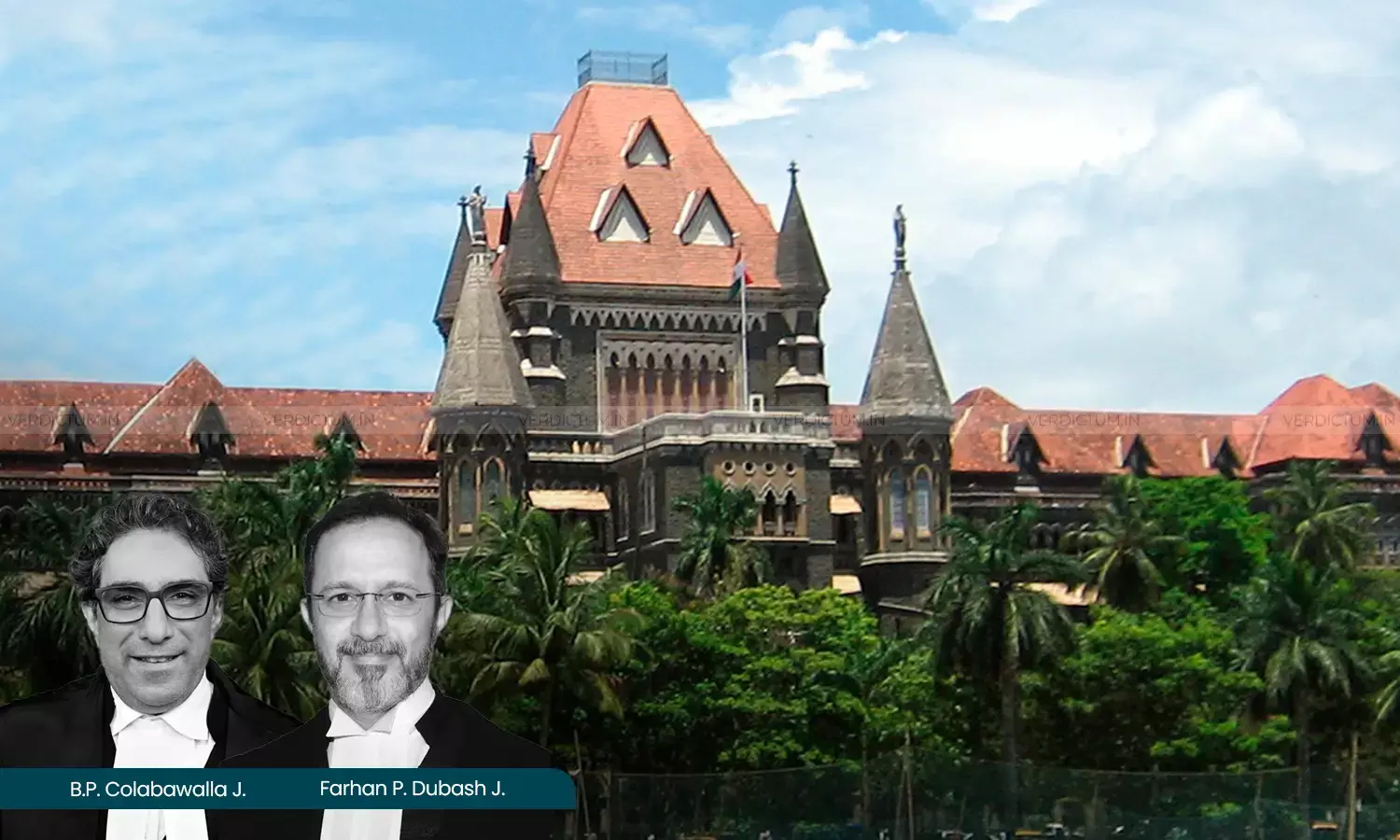
The Bombay High Court has held that charging patients does not, by itself, deprive a hospital of its philanthropic character, while directing approval for Breach Candy Hospital Trust under Section 10(23C)(via) of the Income-tax Act, 1961. The Court rejected the view that philanthropy is confined to free treatment or donations.
The Bench noted that a surplus is relevant but not conclusive of a profit purpose, and that depreciation and capital expenditure must be accounted for before a surplus is alleged. It quashed two orders of the Chief Commissioner of Income Tax and directed approval for Assessment Years 2002-03 to 2021-22.
A Division Bench of Justice B.P. Colabawalla and Justice Farhan P. Dubash observed, “…Providing specialist treatment, modern equipment and skilled staff may also serve a philanthropic purpose. Section 2(15) of the Act similarly recognises medical relief as a charitable purpose distinct from relief of the poor. Respondent No. 1 therefore erred in treating philanthropy as confined to donations or free treatment, and in discounting the said decision merely because of its age. Thus, charging patients does not, by itself, deprive a hospital of its philanthropic character. The hospital must nevertheless exist solely for philanthropic purposes and not for profit. In the present case, the Hospital’s activities, its compliance with the scheme and the application of its funds, discussed above, establish that it satisfies these requirements”.
Senior Advocate Jehangir D. Mistri appeared for the appellant and Advocate Suresh Kumar appeared for the respondent.
“Advances in medical science and technology require hospitals to improve their infrastructure and facilities. Effective medical care may call for new technology, modern equipment and the replacement of outdated machinery. Section 10(23C)(via) of the Act does not require a hospital to keep its infrastructure unchanged to retain its exemption. The acquisition of advanced equipment or improvement of facilities does not, by itself, establish a profit-making purpose. Also, where such expenditure serves the hospital’s medical and philanthropic purposes, the prospect of increased receipts from those facilities cannot, by itself, justify refusal of approval”, the Bench had further observed.
The Trust, incorporated in 1946 to run a hospital for philanthropic purposes, had long enjoyed exemption under former Section 10(22A). From April 1, 1999, Section 10(23C)(via) retained the same test but added approval by the prescribed authority.
The Chief Commissioner rejected the Trust’s applications for Assessment Years 2002-03 to 2010-11 on March 31, 2009. The High Court remitted the matter on August 24, 2009. On April 15, 2010, the Chief Commissioner again rejected them, citing recurring surpluses, limited spending on poor patients and consultants’ fee arrangements. A further application for Assessment Year 2011-12 onwards was rejected on September 28, 2012, thereafter, the Trust challenged both orders.
The Bench found that, after depreciation and capital expenditure, the Trust had an aggregate deficit of Rs. 21,87,28,218 for 2002-03 to 2010-11, against the Revenue’s apparent surplus of Rs. 37,01,91,433. Even where a surplus remains, it held, the question is whether it serves the hospital’s purposes, and the Revenue’s approach would penalise a hospital for improving its equipment. The Trust’s memorandum bars distribution of profits, and no private diversion was found. Retention of ten per cent of consultants’ fees was not a distribution of profits, and Section 10(23C)(via) prescribes no minimum ratio of spending on poor patients. The Court also relied on the Trust’s compliance with the charitable hospitals scheme reserving beds for indigent and weaker-section patients. It distinguished Yash Society, Baba Banda Singh Bahadur Education Trust and Ashwini Sahakari Rugnalaya.
The Court quashed both orders and directed approval for Assessment Years 2002-03 to 2010-11 and, in the second petition, 2011-12 to 2021-22, since the Trust has now opted for the Sections 11 to 13 regime. The orders must issue within eight weeks of the judgment’s upload. There is no order as to costs, and compliance is listed on December 14, 2026. The Court did not decide the natural justice contention.
Cause Title: Breach Candy Hospital Trust v. Chief Commissioner of Income Tax & Ors. (Neutral Citation: 2026:BHC-OS:22219-DB)
Appearances:
Appellant: Senior Advocate Jehangir D. Mistri, Fenil Bhatt and Danish Qureshi, Advocates.
Respondents: Suresh Kumar, Advocate.