

Mamlatdar Cannot Create A New Road U/S 5 Mamlatdars' Courts Act; Existing Road Or Customary Way Must Be Identified & Proved: Bombay High Court
The Bench laid down legal parameters for proving existing road under the Act, lists 15 categories of relevant evidence; and remanded the Nashik Vahivat case.

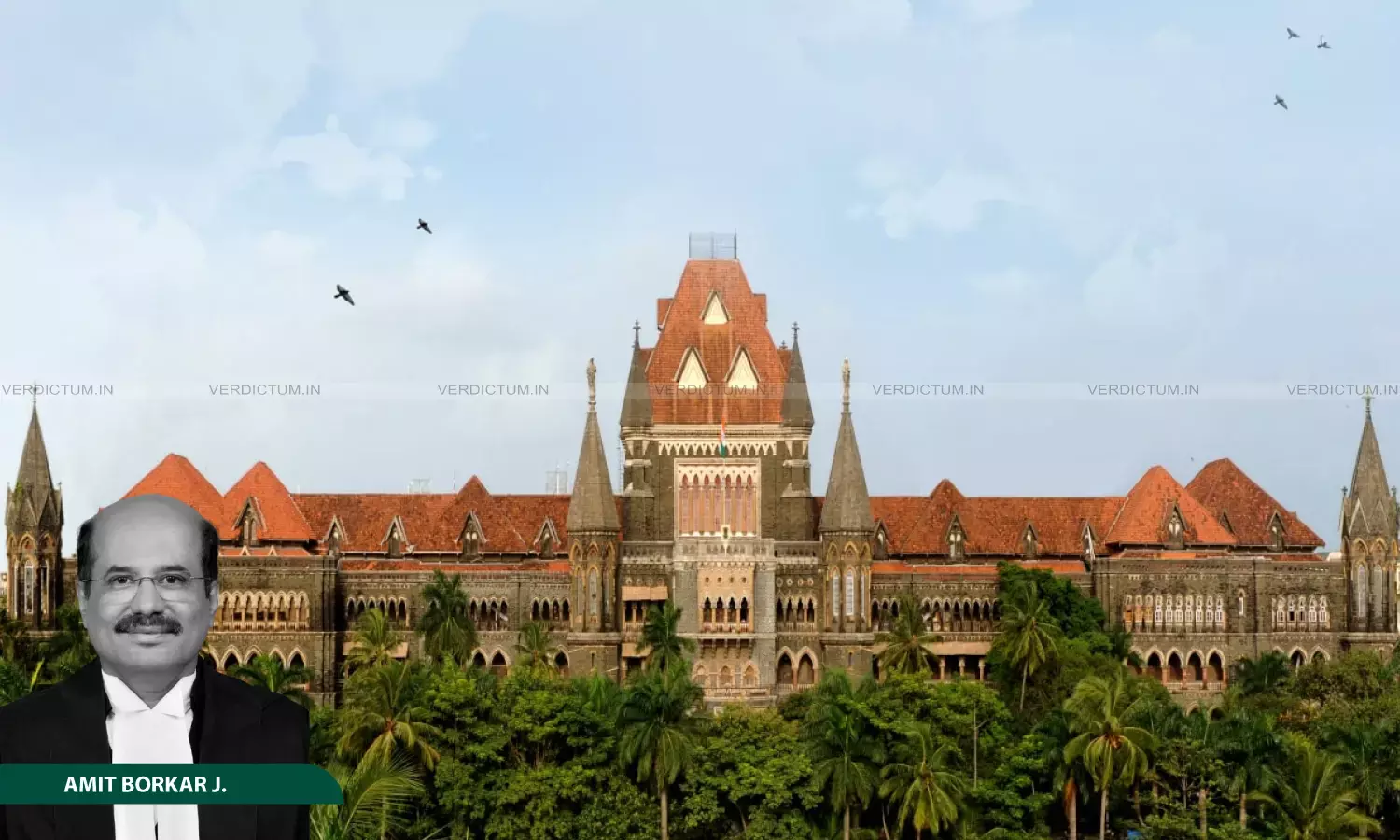
The Bombay High Court has held that a person cannot approach the Mamlatdar under Section 5 of the Mamlatdars' Courts Act merely because he needs convenient access to his agricultural land. The Court said the provision deals only with obstruction to an existing road or customary way and is not a power to create a new road.
The Court said the claimant must first identify the particular road, then show that it existed and was in use, and only then that the opposite party obstructed it. Consequentially, the Bench listed 15 categories of material that may be considered, including revenue and measurement maps, 7/12 extracts, earlier Section 143 orders, spot panchnamas, photographs, government records and oral evidence. It added that the list is not exhaustive and that no single document is compulsory in every case.
A Single Judge Bench of Justice Amit Borkar observed, “…A person cannot approach the Mamlatdar under Section 5 merely because he requires a convenient access to his agricultural land and seek creation of a new road over another person's land. The power under Section 5 is to deal with obstruction to an existing road or customary way. It is not a power to create a new road. Therefore, while deciding such proceedings, the Mamlatdar has to first identify the particular road claimed by the person, consider whether that road was existing and being used, and thereafter consider whether the opposite party has obstructed that particular road. The evidence regarding the road and the evidence regarding obstruction have to be considered and thereafter together, on the basis of the entire material available on record”.
Advocate Sanjay P. Shinde for the petitioners and S.D. Chipade, AGP appeared for the respondent.
The Bench laid down the following material as relevant, which may be considered while deciding proceedings under Section 5 of the Mamlatdars’ Courts Act:
(i) The plaint and its description of the particular road or customary way, including its starting point, ending point, direction, width and the lands or Gat numbers through which it is claimed.
(ii) Village map, cadastral map, Gat map and other revenue maps showing the existence and location of the road.
(iii) Measurement maps or reports prepared by TILR, District Superintendent of Land Records or other competent Land Records authority.
(iv) 7/12 extracts and other revenue records showing the road, shivrasta, pandhan, cart road or customary way.
(v) Earlier orders passed under Section 143 of the Maharashtra Land Revenue Code or other statutory proceedings concerning the same road.
(vi) Spot panchnama recording the physical existence, direction, width, location and condition of the road and the nature and place of the alleged obstruction.
(vii) Sketch or map prepared during the spot inspection showing the road with reference to the boundaries of the concerned Gat numbers.
(viii) Photographs or other material showing the physical condition of the road, obstruction, cultivation, track marks or other signs of its earlier use.
(ix) Oral evidence regarding the existence of the road, its period of use, the persons using it, the manner of use and the date on which the alleged obstruction was first caused.
(x) Documents and evidence showing long-standing use of the particular road or customary way.
(xi) Government or local authority records, including Gram Panchayat, village forms, Zilla Parishad, Public Works Department or sanctioned road plans, wherever relevant.
(xii) Earlier civil Court proceedings, judgments, orders, maps or Commissioner's reports concerning the same road, property or route.
(xiii) Documents showing the possession and cultivation of the concerned Gat numbers, including crop inspection records, where relevant to the identity or use of the road.
(xiv) Evidence relating to the exact date on which the obstruction or attempted obstruction first commenced, for determining the limitation under Section 5(3) and Section 5(4) of the Act.
(xv) Any other relevant documentary, oral or physical evidence which helps in identifying the particular existing road or customary way and the alleged obstruction to that road.
The dispute concerns Gat No. 415 at Varkheda, Dindori, Nashik. Respondent No. 3 claimed a right of Vahivat over an East-West road and sought removal of obstruction by the petitioners.
On December 7, 2015, he filed Vahivat Case No. 35 of 2015 before the Tahsildar, Dindori, who allowed it on March 18, 2017. The Sub-Divisional Officer, Kalwan, dismissed the petitioners' revision on September 12, 2017. The petitioners then filed a writ petition under Articles 226 and 227.
The petitioners argued that the road claimed in an earlier civil suit was different, that the panchnama was vague, and that a Crop Inspection Case had recorded their possession. Respondent No. 3 said he had used the road for years and had no other access.
The Court held that lack of alternate access does not prove that the claimed way existed. It said possession of Gat No. 415 and use of a road are different matters, so the crop inspection finding could not end the case but had to be examined. It found no clear finding on the identity of the road, noted the panchnama was not tied to the East-West road described in the plaint, and flagged an unexplained discrepancy in its date (January 14, 2015 or 2016).
The Court quashed both orders and restored the case to the Tahsildar. He must give notice, conduct a fresh spot inspection, consider Land Records measurement if the location is disputed, verify the panchnama date and record specific findings on the road's identity, prior use, obstruction and its start date. The inquiry is to conclude within four months, with all merits contentions open and no costs.
Cause Title: Balasaheb Karbhari Uphade & Ors. v. Tahsildar, Dindori & Ors. (Neutral Citation: 2026:BHC-AS:39451)
Appearances:
Petitioners: Sanjay P. Shinde, Advocate.
Respondent: S.D. Chipade, AGP, Sachin S. Gite, Sarfaraj J. Shaikh, Mahesh Pawar and Aman Kazi, Advocates.