

Abetment & Suicide Includes Cases Where Accused Creates Situation Whereby Evidence Indicates That It Amounted To Instigation: Bombay High Court
The Revision Applicant had approached the Bombay High Court challenging his conviction.

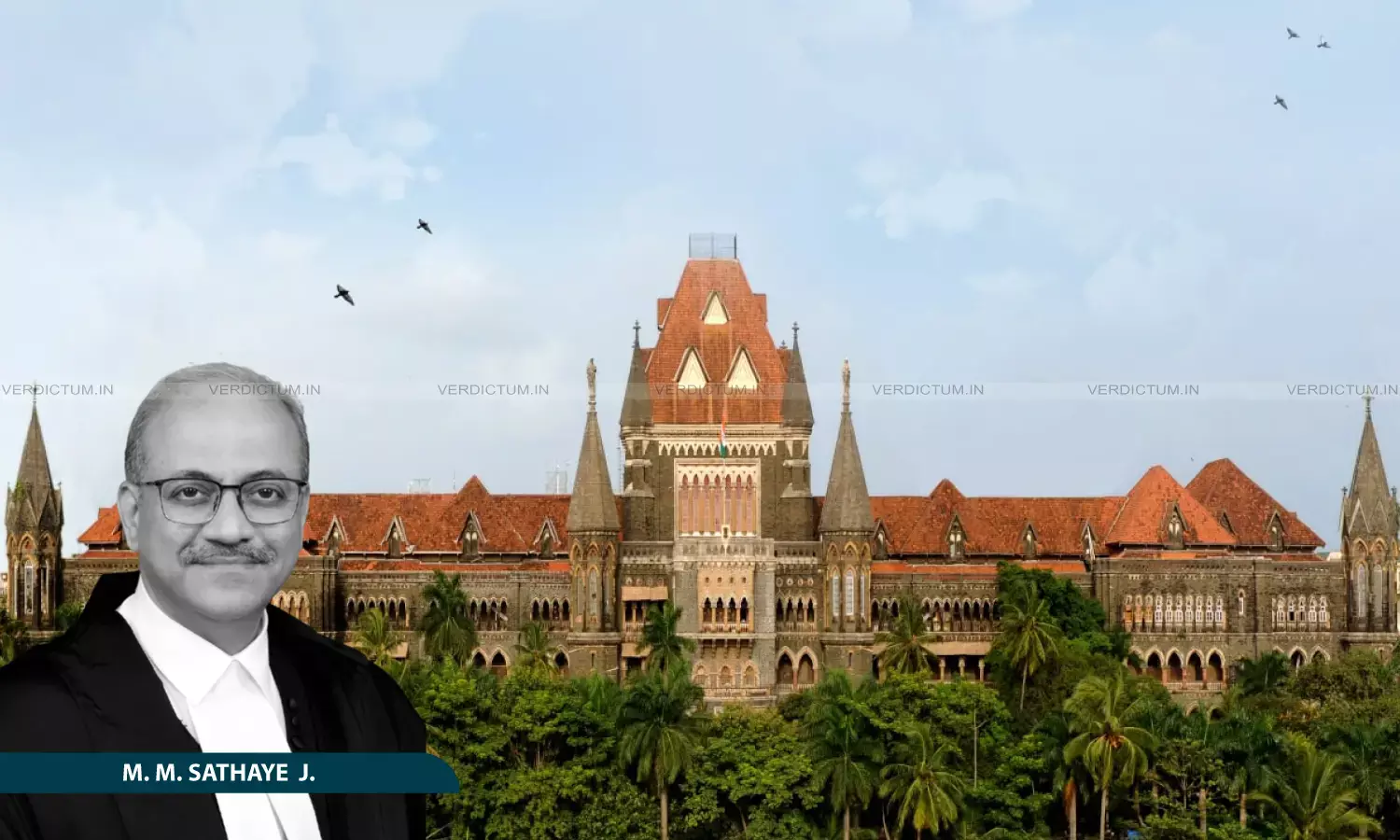
Justice M.M. Sathaye, Bombay High Court
The Bombay High Court has upheld the conviction of a man in the abetment to suicide case of his wife and children. The High Court explained that abetment and suicide includes cases where the accused creates a situation whereby evidence indicates that it amounted to instigation.
The Revision Applicant had approached the High Court invoking Section 397 read with Section 401 of the Code of Criminal Procedure, 1973 (CrPC) challenging his conviction and sentence for offences punishable under Sections 306 and 498A of the Indian Penal Code, 1860 (IPC).
The Single Bench of Justice M. M. Sathaye held, “The Appellate Court has considered the overall situation in which the deceased Sindhu was caught where her husband was not allowing her to live peacefully, father-in-law was not intervening and her parents were not in a position to meet the demand of money by the husband. The Appellate Court has considered that the law about abetment and suicide includes cases where the accused creates a situation whereby evidence indicates that it amounted to instigation. A young mother with two young children have lost their life.”
Advocate U.B. Nighot represented the Applicant whereas Additional Public Prosecutor Tanveer G. Khan represented the Respondent/ State.
Factual Background
The Revision Applicant got married to the deceased Sindhu in the year 1994. One son and one daughter were born from the wedlock. Trouble started when the Revision Applicant decided to start an additional business of selling coconut oil, for which he was in need of money, and he started demanding the same from his wife. To fulfil this demand, he started subjecting Sindhu to physical assault and mental harassment. The wife and two minor children aged 7 and 9 years were found dead. The Revision Applicant was sentenced to undergo rigorous imprisonment (R.I.) for 2 years for an offence under Section 498A of the IPC, and he was further sentenced to undergo R. I. for 3 years for an offence under Section 306 of the IPC. The applicant’s appeal was dismissed by the Sessions Judge. It was in such circumstances that the revision came to be filed before the High Court.
Reasoning
On a perusal of the testimonies and the facts of the case, the Bench noted that the admissions extracted from the witnesses about the ill health of the children were not sufficient to conclude that deceased Sindhu had other pressures in life, so much as to drive her to take the extreme step. As per the Bench, the admission given by the brother of the deceased that he received a telephone call from the Revision Applicant twice on the date of the incident when the deceased had left the house was not sufficient to conclude that the Revision Applicant was a caring person.
The Bench held that the testimony of the neighbour had not been materially shaken in cross-examination. “The argument that PW-4 - neighbour is an interested witness because she is relative of the landlord who was interested in getting possession back is far-fetched and is not sufficient to discard the testimony of an independent witness”, it added.
The Bench was of the view that the Appellate Court had rightly held that except for some minor discrepancies about delivery of amount at the hands of deceased Sindhu or directly to the Revision Applicant, there were no major inconsistencies or discrepancies.
The Bench further noticed that the Appellate Court had also rightly considered that the ill health of her two children was not of such a nature or incurable as to throw her into depression. The Bench took note of the fact that the deceased Sindhu was caught where her husband was not allowing her to live peacefully, her father-in-law was not intervening, and her parents were not in a position to meet the demand for money by the husband.
Holding that the view taken by the Court below could not be faulted, the Bench dismissed the application.
Cause Title: Ashok Maruti Kanase v. The State Of Maharashtra (Neutral Citation: 2026:BHC-AS:38732)