

Stamp Act| Refund Claims Cannot Be Rejected Merely Because Original ESBTRs Are Not Physically Available: Bombay High Court
The Bombay High Court was considering the Writ Petitions challenging the legality of the orders passed by the District Registrar and Collector of Stamps as well as the Chief Controlling Revenue Authority.

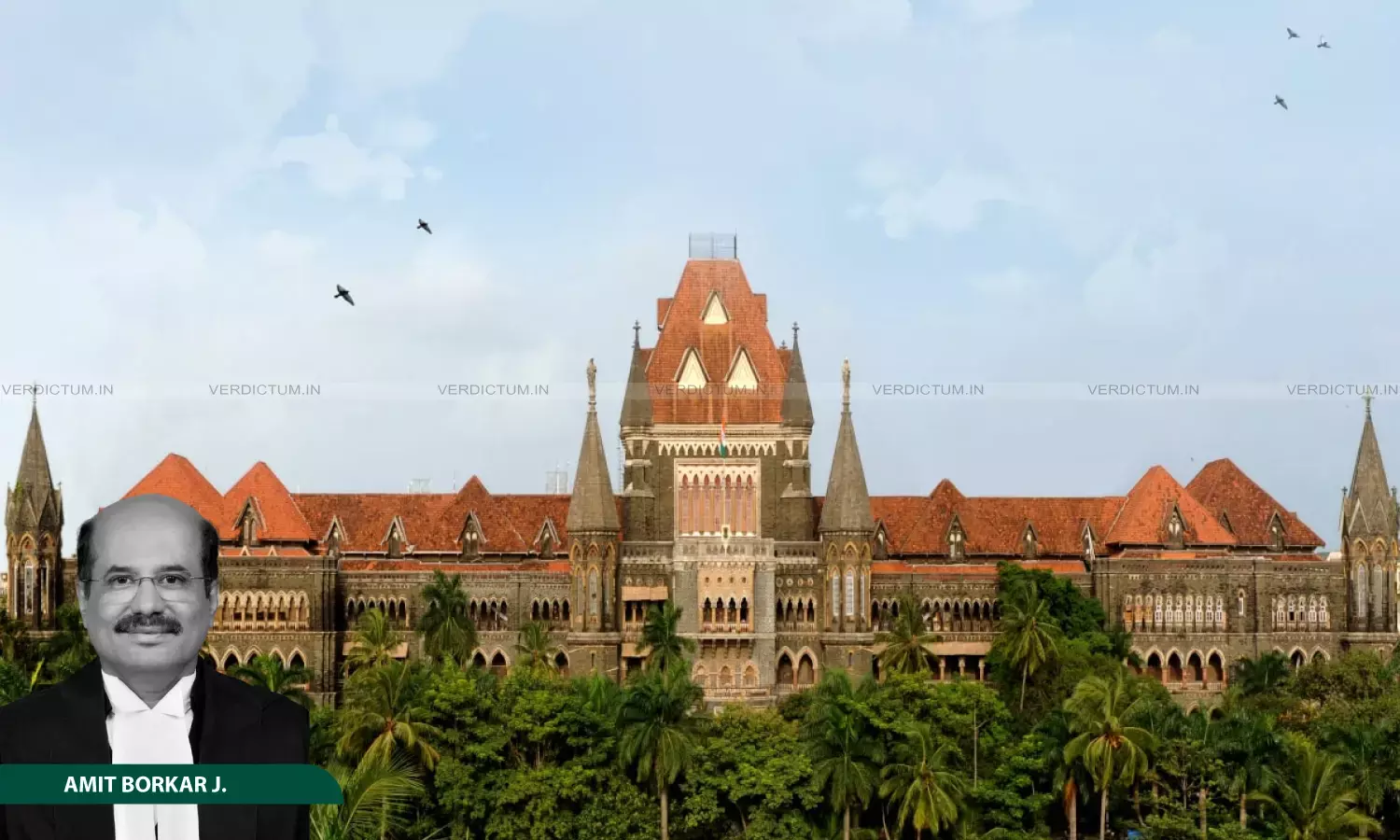
The Bombay High Court has held that the State cannot reject the claims only because the original Electronic Secured Bank and Treasury Receipts (ESBTRs) are not physically available, when the payment, loss and non-use can be established through official records and other reliable evidence. The High Court further held that the concern of the State about possible misuse can be dealt with by proper verification and suitable safeguards.
The High Court was considering Writ Petition 5964 of 2019, filed under Articles 226 and 227 of the Constitution of India, challenging the legality of an order passed by the District Registrar and Collector of Stamps, Pune City, Pune, in a Refund Case. In another Writ Petition No.6199, the petitioner further challenged the order passed by the Chief Controlling Revenue Authority in another petition.
The Single Bench of Justice Amit Borkar held, “At the same time, the loss of the original receipt because of negligence does not automatically allow the State to retain an amount which is otherwise refundable under the law. The authorities have to examine the claim on its merits. If the official records show that the payment was genuine, that the ESBTR was never used for any instrument and that no refund has been obtained against it, the absence of the original receipt cannot be a answer to the claim. The concern of the State about possible misuse can be dealt with by proper verification and suitable safeguards. The claim cannot be rejected by refusing to examine the records which are available.”
“On considering the facts and the submissions made by both sides, I find that the Petitioners cannot receive refund merely by stating that the original ESBTRs were lost. The State is entitled to verify the payments and take steps to prevent misuse. At the same time, the State cannot reject the claims only because the original ESBTRs are not physically available, when the payment, loss and non-use can be established through official records and other reliable evidence”, it added.
Advocate Sanskar Marathe represented the Petitioner while Panel Advocate Anirudha Garge represented the Respondent.
Factual Background
The Bench noted that in Writ Petition 5964 of 2019, stamp duty was paid again for the same transaction. In Writ Petition 6199 of 2018, the proposed agreement was not executed because the booking was cancelled.
The Petitioner paid the required stamp duty for registration of an agreement for sale of immovable property. However, before the transaction could be completed, the stamp paper was misplaced. A police complaint was lodged in this regard. The Petitioner paid the same stamp duty once again for the very same transaction so that the agreement could be registered. The registration was then completed. Since the stamp duty paid earlier had remained unused, the Petitioner applied for its refund under Sections 47 and 48 of the Stamp Act. However, the application was rejected. The Petitioner then filed an appeal under the provisions of the Act, challenging the rejection of the refund application. The Appellate Authority dismissed the appeal. Aggrieved thereby, the Petitioner approached the High Court.
Reasoning
The Bench, at the outset, explained that Section 47 of the Maharashtra Stamp Act provides for refund or allowance in respect of stamps which have become spoiled in the situations mentioned in that section. “Therefore, the person asking for refund must prove the claim with proper evidence. However, the section does not specifically say that every claim must be rejected only because the original stamp cannot be produced, without checking why it is missing and whether the payment and its non-use can be proved through other reliable records”, it stated.
The Bench explained that the Maharashtra e-payment Rules provide that the procedure for refund of stamp duty paid through an e-SBTR is the same as the procedure applicable to an impressed stamp under the Act. “Therefore, payment through an ESBTR does not remove the requirement of verification. At the same time, the authorities cannot ignore the electronic records relating to the payment. The Government Reference Number, details available in the Virtual Treasury and other official records may help to establish whether the payment was made, whether the ESBTR was used for any instrument and whether a refund has been granted against it”, it added.
While dealing with Writ Petition 5964 of 2019, the Bench held that the impugned orders could not be upheld merely because the original ESBTR was not produced. “The payment and its non-use must be checked from the electronic and other official records. If those records confirm the Petitioner's case, the amount paid through the first ESBTR is refundable, subject to any deduction permitted under the applicable Rules. The authority cannot refuse refund only because the original ESBTR has been lost”, it added.
In Writ Petition 6199 of 2018, the Bench held, “...the claim cannot be rejected only because the original ESBTR is missing.” The Bench clarified that when the other requirements of law are satisfied, the stamp duty must be refunded, after making any lawful deduction prescribed under the applicable Rules.
The Bench concluded the matter by quashing the impugned orders by directing, “The concerned refund authorities shall verify the ESBTR and payment particulars from the Government Reference Number, Virtual Treasury and other available official records. In Writ Petition No. 5964 of 2019, they shall verify whether the first ESBTR remained unused and whether the second payment was used for the registration of the agreement. In Writ Petition No. 6199 of 2018, they shall verify whether the proposed agreement for sale was cancelled and never executed, and whether the ESBTR remained unused.”
Cause Title: Anita Jayant Oswal v. Joint District Registrar and Collector of Stamps (Neutral Citation: 2026:BHC-AS:43379)
Appearance
Petitioner: Advocates Sanskar Marathe, Ajay L. Bhise
Respondent: Panel Advocate Anirudha Garge, Additional Government Pleaders V.R. Raje, Mamta Shrivastava, Advocate Adesh M. Patil