

Chatting With Husband Not Cruelty: Bombay High Court Quashes Wife’s S. 498A IPC Case Against Sister-In-Law
The Bombay High Court was considering a writ petition filed by the sister-in-law of the accused husband seeking quashing of the criminal case against her.

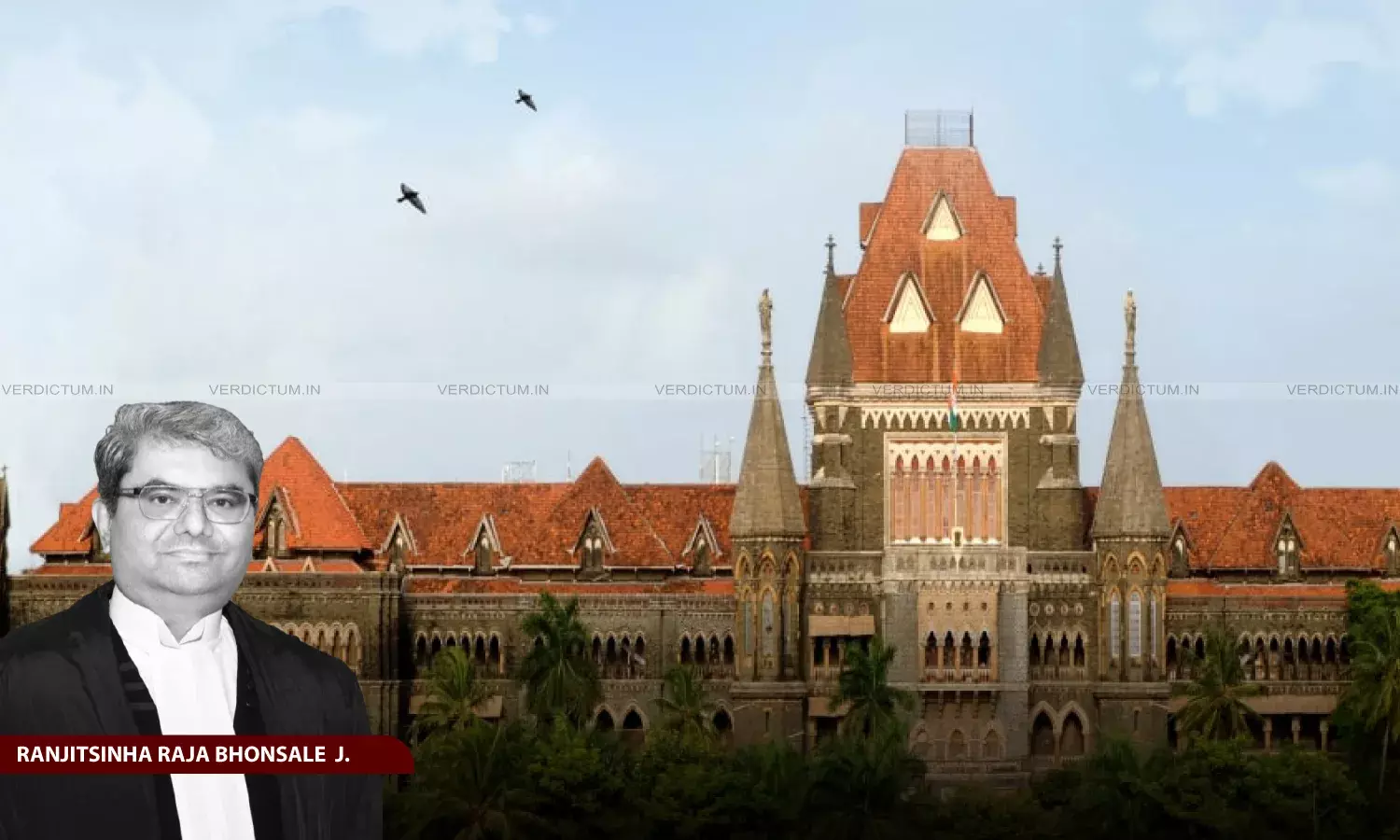
Bombay High Court, Justice Ranjitsinha Raja Bhonsale
The Bombay High Court has quashed a case registered under Section 498-A of the Indian Penal Code against a sister-in-law while observing that the husband’s act of talking or chatting with her or engraving the name of her son cannot come within the ambit of “cruelty”. The High Court explained that the FIR should prima facie show the intention and the intensity of the acts.
The High Court was considering a Writ Petition filed under Articles 226 and 227 of the Constitution and Section 482 of the Code of Criminal Procedure, seeking to quash and set aside the case arising out of an FIR registered under sections 498-A, 107, 323, 504, 506 read with section 34 of the Indian Penal Code (IPC).
The Single Bench of Justice Ranjitsinha Raja Bhonsale held, “If the Petitioner is considered a relative being the wife of the cousin brother, then in that event her son would be the nephew of accused No.1. The act of talking or chatting with the Petitioner or accused no.1 engraving the name of her son, cannot in my opinion, be considered as an act to come within the meaning of the terms “cruelty” as is defined by the the explanations to section 498A of the Indian Penal Code. To term the same, as an act of cruelty, the FIR should prima facie show the intention and intensity of the acts. The “cruelty” inflicted should be such that it drives the woman to commit suicide or cause grave injury to herself or lead to such a conduct that causes grave injury or danger to life, limb or health.”
Advocate Prashant Maggu represented the Petitioner while Additional Public Prosecutor Amit A. Palkar represented the Respondent.
Factual Background
The FIR was filed by the Respondent wife under Sections 498-A, 107, 323, 504, 506 read with Section 34 of the Indian Penal Code against her husband and her in-laws alleging that the a dowry of Rs 3 lakh was given in addition to household articles such as fridge, TV, washing machine, AC and furniture and, immediately, three days after the marriage, her husband started harassing her on petty issues. It was further alleged that the husband was having an extramarital affair with the Petitioner, who was his cousin’s wife. The respondent wife further asserted that the husband had engraved the name of the son of the Petitioner on his hand. The petition before the High Court was filed by the woman alleged to be in an affair with the respondent’s husband.
Reasoning
Referring to Section 498A of the Indian Penal Code, the Bench explained that this section can be invoked by a woman against her husband or a relative of the husband who subjects the woman to cruelty. “The crux of the section is that, the husband or the relative has subjected the woman to cruelty”, it added.
The Bench further explained, “For the act of the husband or the relative, to come within the meaning of “cruelty” the same has to be with a particular intent, motive and objective i.e to drive the woman to commit suicide or cause grave injury to life or limb. The act cannot be a stray act or a one-off act. The intent and severity of the act have to be one which leaves the woman with no other alternative but to commit suicide or cause grave injury. Likewise, the harassment has to be with the intent and object of make and receiving or if it may be termed “extracting” an unlawful demand of property.”
On a perusal of the FIR and the allegations made therein, the Bench noted that the allegations against the Petitioner, apart from being general and vague in nature, were based on suspicion. The Bench further noticed that the Petitioner is the wife of the cousin brother of the first accused (husband), and the FIR was filed against the husband and his immediate family members, i.e father, mother and brothers. As per the Bench, the allegations against the Petitioner were based on the suspicion that the accused was having an extramarital affair with the Petitioner.
“Perusal of the FIR and chargesheet does not indicate that, the Petitioner was involved in any act of violence and cruelty against the Respondent No.2 or in the alleged demand of dowry. There are no details in respect of the allegation of abusing or instigating the accused No.1 to abuse or assault the Respondent No.2 at the instance of or instigation of the Petitioner”, it mentioned.
The Bench noted that the Petitioner was a relative of the accused husband (wife of his cousin brother). As per the Bench, the name of the Petitioner appeared to be included in the FIR in a usual and casual manner, and on the basis of mere suspicion. “In my opinion suspicion should be based on reliable material so as to form basis of cogent and legal evidence at the trial. The material should be such that it can be translated into legal evidence at the trial. In the present case, the record and allegations in the FIR would indicate that the suspicion is based on the moral notions of the Respondent No. 2”, it added.
Thus, invoking the invoke the inherent powers under section 482 of the Code of Criminal Procedure, the Bench quashed the criminal proceedings as against the Petitioner.
Cause Title: A v. The State of Maharashtra (Case No.: Criminal Writ Petition No.. 1158 OF 2021)
Appearance
Petitioner: Advocates Prashant Maggu, Sujender Yadav
Respondent: Additional Public Prosecutor Amit A. Palkar, Advocate Pranali Kakade