

Registrar Cannot Treat Indian Court Judgement As "Foreign" Under Portuguese Civil Procedure Law: Bombay High Court
The Court directed Goa Registrars to process marriage cancellations based on Indian court orders without requiring High Court confirmation.

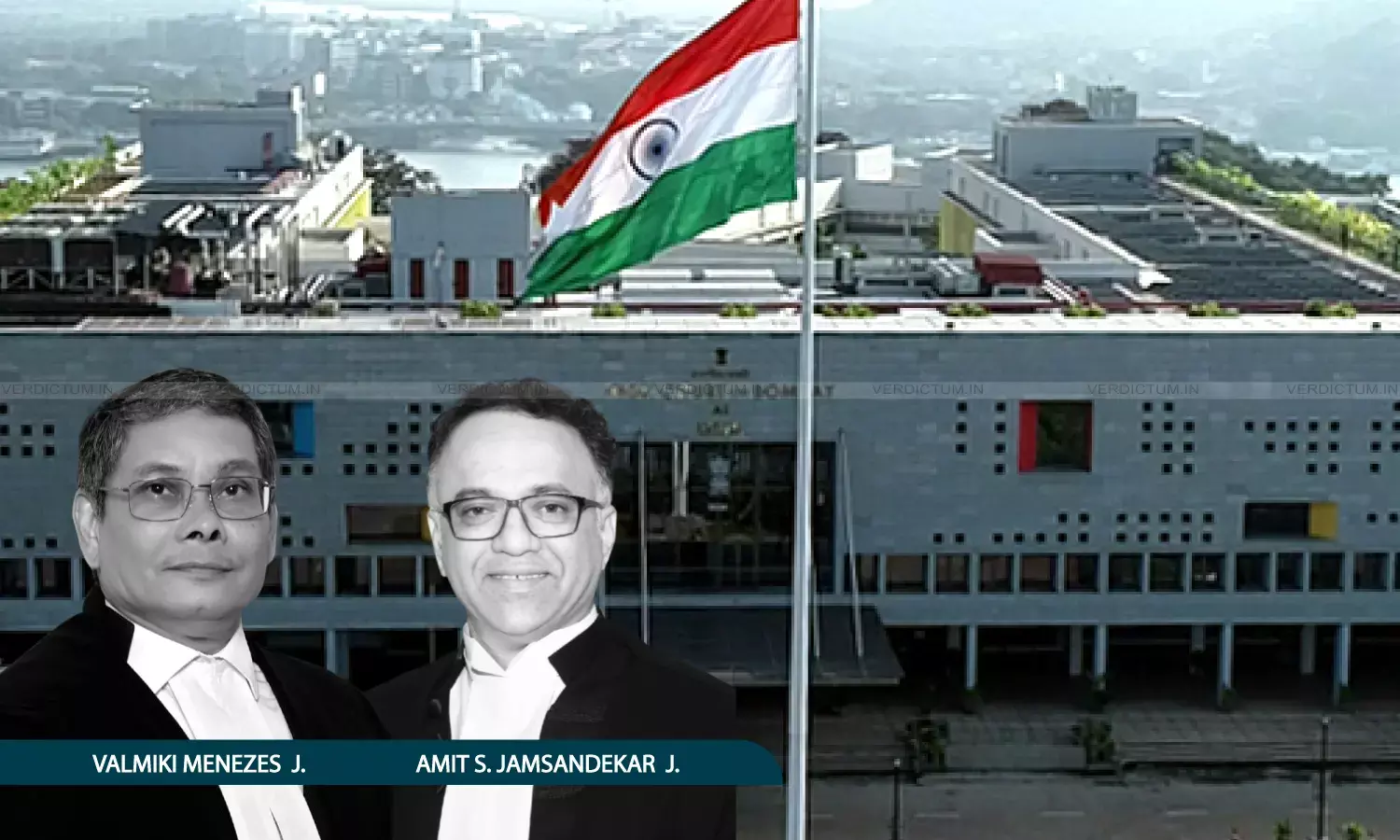
The Bombay High Court held that the Civil cum Sub Registrar cannot treat a decree passed by a competent Indian Civil Court as a "foreign judgment" under the Portuguese Code of Civil Procedure, 1939.
The Court observed that since the Portuguese Civil Code is considered an Indian law following the liberation of Goa, a decree passed by any court established within India is binding on the Registrar and does not require further review or confirmation by the High Court.
Consequently, the Bench quashed the Registrar's refusal to cancel a marriage certificate based on a Bangalore Family Court decree, labeling such objections as arbitrary and contrary to law.
The Division Bench of Justice Valmiki Menezes and Justice Amit S. Jamsandekar observed, “The Registrar cannot treat any judgment and decree passed by a Civil Court within India as a foreign judgment. If the decree is passed by any Civil Court in India, then the provisions of Articles 1100, 1101 and 1102 of the Portuguese Code of Civil Procedure, 1939 are not applicable. A decree passed by any Civil Court having jurisdiction is not required to be reviewed and confirmed by the High Court under Articles 1101 and 1102 of the Portuguese Code of Civil Procedure, 1939. The decree passed by a Civil Court established in India is binding on the Registrar, and the Registrar is bound to abide by the same. Therefore, there was no reason for the Registrar not to cancel the entry and the certificate of marriage and make the consequential changes in the Register.”
Advocate A. Agni appeared for the Petitioner, while Advocate Sameer Talekar appeared for the Respondents.
Factual Background
The Petitioner approached this Hon’ble Court by way of the present Writ Petition, seeking the issuance of a Writ of Mandamus against the Civil cum Sub Registrar, Salcete, Goa. The Petitioner prayed for directions to the said Registrar to cancel the marriage certificate and the relevant entry in the marriage register, in light of the judgment and decree passed by the Family Court, Bangalore, in the matrimonial proceedings between the parties.
The Petitioner initially preferred an Application under Article 1101 of the Portuguese Code of Civil Procedure, 1939, for the review and confirmation of the said decree. However, pursuant to the leave granted by the Learned Single Judge, the Petitioner amended the proceedings to implead the Registrar as a party Respondent and converted the original Application into a Writ Petition under Article 226 of the Constitution of India.
The brief facts leading to the filing of the present Petition were that the Petitioner instituted a Matrimonial Petition under the Indian Divorce Act before the Family Court, Bangalore, seeking dissolution of the marriage solemnised between the parties. Following a referral to mediation, a settlement was arrived at, and a Mediation Report was duly filed before the said Court.
The Family Court, Bangalore, subsequently passed a decree whereby the marriage between the Petitioner and the Respondent stood dissolved in terms of the Memorandum of Settlement. When the Petitioner presented the said decree before the Registrar for the purpose of cancelling the marriage registration, the Registrar refused to entertain the request.
The Registrar arrived at the findings that the decree, having been passed by a Court situated outside the State of Goa, constituted a "foreign decree" within the meaning of the Portuguese Code of Civil Procedure. Consequently, the Registrar maintained that the provisions of Articles 1100 and 1102 of the said Code were attracted, necessitating the review, ratification, and confirmation of the judgment by the High Court before any entry could be modified in the local jurisdiction.
Observations of the Court
The Court said that prior to the liberation of Goa, civil law was governed by the Portuguese Civil Code of 1867 (substantive law) and the Portuguese Code of Civil Procedure, 1939 (procedural law). These codes utilized the term "foreign" to refer to legal institutions or persons not belonging to Portugal.
Following liberation, the Goa, Daman and Diu (Administration) Act, 1962 ensured the continuity of existing laws until amended or repealed. Subsequently, the Code of Civil Procedure, 1908 was extended to Goa, making it applicable in its entirety. In the landmark case of Jose Paulo Coutinho V. Maria Luiza Valentina Pereira & anr., the Supreme Court clarified that the Portuguese Civil Code is an Indian law, not a foreign law, as it remains in force only by virtue of an Act of the Indian Parliament.
It said, “foreign judgment’ to mean a judgment of a foreign court. Section 2 (5) defines ‘foreign court’ to mean a court situated outside India and not established or continued by the authority of the Central Government. Therefore, the definitions of ‘foreign judgment’ and ‘foreign court’ as provided in the Code of Civil Procedure, 1908, will be the binding definitions even for the purpose of the Portuguese Civil Code, 1867 and the Portuguese Code of Civil Procedure, 1939.”
The Court concluded that the Registrar’s objection was arbitrary, perverse, and contrary to law. It ordered the Registrar to cancel the marriage certificate within one week and issued a general directive to all sub-registrars in Goa not to treat Indian decrees as foreign decrees.
The Court also said, “Therefore, the Portuguese Civil Code, 1867 or the Portuguese Code of Civil Procedure, 1939 cannot be construed and interpreted to treat the judgments and decrees of Indian Civil Courts as foreign judgments. After the liberation, the local and special law of the State of Goa cannot treat the rest of India as foreign territory.”
The Court further mandated that any similar pending applications must be disposed of within two weeks in accordance with this judgment.
Cause Title: H v. W [Neutral Citation: 2026:BHC-GOA:954-DB]
Appearances:
Petitioner: Advocate A. Agni
Respondents: Advocates Sameer Talekar and Rishikesh Gawas