Non Obstante Clause Is A Legislative Device: Supreme Court Upholds Notification Fastening Customs Duty Liability On Mumbai Port Trust For Pilfered Goods
 |
|The Court held that Section 45(3)'s non obstante clause overrides the Major Port Trusts Act's conditional bailee liability, distinguishing statutory duty owed to Revenue from civil liability owed to goods-owners.
The Supreme Court has upheld a customs notification approving the Mumbai Port Trust as custodian of imported goods for the purpose of fastening liability to pay customs duty on pilfered goods, holding that Section 45(3) of the Customs Act, 1962, which begins with a non obstante clause, was deliberately enacted as "a legislative device to meet such a circumstance" where the ordinary saving clause under Section 45(1) would otherwise have left a lacuna in revenue collection.
The Court further held that the liability of a Major Port Trust under Sections 42 and 43 of the Major Port Trusts Act, 1963 as a bailee towards the owner of goods is fundamentally different in source, nature and object from the statutory liability to pay customs duty under Section 45(3) of the Customs Act, since the former is compensatory and conditional upon fulfilment of prescribed formalities, while the latter is an independent and absolute obligation owed to the Revenue that survives regardless of the Port Trust's civil liability status.
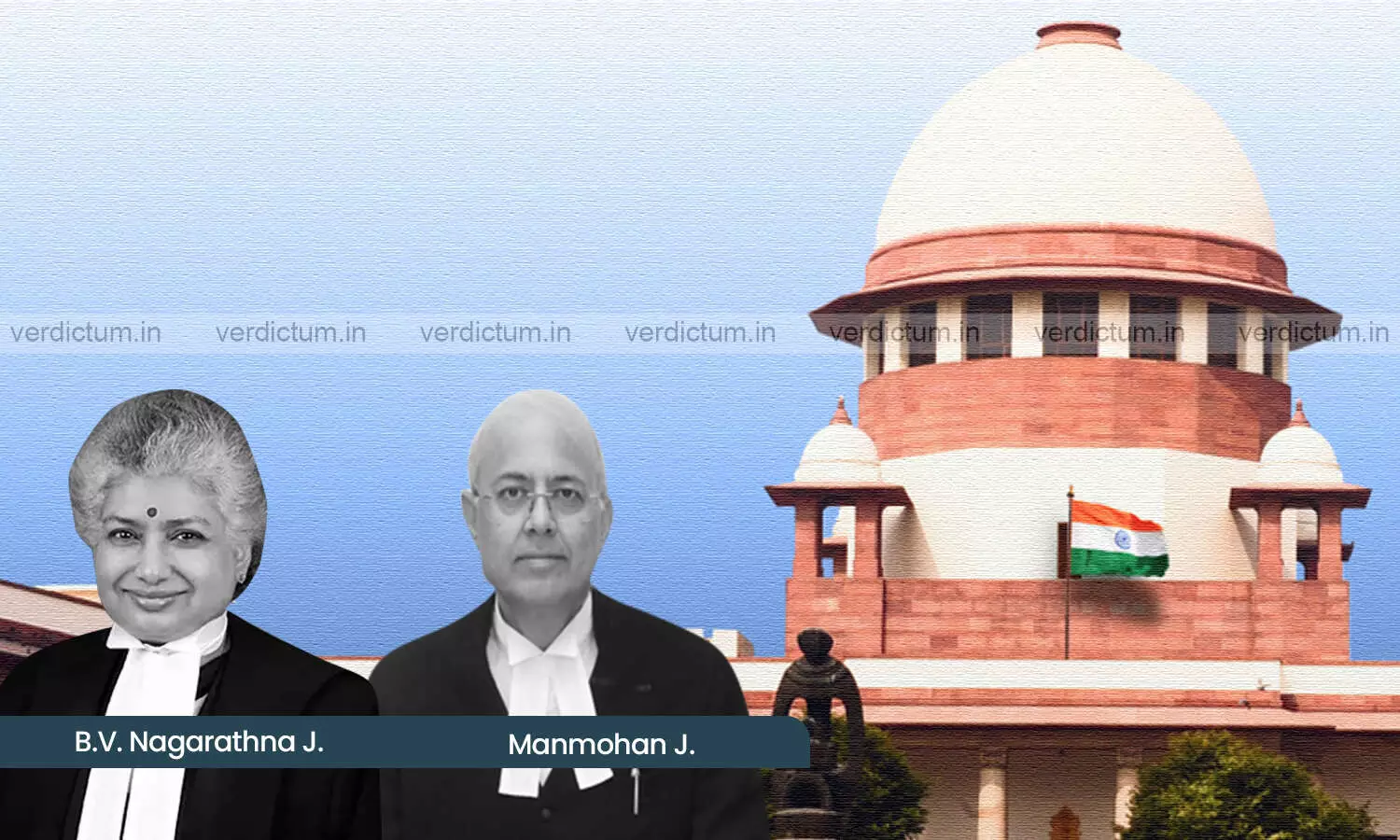
A Bench comprising Justice B.V. Nagarathna and Justice Manmohan in an appeal by the Union of India against a Bombay High Court judgment that had quashed a 2000 customs notification and set aside orders confirming duty demands against the Board of Trustees of the Port of Bombay, observed, “…On a reading of Section 23 of the Customs Act, pilferage of goods in a customs area is not loss of goods simpliciter. If it is a case of loss of goods simpliciter then the provisions of the Major Port Trusts Act would apply having regard to the saving clause under sub-section (1) of Section 45 of the Act. But, as pilferage is not specifically dealt with under the provisions of the Major Port Trusts Act and is dealt with only under the Customs Act and duty is imposed under sub-section (3) of Section 45 of the said Act, then, the savings clause under sub-section (1) of Section 45 would not apply. Consequently, the non obstante clause under sub-section (3) of Section 45 is used as a legislative device to meet such a circumstance. Therefore, any loss of goods other than pilferage is not a subject matter of payment of customs duty under Section 45 of the Customs Act…”.
Advocate V. Chandrashekara Bharati appeared for the appellants and Senior Advocate Rakesh Khanna appeared for the respondent.
For the facts, between 1996 and 2000, the Assistant Commissioner of Customs issued multiple show cause-cum-demand notices to the Mumbai Port Trust seeking recovery of customs duty under Section 45(3) of the Customs Act in respect of goods pilfered while in its custody. These notices were adjudicated and confirmed through orders-in-original.
Subsequently, on October 11, 2000, the Commissioner of Customs (Import) issued a notification under Section 45(1) formally approving the Mumbai Port Trust as custodian of the notified customs area and holding it responsible for statutory duties under Section 45(2) and (3). The Commissioner of Customs (Appeals) dismissed the Port Trust's appeals against the orders-in-original.
The Port Trust challenged both the appellate order and the 2000 notification before the Bombay High Court, which by judgment dated July 28, 2009 held that Section 45(1) permitted recovery of duty only from a person specifically approved by the Commissioner and not from a statutory body already vested with custody under another enactment, and accordingly quashed the notification as being without jurisdiction and ultra vires. The Union of India appealed to the Supreme Court. During the hearing, the appellants did not press the challenge to demands predating the notification, confining the controversy to the validity of the notification itself.
The Court undertook a detailed analysis of the distinction between a saving clause ("save as otherwise provided in any law for the time being in force") under Section 45(1) and a non obstante clause ("notwithstanding anything contained in any law for the time being in force") under Section 45(3), relying on the principles laid down in Aswini Kumar Ghosh v. Arabinda Bose AIR 1952 SC 369 and Dominion of India v. Shrinbai A. Irani IR 1954 SC 596.
It held that the Port Trust's liability under Section 43 of the Major Port Trusts Act as a bailee under Sections 151, 152 and 161 of the Indian Contract Act is conditional upon issuance of a receipt and subject to statutory time limits, and does not by itself create any liability to pay customs duty. Since Section 13 of the Customs Act absolves the importer of duty on pilfered goods, the Court found that Parliament had inserted Section 45(3) with effect from May 26, 1995 specifically to prevent a resulting loss of revenue, and that this provision operates independently of the Major Port Trusts Act's civil liability scheme.
The Court concluded there was no genuine conflict between the two enactments requiring resolution, since pilferage under Section 13 is treated distinctly from loss or destruction of goods generally, the latter alone falling within the saving clause's protection.
Accordingly, the notification dated October 11, 2000 was held valid, and the High Court's judgment to the extent it quashed the notification was set aside. However, since the appellants did not press the challenge relating to demands prior to October 11, 2000, no liability under Section 45(3) being possible absent a prior approval under Section 45(1), the High Court's quashing of the show cause-cum-demand notices predating the notification was left undisturbed. The appeal was disposed of accordingly with no order as to costs.
Cause Title: Union of India and Others v. The Board of Trustees of the Port of Bombay (Neutral Citation: 2026 INSC 919)
Appearances:
Appellants: V. Chandrashekara Bharati, Advocate.
Respondent: Rakesh Khanna, Senior Advocate.