Supreme Court Allows Taj Trapezium Zone Authority To Process Pending 400 MSME Applications Under Expert Oversight
 |
|The Court modified its earlier order and relaxed the 2024 moratorium to let the TTZ Authority process pending non-polluting MSME applications, subject to unanimous clearance by a joint expert panel from NEERI and CEC.
The Supreme Court has modified its October 2024 moratorium to permit the Taj Trapezium Zone (TTZ) Authority to process around 400 pending applications for non-polluting micro, small, and medium enterprises (MSMEs).
The Court ruled that a complete ban on industrial activity could not continue indefinitely without severely impacting local livelihoods.
Under the modified mechanism, applications can be cleared without prior leave of the court, provided a joint expert panel comprising representatives from the National Environmental Engineering Research Institute (NEERI) and the Central Empowered Committee (CEC) gives unanimous approval, balancing regional economic aspirations with strict ecological protection.
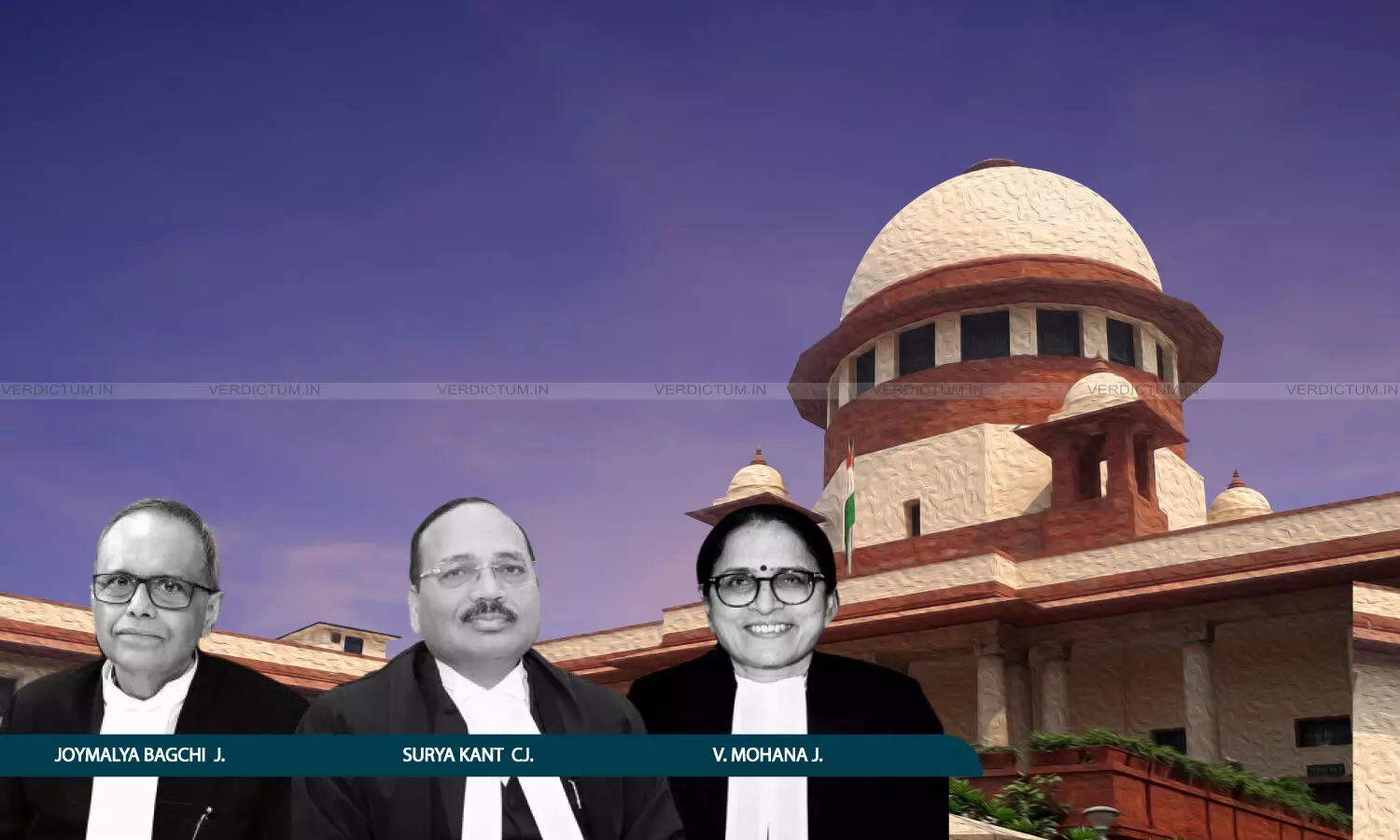
The Bench of Chief Justice Surya Kant, Justice Joymalya Bagchi and Justice V Mohana directed, "We, therefore, direct that the TTZ Authority may process the pending applications; however, in every such meeting, one expert representative from the CEC and another from NEERI shall be invited, and no meeting shall take place unless both subject experts are present. Similarly, in the event one of the two experts objects to the nature of an industry—namely classifying it as not being a 'non-polluting industry'—such application shall not be accepted without leave of this Court...In those cases where both the experts (from NEERI and CEC) are unanimous along with the TTZ Authority, such an application may be processed and taken to its logical conclusion strictly in accordance with law, without any reference to this Court. However, all such decisions shall also be uploaded on the website of the CEC, enabling public-spirited persons to submit their objections and suggestions, if any. Those objections and suggestions shall also be considered by the TTZ Authority in consultation with the experts from NEERI and the CEC, as directed above."
Attorney General R. Venkataramani and Additional Solicitor General Aishwarya Bhati appeared for the Union of India, Senior Advocate Liz Mathew appearing as Amicus Curiae, and Senior Advocate Aparna Bhat appeared for the applicant
The TTZ Authority moved the Supreme Court seeking the modification of its order dated 14th October 2024, pointing out that 410 applications for setting up, expanding, or relocating MSMEs remain pending. The Authority submitted that the apex court’s blanket prohibition had completely halted the processing of these applications.
Appearing for the Union Authorities, Attorney General R. Venkataramani and Additional Solicitor General Aishwarya Bhati submitted that the complete moratorium had severely affected local livelihoods and brought small-scale operations, such as flour mills, footwear units, and paper manufacturing, to a standstill across six districts.
It was pointed out that no heavy industries relying on coal or coke were being considered, and that around 410 pending MSME applications were restricted strictly to units operating on electricity or natural gas.
Senior Advocate Aparna Bhat, appearing for the applicant, strongly opposed the modification and alleged that the TTZ Authority had previously granted arbitrary sanctions to metal and chemical industries in contravention of environmental norms.
Addressing these concerns, the Supreme Court mandated that every meeting of the TTZ Authority convened to consider industrial applications must mandatorily include one expert nominated by the Central Empowered Committee (CEC) and one representative from the National Environmental Engineering Research Institute (NEERI). The Court clarified that a quorum would be invalid in the absence of either expert.
The Court also ordered, "Still further, every final decision shall be conveyed in advance to the learned Amicus Curiae who, if they find that any such decision warrants review by this Court, may move an appropriate application for that purpose...It goes without saying that the TTZ Authority shall be obligated to furnish complete material in respect of every industry to the CEC and NEERI well in advance, before the meeting is convened...Paragraph 27 of our order dated 14th October 2024 stands modified to the extent stated above."
The Bench laid down a dual mechanism for clearing applications:
1. Unanimous Approval: Where representatives of NEERI, the CEC, and the TTZ Authority reached a consensus that an enterprise was non-polluting, the application could be processed and finalized in accordance with statutory guidelines without seeking further clearance from the Court.
2. Dissenting Opinion: If either expert objected to the classification of a proposed unit as non-polluting, the application could not be sanctioned without explicit leave of the apex court.
To ensure transparency, the Supreme Court directed that all approvals granted by the TTZ Authority must be published on the official website of the CEC to enable public-spirited citizens to file objections or suggestions.
The Court further instructed the Authority to evaluate any public feedback in consultation with the expert panel prior to issuing final operational clearances.
Previously, the Court directed the National Environmental Engineering Research Institute to conduct an assessment of the nearby glass industries impacting the Taj Mahal in Uttar Pradesh.
Cause Title: In Re: Regulation Of Industries In The Taj Trapezium Zone [SMW(C) No. 9/2026]