Article 142 Can Be Invoked In Exceptional Circumstances To Protect Post Retiral Benefits Despite Annulment Of Caste Certificate: Supreme Court
 |
|The Supreme Court was considering an appeal challenging the judgment affirming the order passed by the Scheduled Tribe Certificate Scrutiny Committee.
The Supreme Court has granted retiral and pensionary benefits to a retired employee whose caste claim to the “Tokre Koli” Scheduled Tribe was invalidated. The Supreme Court held that generally, invalidation of a caste or tribe claim upon verification would have consequences in law, but the power under Article 142 of the Constitution may be exercised where the equities of the case so warrant, to do complete justice.
The Apex Court was considering an appeal challenging the judgment of the Bombay High Court dismissing the writ petition filed by the appellant and affirming the order passed by the Scheduled Tribe Certificate Scrutiny Committee (second respondent) invalidating the caste claim of the appellant as belonging to the “Tokre Koli” Scheduled Tribe.
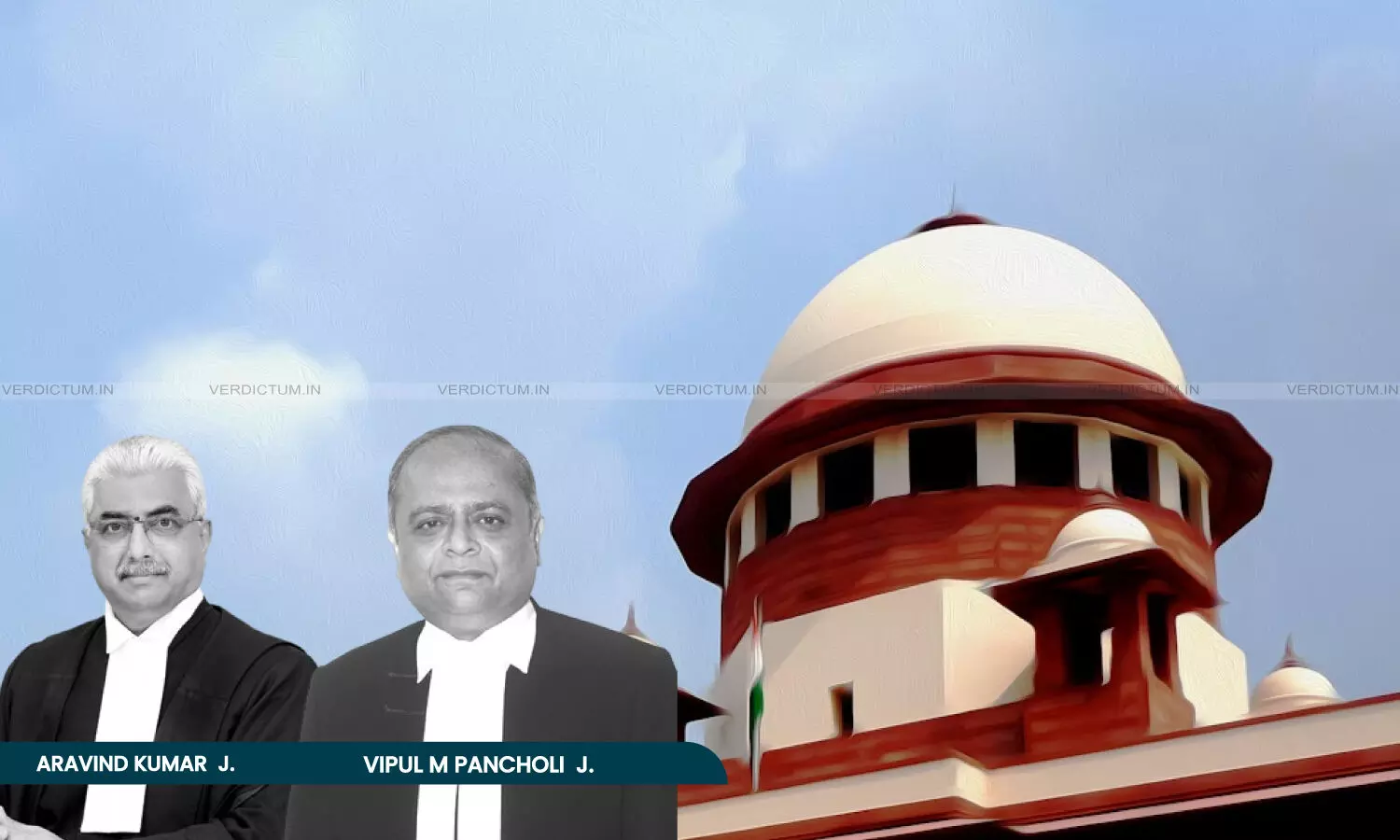
The Division Bench of Justice Aravind Kumar and Justice Vipul M. Pancholi held, “Generally, invalidation of a caste or tribe claim upon verification would have consequences in law. However, this Court has consistently recognized that, in exceptional circumstances where equities of the case so warrant, the power under Article 142 of the Constitution of India may be exercised to do complete justice.”
“We are of the view that the order dated 27.07.2020 passed by the Scrutiny Committee, insofar as Pit invalidates the claim of the appellant of belonging to the “Tokre Koli” Scheduled Tribe, and the impugned judgment dated 15.09.2020 passed by the High Court affirming the same, do not warrant interference. The appellant will be entitled to the retiral and pensionary benefits, which shall be processed and released within a period of six months from the date of this judgment”, it ordered.
Factual Background
The appellant was issued a caste certificate in the year 1984, certifying him as belonging to the “Tokre Koli” Scheduled Tribe. On the basis of the said caste certificate, the appellant secured appointment as a Junior Engineer (Civil) with the Municipal Corporation of Greater Mumbai (third respondent) in 1994 and was subsequently promoted in the year 1999. After misplacing the original caste certificate, the appellant obtained a fresh caste certificate in the year 2000 from the Sub-Divisional Magistrate, Bhusawal Division, certifying him as belonging to the “Tokare Koli” Scheduled Tribe.
In the year 2008, the caste claim of the appellant was referred by the respondent-employer for verification. A show-cause notice was issued to the appellant, who submitted his replies and representation. Thereafter, the Scrutiny Committee, by an order, invalidated, cancelled and confiscated the Caste Certificate. Vide the impugned judgment, the High Court declined to interfere with the order of the Scrutiny Committee and dismissed the writ petition. Aggrieved thereby, the appellant approached the Apex Court.
Arguments
The appellant claimed that he had retired and sought protection of his retiral and pensionary benefits. The appellant had also filed an affidavit wherein he stated that he had retired on June 30, 2025, and that no children and no member of his family had availed any benefit on the basis of the impugned Caste Certificate.
Reasoning
The Bench took note of the fact that the appellant entered service in the year 1994 and continued in service until the date of his retirement on June 30, 2025, which was for more than three decades. “...we consider it appropriate to ensure that the appellant is not deprived of his retiral and pensionary benefits”, it added.
The Bench noticed that during the pendency of the appeal, the appellant continued in service pursuant to an interim order dated November 18, 2021 and ultimately retired on attaining the age of superannuation.
Reference was made to the judgments in Chairman and Managing Director, Food Corporation of India & Ors. v. Jagdish Balaram Bahira & Ors., (2017) where it was held that although ordinarily an appointment secured on the basis of an invalid caste or tribe certificate would not survive, the Court may exercise its power under Article 142 to render complete justice. Reference was also made to R. Sundaram v. Tamil Nadu State Level Scrutiny Committee (2023) wherein relief in respect of post-retirement benefits was extended to the individuals notwithstanding the annulment of their caste certificates.
Thus, exercising its power under Article 142 of the Constitution, the Bench held that the service rendered by the appellant from October 21, 1994 until his date of retirement on June 30, 2025 would be protected for the limited purpose of computation and release of his retiral and pensionary benefits, in accordance with the applicable service rules. “...the protection granted hereinabove shall not amount to validation or recognition of the claim of the appellant of belonging to the “Tokre Koli” Scheduled Tribe”, it clarified.
Thus, allowing the appeal, the Bench directed that the retiral and pensionary benefits be released to the appellant within six months.
Cause Title: Shirish Pandharinath Patil v. The State of Maharashtra (Neutral Citation: 2026 INSC 949)