“Grasp The Nettle And Decide”: Supreme Court Issues Guidelines On Passing Summary Judgment Under Order XIII-A CPC In Commercial Suits
 |
|The Bench noted that commercial adjudication reflects modern reality, and trial is unnecessary where factual certainty remove the need for oral evidence.
The Supreme Court has articulated a proactive mandate for judges to "grasp the nettle and decide” summary judgment applications under Order XIII-A of the Code of Civil Procedure, 1908 (CPC) when faced with neat points of law or construction. Noting that a "conventional trial no longer reflects modern reality", the Court held that judicial efficiency is best served by arresting proceedings at the threshold when a defense is merely "fanciful or speculative" rather than real and substantial.
The Bench while issuing guidelines, observed that the summary judgment procedure advances access to justice by providing a swift, cost-effective alternative to a full-fledged trial. The Court suggesting to ‘embrace a shift in the culture of efficiency in dispute resolution’, clarified that accessibility must be assessed in terms of affordability, timeliness, and proportionality, requiring procedural mechanisms to be tailored to the stakes of the litigation while ensuring the optimal use of judicial resources in cases where prolonged adjudication would serve no real purpose.
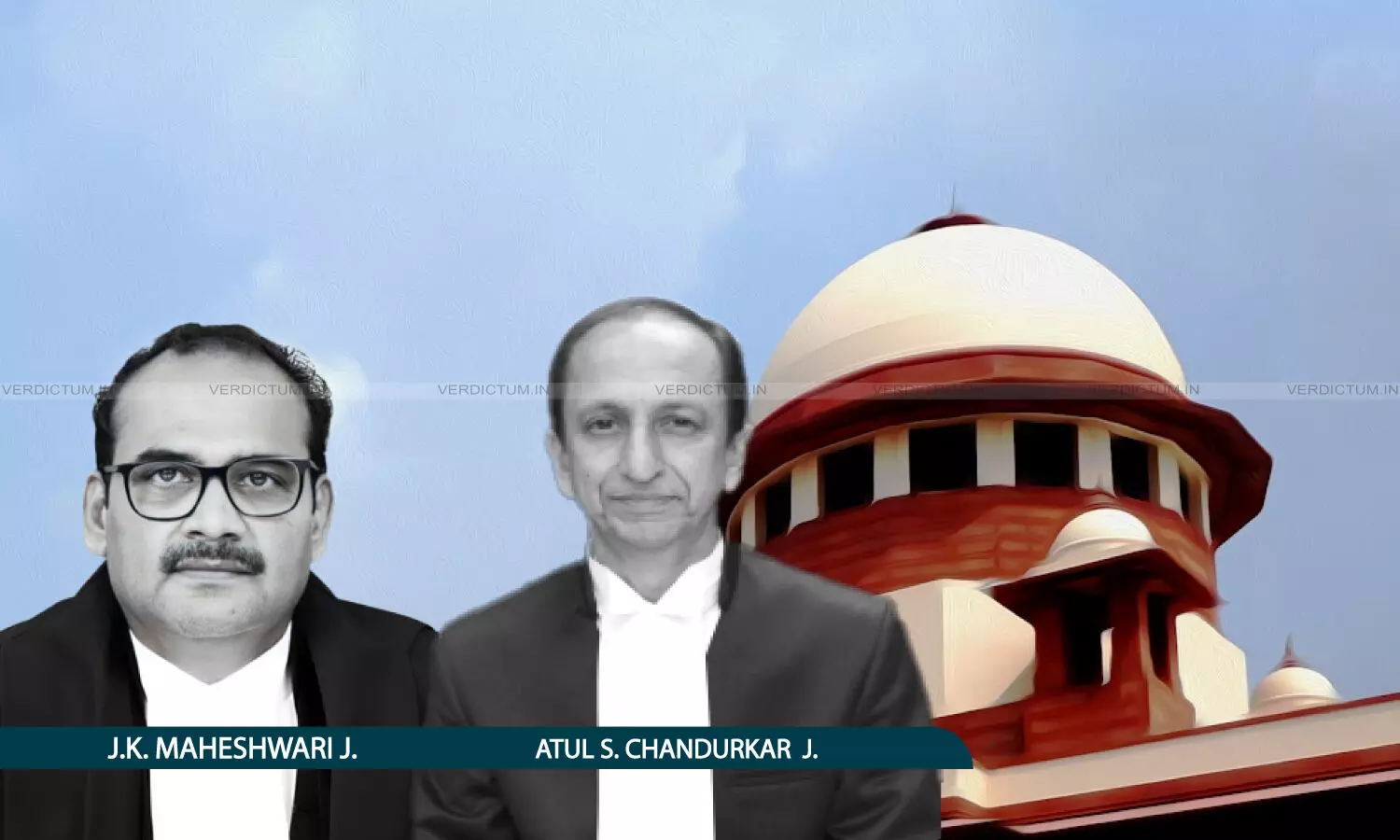
Justice J.K. Maheshwari and Justice Atul S. Chandurkar observed, “If a case before the Court gives rise to a neat point of law or construction, and if the Court is satisfied that it has all evidences necessary for the proper determination of the question and that the parties have had an adequate opportunity to address their arguments; it should grasp the nettle and decide the same. While it is simply not enough for the defendant to argue that something may come up in trial, at the same time the defendant has to show from the documents available on record, or portray that such evidence likely exists and can be expected to be made available during the trial”.
Senior Advocate Shyam Divan appeared for the petitioner and Senior Advocate Kailash Vasdev appeared for the respondent.
In 2007, the appellant purchased a commercial plot in Jasola from DDA for ₹164.91 crore through public auction, with the conveyance deed registered in 2008. However, the land acquisition was later declared lapsed by the High Court in 2016, a decision upheld by the Supreme Court, and DDA failed to re-acquire the land despite being granted time.
The appellant then filed a commercial suit seeking refund and sought summary judgment under Order XIII-A CPC. The Delhi High Court refused, holding that disputed questions on possession required trial, prompting the appeal before the Supreme Court.
The Supreme Court held that the High Court misdirected itself by equation physical possession with a triable legal issue. The Bench reasoned that because the land acquisition had conclusively lapsed, the title flowed back to the original owner, leaving the DDA with no legal interest to retain the bid amount.
The Court noted that the "real prospect of success" standard postulates a degree of certainty higher than a merely arguable claim; therefore, when the DDA's defense of "possession" was legally irrelevant to the right of refund, it was "fanciful" to let the matter go to trial.
Consequentially, the Bench directed that while considering an application for summary judgment under Order XIII-A of the CPC, the following non-exhaustive guidelines have to be complied –
(i) That the procedural mandate under Order XIII-A, CPC be strictly complied.
(ii) The Court should consider, (a) Whether Plaintiff has no real prospect of succeeding on the claim or issue; or (b) Whether the defendant has no real prospect of successfully defending the claim or issue; and
(iii) The Court should also consider whether there is no other reason why the case or issue(s) should be allowed to go to trial.
(iv) While ascertaining above, the Court does not have to take everything on the face value, but it must also not conduct a mini trial at the same time.
(v) That the Court has to differentiate between a cause of action/defence respectively, which is real as opposed to fanciful prospect.
(vi) That the Court ought to grasp the nettle, when dealing with the summary judgment applications to decide short points of law and interpretations.
(vii) The Court must take into account not only the evidence before it but also the evidence that can reasonably be expected to be led/available at the trial.
(viii) That the Court’s usage of power under Order XIII-A, CPC is exceptional as it cuts short the process of trial and ought to be exercised where oral evidence and full trial is not required.
(ix) In order to ascertain the need for full trial over summary judgment, the Court has to see whether, in the interest of justice, it is more suited to conduct trial to –
(a) Weigh the evidence,
(b) Evaluate the credibility of a deponents,
(c) Draw reasonable inferences from the evidence.
“The effectiveness of private arbitration, once seen as a solace cannot be the panacea for all disputes. There is a need, as well as growing support, for developing new extensive pre-trial processes. A conventional trial no longer reflects modern reality and requires re-calibration. In this light, to ensure balance, there is a requirement of simplified and proportionate tools for efficacious adjudication. This implores our system to adopt and embrace a shift in the culture of efficiency in dispute resolution”, the Bench noted.
“The principle of proportionality requires that procedural mechanisms be tailored to the nature, complexity and stakes of the litigation; while ensuring optimal use of judicial time and resources. In this context, a summary judgement assumes significance as an important procedural tool. It advances access to justice by providing a swift and cost-effective alternative to a full-fledged trial, especially in cases where prolonged adjudication would serve no real purpose. In such a background, the scheme of Order XIII-A of the CPC required to be analysed. Order XIII-A of the CPC was brought by way of the Commercial Courts Act, 2015…”, the Bench further noted.
Therefore, the Court rejected the DDA’s limitation plea, holding the right to refund arose only after November 2017, and stressed courts must avoid undue timidity where evidence permits a clear decision. It allowed the appeal, set aside the 2008 conveyance deed under Article 142, and directed DDA to refund ₹164.91 crore with 7.5% interest from July 12, 2007.
The appellant was permitted to withdraw ₹186 crore held in deposit, with the balance payable within eight weeks.
Cause Title: Reliance Eminent Trading and Commercial Private Limited v. Delhi Development Authority (Natural Citation: 2026 INSC 436)
Appearances:
Appellant: Shyam Divan, Senior Advocate.
Respondent: Kailash Vasdev, Senior Advocate.