Supreme Court Asks Police To Add Attempt To Murder Charges, Transfer Probe To Crime Branch In Advocate Assault Case
 |
|The Bench directed the Delhi Police Commissioner to transfer the investigation due to allegations that local police were shielding the accused and forcing a settlement.
The Supreme Court has directed the Commissioner of Delhi Police to immediately transfer the investigation into the brutal assault of a regular court practitioner from local police to the Crime Branch.
The Court issued the order after noting glaring lapses and credible allegations that local police officers were shielding the accused—an RWA president—and actively forcing the victim into a compromise.
Emphasizing that intention matters more than the physical gravity of an injury when evaluating an attempt to murder, the Court rejected attempts to downplay the assault and ordered that Sections 109 (Attempt to murder) and 118 (Voluntarily causing hurt by dangerous weapons) of the Bharatiya Nyaya Sanhita (BNS) be formally added to the FIR.
On July 14, the Court issued notice and directed immediate interim police protection to secure the life and liberty of the victim.
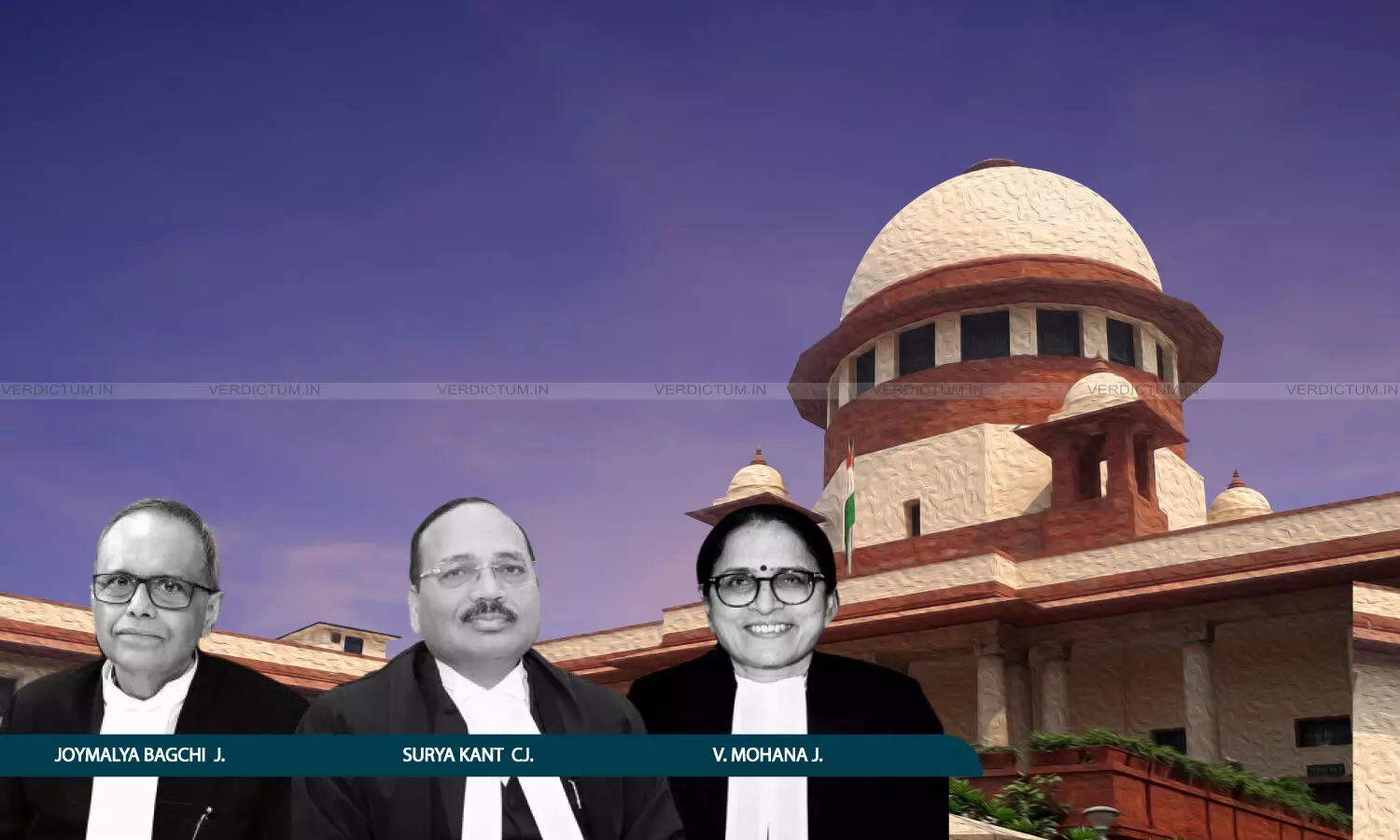
The Bench of Chief Justice Surya Kant, Justice Joymalya Bagchi and Justice V Mohana ordered, "Taking into consideration the injury and the vital part of the body where it has been inflicted, it seems to us an offence like attempt to murder ought to have been incorporated in the FIR subject to the final outcome of the investigation. Thus, we direct that Sections 109 and 118 of BNSS be added. Since there are allegations like urging the petitioner to settle the dispute by local police, in the peculiar circumstances, we direct commissioner of police to transfer the case to crime branch."
Senior Advocate Vikas Singh appeared for the Petitioner, while Attorney General R. Venkataramani appeared for the State.
Singh submitted, "The police is acting very strange, lord. Yesterday they were forcing them to get into a settlement."
Regarding the adequacy of the investigation and the victim's medical evaluation. Attorney General R. Venkataramani said that he had advised the victim to be taken to a government hospital to obtain an objective Medico-Legal Report (MLR) so that the exact nature of the injuries could be legally established. He stated that he had acted in the victim's best interest.
He said, "I told them, look, if a medical-legal report given by a private hospital would not inspire confidence, please take this person to a government hospital, get him examined all over again, and change your charges if that is what need to be done. They are going to do that today...Let it be done today. If there is, if there is a medical-legal report on the basis of which they have acted, which says simple injury, it could be wrong. A private hospital could commit a wrong. So why should it go by a private hospital's opinion? I said please take him to a government hospital, have a clear examination, and change the charges. I suppose what I have done is in the best interest of the person."
Singh replied, "No, you have not. I'm sorry. As attorney, we expected more from you."
Singh countered the AG's submission, arguing that the Attorney General should have taken far more proactive and stringent measures given the gravity of the incident.
When the Chief Justice of India (CJI) pointed out that a "sharp object" was reportedly used in the attack, the AG remarked that the accused had claimed the victim merely "brushed against a wall"—which is precisely why an independent medical assessment was necessary to uncover the truth.
Justice Joymalya Bagchi rejected any attempt to downplay the severity of the assault based purely on the physical nature of the injury. Justice Bagchi emphasized that "intention is important in such cases and not the gravity of the injury," noting that the attack was targeted at a highly vital part of the victim's body (the head).
Justice Bagchi said, "this is, uh, something which is a question of law which requires to be addressed by you. When you see an injury on the face, as you rightly say, until and unless we have the expert opinion, it is not possible to have a very forensic understanding whether it is...What happens is an injury on the head does not qualify within the seven categories or eight categories of grievous hurt. Out. Simple hurt. When you look at attempt to murder, the perspective is different. Intention becomes important, the action is not that important...The question is what courts have done, and what courts persuade, because FIR is essentially an executive premise. Courts persuade police agencies to put the case at its highest. And then you pass through materials and you file a report under 320."
Representing the victim, Senior Advocate Vikas Singh placed the latest status report before the Bench, pointing out that a compromise was actively being forced upon the victim. Adding weight to these concerns, Senior Advocate Vikas Pahwa alleged that the accused—who is a Resident Welfare Association (RWA) president—was being shielded and protected by local police officers.
Vikas Singh argued that the local police's reluctance to apply the appropriate law was glaring, questioning, "If Section 109 [of the Bharatiya Nyaya Sanhita, 2023, pertaining to attempt to murder] is not attracted here, then what else is?" Senior Advocate Siddharth Dave also joined the submissions, emphasizing that the victim is a regular practitioner who frequently appears before the Supreme Court, making the targeted threat even more alarming.
Ultimately, the Court ruled that the physical strike on a vital organ strongly indicated an offence that ought to have been registered as an attempt to murder. Consequently, the Bench directed that Sections 109 (Attempt to murder) and 118 (Voluntarily causing hurt by dangerous weapons or means) of the Bharatiya Nyaya Sanhita (BNS) be formally added to the FIR.
Due to the credible allegations of bias and shielding by the local police, the Court directed the Commissioner of Delhi Police to immediately transfer the investigation from the local police station to the Crime Branch.
With these directions to ensure an impartial and high-level probe, the Court disposed of the writ petition.
Cause Title: Pankaj Sharma v. State of NCT of Delhi [W.P.(Crl.) No. 265/2026]