Supreme Court Issues Notice In PIL Seeking Standard Investigation Procedure & Speedy Trial For Child Kidnapping And Trafficking Cases
 |
|The plea said that the absence of a uniform, comprehensive statutory and administrative framework has resulted in serious institutional deficiencies.
The Supreme Court has issued notice in a plea seeking directions for the formulation of a 'Standard Investigation Procedure', time-bound investigation, and the establishment of Special Courts for the speedy trial of kidnapping and child trafficking matters.
A writ petition was filed under Article 32 of the Constitution highlighting the illegal adoption racket, interstate child trafficking network, cases involving abduction of children for exploitation and human organ trading, and also for medicinal trial.
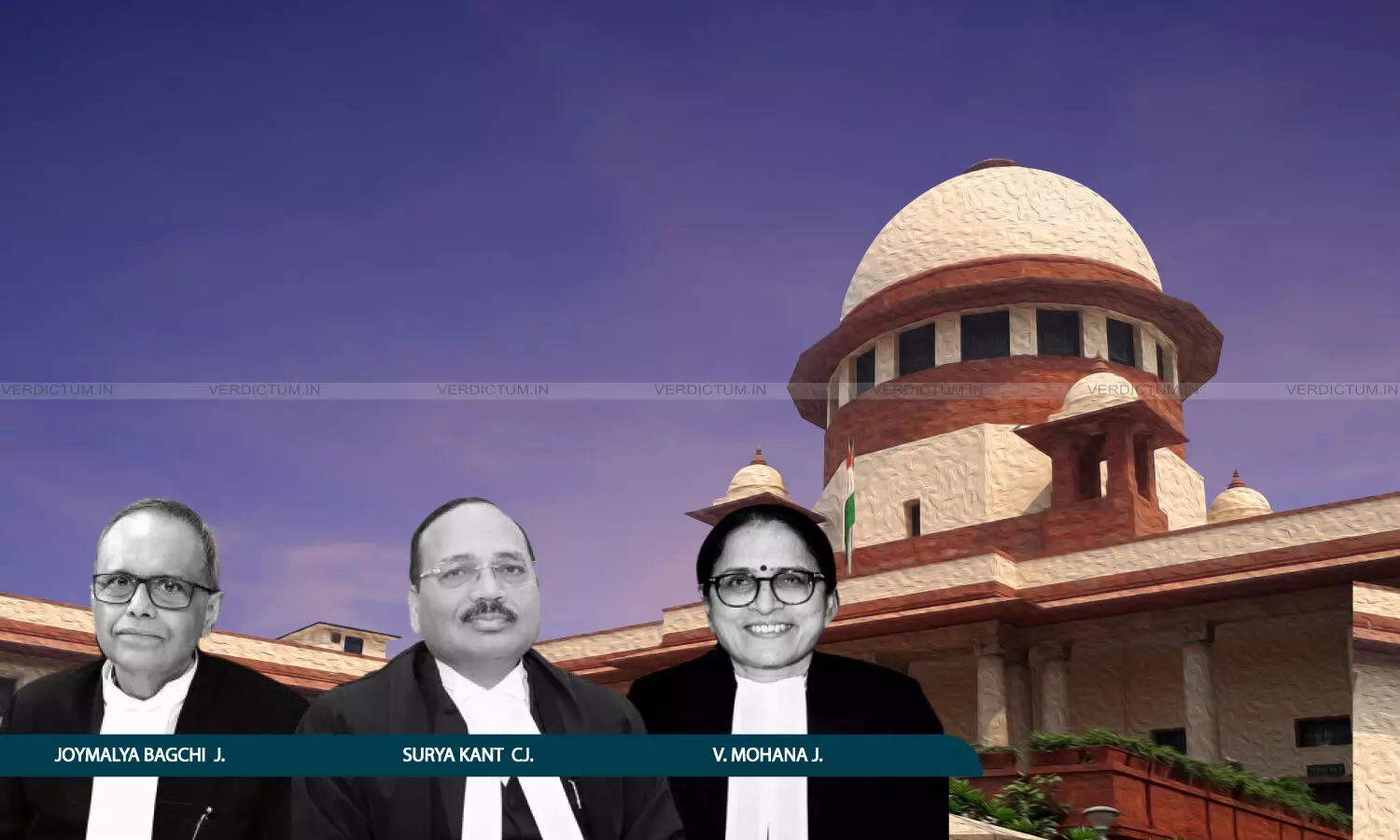
The Bench comprising Chief Justice Surya Kant, Justice Joymalya Bagchi and Justice V Mohana issued notice in the plea filed by Advocate Ashwini Kumar Upadhyay.
The petitioner, appearing in person, submitted that a vast number of children, predominantly belonging to the Economically Weaker Section (EWS) and Below Poverty Line (BPL) categories, were abducted annually across various states.
He drew the attention of the Bench to the precedents set by the Apex Court, specifically placing reliance on the judicial observations in Pinki vs. State of Uttar Pradesh, which underscored the alarming rise in human trafficking and the multifaceted forms of child exploitation, including forced labor, begging, sexual abuse, and illegal adoptions.
It was submitted that the police don’t promptly register FIR, conduct expeditious investigations in cases involving missing, kidnapped and abducted children. The delayed investigation and lengthy trial facilitate organized kidnapping mafias to flourish their illicit business, and therefore countless children are at grave risk.
It was argued that despite the directions issued by the Court in G. Ganesh v. State of Tamil Nadu & Ors, directing that every complaint regarding a missing child be treated with utmost urgency and investigated in accordance with law on priority, the implementation of it remains grossly inadequate across the country. Local Police authorities continue to adopt old inconsistent arbitrary practices, thereby frustrating the very object of timely rescue and protection of children.
The plea stated, "There is systemic failure of effectively investigating such offences, resulting in widespread child trafficking, illegal adoption, forced labour, sexual exploitation & other similar crimes. Such institutional failures violate the right to life liberty dignity safety and security of children guaranteed under Article 21...4. The continued failure of Centre and State authorities to ensure immediate registration of FIRs and conduct prompt, effective and time bound uniform investigation violated fundamental rights guaranteed under Articles 14, 15, 21, 21A, 23 read with Articles 15(3), 38, 39(e), 39(f), 45 and 51(c) of the Constitution."
It was submitted that the injury to the children is extremely large. Delayed registration of FIR & ineffective investigation significantly reduces the likelihood of safely recovering a kidnapped child and increases the risk of trafficking, sexual abuse, forced labour, illegal adoption, child marriage, organ trafficking, and other forms of exploitation.
Families of missing children are subjected to severe psychological trauma, emotional distress, financial hardship, and prolonged uncertainty, while the children are deprived of their constitutional rights to life, liberty, dignity, security and education, it added.
"Organized crime like kidnapping and abduction cannot be effectively investigated by the routine police, busy in maintaining Law & Order as these offence are committed by interstate transnational criminal networks involving forged identity documents, illegal adoption rackets, trafficking syndicates, cyber enabled communication, financial transactions routed through multiple intermediaries, and coordinated heinous crimes operating across the country", it was averred.
The plea said that despite an alarming increase in organized child kidnapping trafficking, no specialized expert body has undertaken comprehensive empirical assessment of the nationwide patterns, causes and institutional deficiencies associated with such offences. Consequently, policy responses continue to remain fragmented and largely reactive.
The plea prayed, "direct the Centre and States to formulate ‘Standard Questionnaires’, ‘Special Investigation Procedure’ and to ensure that investigation of kidnapping and abduction shall be done by the officer not below the rank of ACP/SHO in order to ensure time bound investigation...direct the Centre and States to establish Special Courts like MLA-MP Court to decide the cases of kidnapping & abduction within 01 year...direct the Centre & States to assess the entire property of kidnappers, abductors & family members, and accordingly invoke the provisions of money laundering, benami property and black money..."
It also sought directions to the Centre and States to take steps to confiscate movable and immovable property of perpetrators and their family members, directly and indirectly involved in kidnapping and abduction.
Accordingly, the Court listed the matter for further hearing.
Cause Title: Ashwini Kumar Upadhyay v. Union of India & Ors. [W.P.(Crl.) No. 354/2026]