Unreasonable When There Are No Teachers & Books In Schools: Supreme Court Issues Notice On PIL Challenging CBSE’s Three-Language Mandate For Class 9
 |
|The Court has sought responses from the Centre and CBSE on a plea challenging the abrupt implementation of a policy making two native Indian languages compulsory for Class 9 students from this academic year.
The Supreme Court has issued notice to the Centre, CBSE, and NCERT on a Public Interest Litigation (PIL) challenging the sudden implementation of a three-language mandate for Class 9 and 10 students.
The petition assailed the CBSE Circular No. Acad-33/2026, which abruptly advanced the enforcement of the policy to July 1, 2026, making it compulsory for students to study three languages, with at least two being native Indian languages.
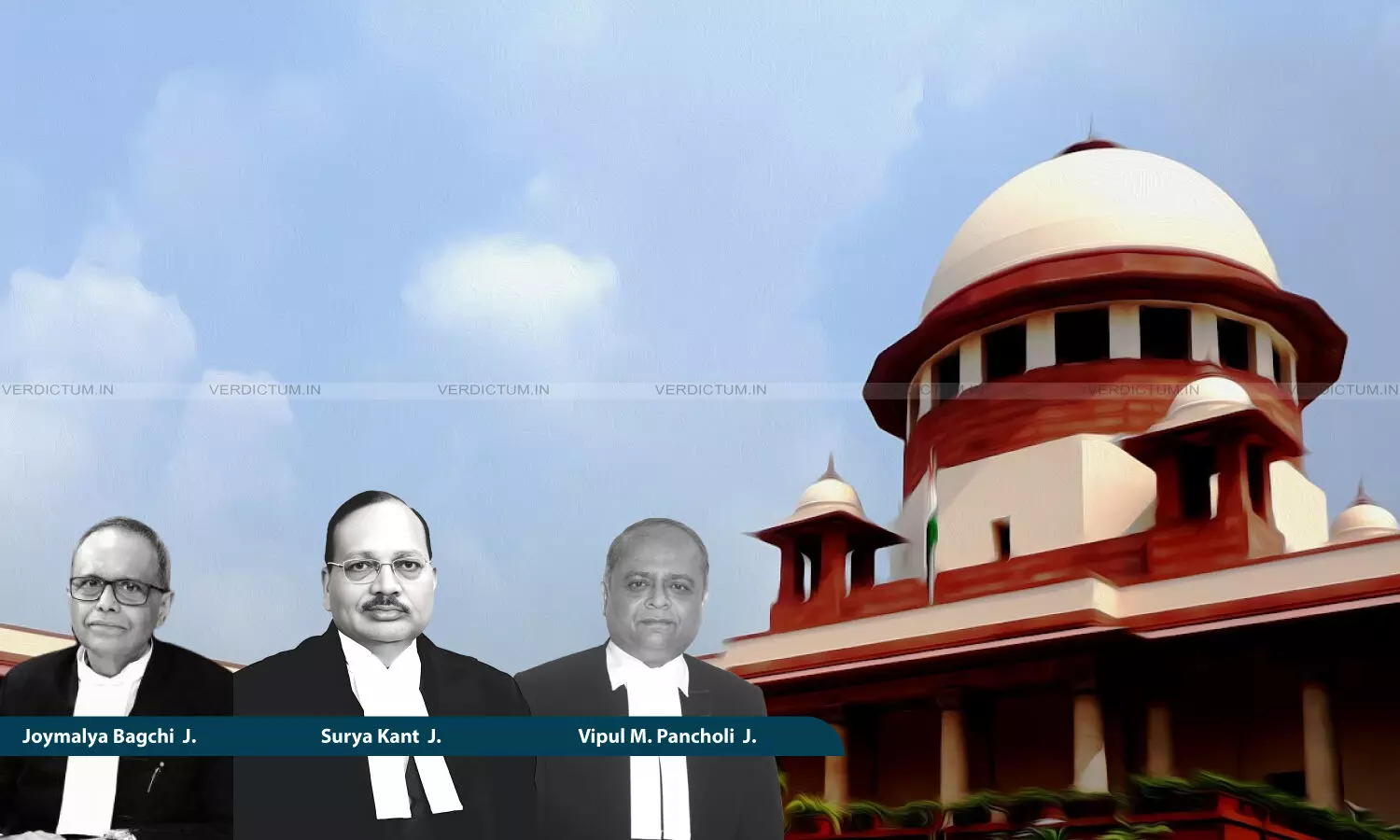
The Bench of Chief Justice Surya Kant, Justice Joymalya Bagchi and Justice Vipul M Pancholi ordered, "Issue notice. Let the soft copies of the present writ petition be handed over to the office of ASG Aishwarya Singh Bhati...List this on June 15."
Senior Advocates Mukul Rohatgi and Kapil Sibal appeared for the Petitioners, while ASG Aishwarya Bhati appeared for the Union of India and NCERT.
A Public Interest Litigation (PIL) was filed in the Court under Article 32 of the Constitution. The writ petition challenged a decision by the Central Board of Secondary Education (CBSE) to make a third language compulsory for Class 9 and 10 students starting from the 2026-27 academic year. The petitioners named the Union of India, the CBSE, and the National Council of Educational Research and Training (NCERT) as respondents in the case.
Senior Advocate Mukul Rohatgi, appearing for the Petitioners submitted, "These are several matters which require the intervention of the Court. A pan-India circular has been issued by the CBSE. I just want to tell you in a nutshell, without reference to papers—without reference to papers. So, let's say in Delhi, somebody is studying English, Hindi, and, say, French; in Bengal, somebody is studying English, Bengali, and French; in Tamil Nadu, similarly...Now they have issued a circular. First, they said we will implement a change from 2029–30, which is about 3–4 years away, so the students would adjust. But suddenly, a change has been made to be launched now, on the 1st of July, which is in the ongoing session. Children have been promoted; they are already there in April, in the ongoing session in the 9th standard, all over India."
The legal challenge specifically targeted CBSE Circular No. Acad-33/2026, which the board issued on May 15, 2026. According to the petition, this directive mandated that effective July 1, 2026, Class 9 students had to study three languages, with a requirement that at least two of them be native Indian languages. The policy allowed students to study a foreign language only as a third language—if the other two were Indian languages—or as an optional fourth language.
"Now the mandate is that you must have two native languages. So, let's say in Tamil Nadu, somebody who studied Tamil, English, and, say, French—because you don't study Hindi, a lot of people don't—will now have to have one more native language in the 9th class. When he is already 14 years of age, he will have to take Telugu, or he can take Assamese, or whatever he likes, provided you have teachers. In Delhi, we studied English and Hindi, so now, that's not enough...One more thing I would tell you, which is something startling: they say, "We don't have textbooks," because you have to implement this in 15 days. "Take the textbooks of the 6th standard." And each subject is...", Rohatgi added.
CJI Surya Kant said, "It is a very, very important issue. The legal aspect we will see, whatever it is, but there are certain factual aspects of logistics problems and implementation issues. We would like to have your comprehensive reply, and we will take up the matter on 15th June."
Senior Advocate Kapil Sibal submitted, "I understand the logistical issue, but there is also a question of choice, my Lords. Language is a matter of choice. I can understand if you say, Look, there is a national language, you must learn that—of course we must learn it—but otherwise, language is a matter of choice, and there are also federal issues."
Justice Bagchi remarked, "We are not really on the question of a federal issue here, because it is an insistence on federalism in the country itself, increasing the number of national languages. It is not a federal issue; it is an issue of being unreasonable when teachers are not there in the schools and books are not there."
The petitioners sought the quashing of the controversial May 15 circular. They requested the court to restore the position established in an earlier CBSE notification on April 9, which had deferred the compulsory implementation of the language policy for Class 9 until the 2029-30 academic year. Additionally, the group asked for interim protection to prevent the enforcement of the revised policy on existing students while the matter remained under judicial review.
Accordingly, the matter will be heard on June 15.
Cause Title: Yashica Bhandari v. Union of India and Ors. [W.P.(C) No. 694/2026]