Supreme Court Sets Aside NGT Orders Directing Closure Of Formaldehyde Units Operating Without Prior Environmental Clearance
 |
|The Court held that formaldehyde manufacturing units established and operated pursuant to Consent to Establish and Consent to Operate granted by Pollution Control Boards could not be ordered to shut down where the Boards themselves were unaware of the requirement of prior Environmental Clearance under the EIA Notification, 2006.
The Supreme Court has set aside orders passed by the National Green Tribunal directing the closure of several formaldehyde manufacturing units in Rajasthan and Haryana for operating without prior Environmental Clearance.
The Court was hearing a batch of civil appeals filed by formaldehyde manufacturing units challenging orders passed by the National Green Tribunal on 03.06.2021 in Original Applications concerning the operation of formaldehyde units without prior EC under the Environment Impact Assessment Notification, 2006.
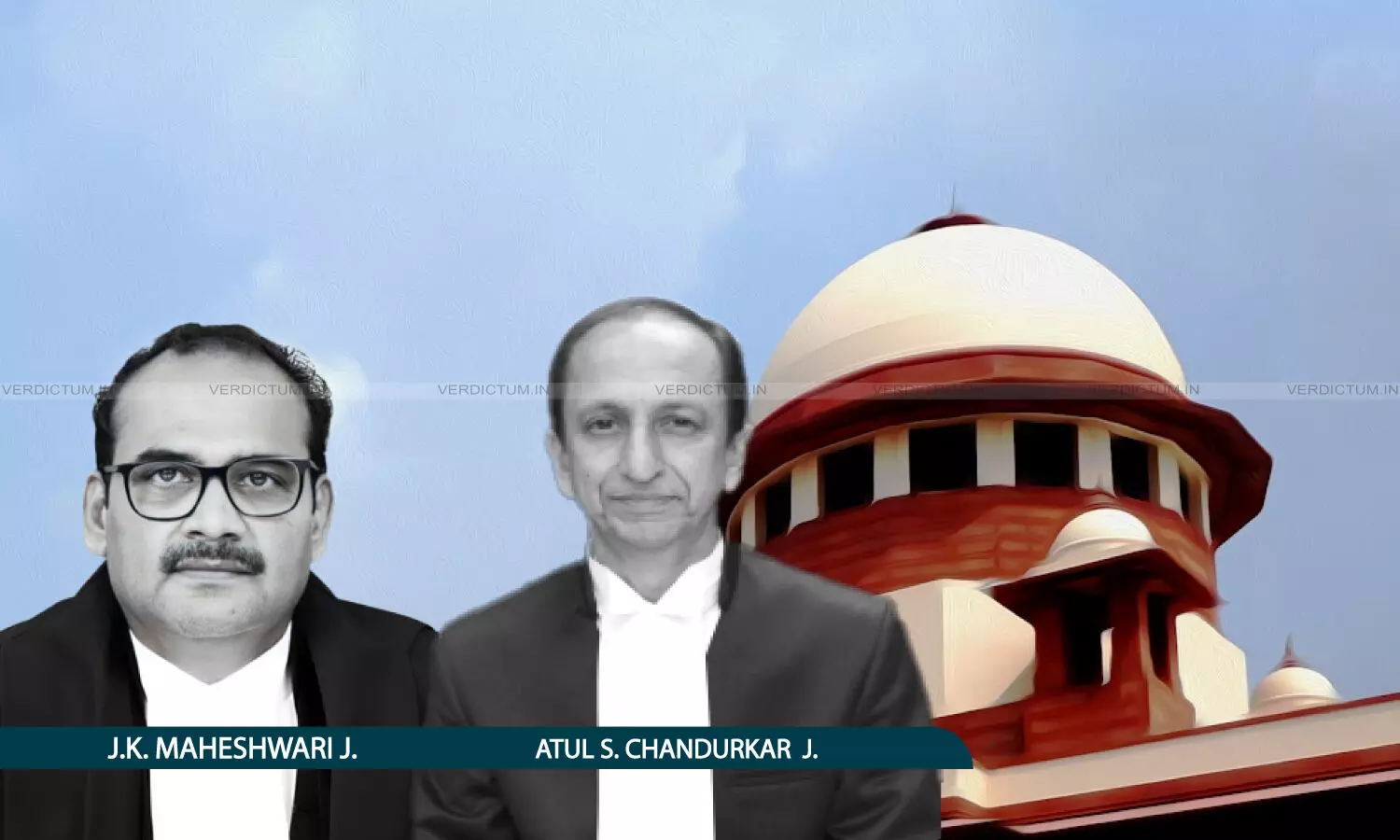
A Bench of Justice J.K. Maheshwari and Justice Atul S. Chandurkar, while setting aside the NGT order, observed: “the case in hand is not a one where the appellants established the units of formaldehyde and started operation due to lack of bona fide, ignoring any requirement of law. On the contrary, it is a case where the PCBs were not aware that prior EC to establish and operate such units is required in terms of EIA 2006 notification. Accordingly, in terms of the notices issued by the PCBs, the appellant units have applied for grant of EC which remains pending”.
Advocate Tarun Gupta appeared on behalf of the appellants. Additional Advocate Generals B.K. Satija and Shiv Mangal Sharma appeared on behalf of the respondents.
Background
The appellants are industries engaged in the manufacture of formaldehyde and related resins, including melamine formaldehyde, urea formaldehyde and phenol formaldehyde in the States of Rajasthan and Haryana.
Three original applications were filed before the National Green Tribunal alleging that formaldehyde manufacturing units had been established and were operating without obtaining prior Environmental Clearance under the EIA Notification, 2006.
The NGT, by orders dated 03.06.2021, held that formaldehyde manufacturing units could not operate without prior EC and directed the closure of such units. The orders in the cases concerning the present appellants were passed relying upon the NGT’s principal decision in Dastak NGO v. Synochem Organics Pvt. Ltd.
The appellants challenged the said orders before the Supreme Court.
During the pendency of the appeals, this Court in Pahwa Plastics Pvt. Ltd. v. Dastak NGO (2023) had already set aside the principal NGT judgment relied upon against the present appellants. In Pahwa Plastics, the Court held that units established pursuant to valid Consent to Establish (CTE) and Consent to Operate (CTO) granted by Pollution Control Boards could not be shut down merely for want of prior EC, where even the Pollution Control Board itself was unaware that EC was required for such units.
The Court also examined subsequent developments relating to the judgments in Vanashakti v. Union of India and the review judgment in CREDAI v. Vanashakti, concerning ex-post facto Environmental Clearances and validity of Office Memorandums issued by the Ministry of Environment, Forest and Climate Change.
Court’s Observation
The Supreme Court extensively examined whether the factual position of the present appellants was materially different from the units involved in Pahwa Plastics.
The Court noted that in all the present cases, the concerned Pollution Control Boards had granted Consent to Establish and Consent to Operate to the appellant-units before commencement of their operations.
The Bench observed that at the relevant point of time, even the Pollution Control Boards themselves were uncertain regarding the applicability of prior EC requirements to formaldehyde manufacturing units under the EIA Notification, 2006.
The Court noted that the Rajasthan Pollution Control Board issued an Office Order dated 19.08.2019 directing formaldehyde units already granted CTE and CTO to apply for EC and submit proof thereof within sixty days. Similarly, the Haryana Pollution Control Board issued a corresponding Office Order dated 10.11.2020.
The Bench further recorded that all the appellant-units complied with the directions and applied for Environmental Clearance within the stipulated period.
The Court also examined the stage of EC applications in each case and found that the process of Screening and Scoping had already been completed, Terms of Reference had been granted, and in most cases, public consultation stood exempted because the units were situated in industrial areas. In certain units, even public hearings had been completed, and only appraisal remained pending.
Referring to Pahwa Plastics, the Court reiterated: “The question in this case is, whether a unit contributing to the economy of the country and providing livelihood to hundreds of people, which has been set up pursuant to requisite approvals from the statutory authorities concerned, and has applied for ex post facto EC, should be closed down for the technical irregularity of want of prior environmental clearance…”
The Bench further reproduced the observation from Pahwa Plastics that: “Ex post facto EC should not ordinarily be granted, and certainly not for the asking. At the same time, ex post facto clearances and/or approvals cannot be declined with pedantic rigidity, regardless of the consequences of stopping the operations.”
The Court rejected the respondents’ argument that Pahwa Plastics was confined only to units employing approximately 8000 workers. The Bench clarified that the reference to 8000 workers in the earlier judgment related collectively to all formaldehyde manufacturing units, including the present appellants, and not merely to the units directly involved in Pahwa Plastics.
The Court also rejected the argument founded upon the distinction between deemed consent provisions under the Water Act and Air Act, holding that once Consent to Operate had in fact been granted by the Pollution Control Boards, such objection was not germane to the controversy.
The Bench emphasised that the present case involved already operational units established pursuant to permissions granted by statutory authorities and not industries that had knowingly commenced operations in deliberate violation of environmental law.
The Court, while stating that “it can safely be concluded that ex-post facto EC is the right recourse taken on the insistence of the respective PCB in order to rectify the mistake", accordingly remarked that "the direction of closure of the appellant-units by the impugned orders of NGT stands set aside".
Conclusion
The Supreme Court held that the present appellant-units stood on the same footing as the units considered in Pahwa Plastics and therefore the NGT orders directing closure of the units could not be sustained.
Accordingly, the Court set aside the directions of closure issued by the NGT and permitted the appellant-units to continue operations pursuant to the Consent to Establish and Consent to Operate already granted to them.
The Court directed the authorities to take decisions on the pending Environmental Clearance applications within one month and further directed that operations of the units shall not be interfered with pending such consideration.
The Court additionally directed restoration of electricity supply to any unit where it had been disconnected, subject to payment of charges, while clarifying that if EC applications were ultimately rejected due to any contravention attributable to the units, the authorities would remain free to disconnect electricity supply and proceed in accordance with law.
Cause Title: Neetu Solvents v. Vineet Nagar & Ors. and connected matters (Neutral Citation: 2026 INSC 455)
Appearances
Appellants: Advocates Tarun Gupta, Hirday Virdi
Respondents: Advocates Amarjeet Singh, Surender Singh Hooda, N. Visakamurthy, Mahesh Kasana, Aparna Rohatgi Jain, S.K. Verma, Rahul Khurana, Samar Vijay Singh, Sabarni Som, Aman Dev Sharma, Gaj Singh, Vivek Bedi, Pradeep Misra, Shivansh Panday, Saurabh Rajpal, Nidhi Jaswal, Gurmeet Singh Makker, Tahir Ashraf Siddiqui, Rajesh Kumar Gautam; Additional Advocate Generals B.K. Satija and Shiv Mangal Sharma for the respondents.