Breaking: Supreme Court Directs EC To Postpone Publication Of Final Candidate List By Two Days In Andhra Pradesh Local Body Elections, Asks To Examine YSRCP Obstruction Claims
 |
The Court also directed the State DGP to take all necessary steps at nomination centres and provide protection to the candidates
The Supreme Court directed the State Election Commission (SEC) to postpone the publication of the final list of candidates by at least two days (to be completed by October 25, 2026) and to evaluate representations regarding candidates allegedly being prevented from filing nominations due to violence and law and order disturbances.
Hearing a Special Leave Petition filed by the YSR Congress Party (YSRCP), the Court emphasized that while judicial deference to election authorities is a bedrock principle, constitutional courts cannot remain silent spectators when the foundational tenets of a free and fair electoral process are compromised by systemic impediments.
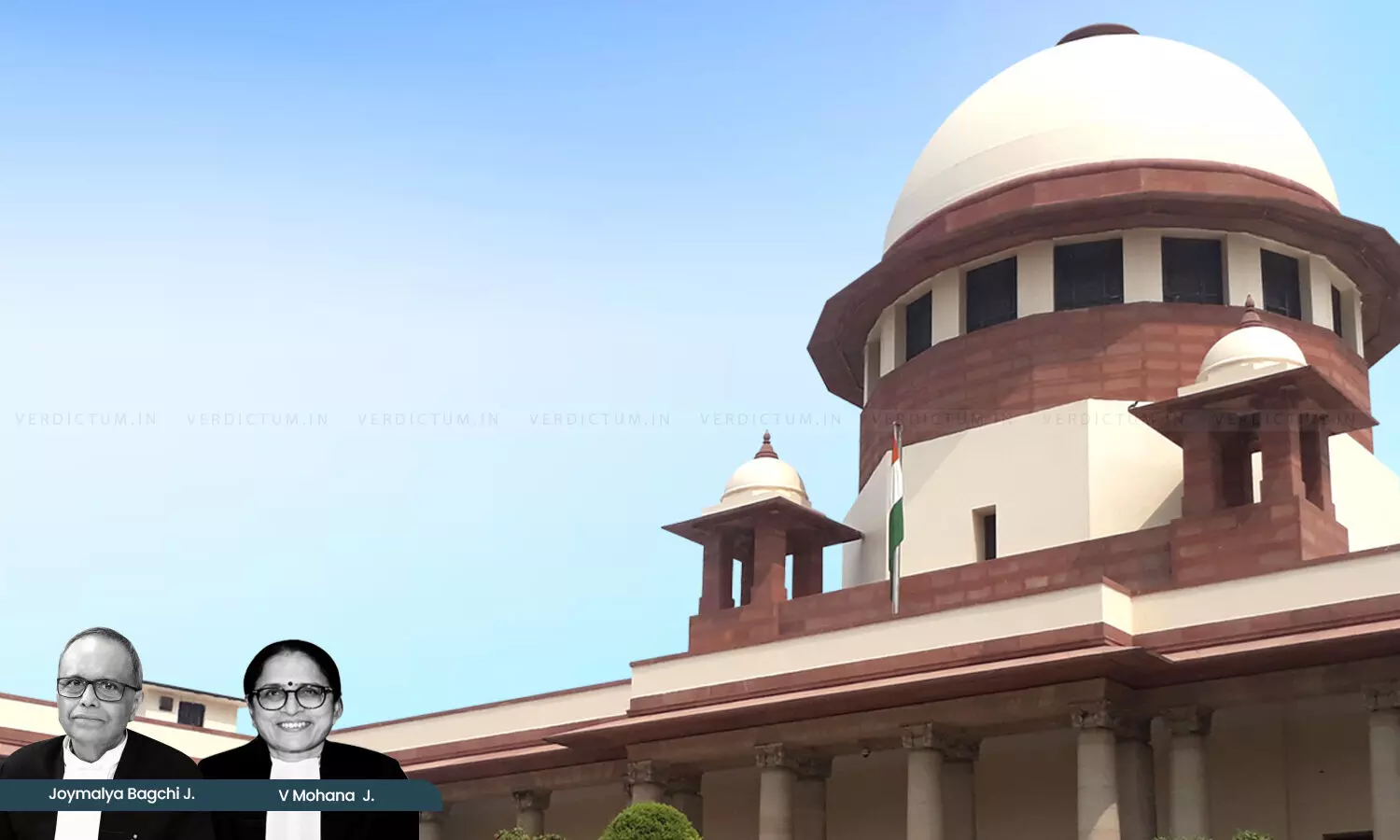
The Vacation Bench of Justice Joymalya Bagchi and Justice V Mohana ordered, "Bearing in mind these principles and these materials in the form of representations, we are of the opinion that the petitioner has made out a prima facie case to pass the following directions: 1. The State Election Commission shall postpone the filing of the final last date of filing nomination and shall postpone the publication of the final list of candidates at least by two days. Let it be done by October 25. 2. In the meantime, the SEC shall consider the issues raised by the Petitioner, including the evidentiary materials as well as electronic evidence enclosed therewith and take a decision to extend the last date of filing nominations for candidates in urban local bodies wherever it is of the view that the candidates concerned were unable to file nominations due to the law and order situation. Such decisions must be taken up by the Commission by tomorrow and wherever the Commission chooses to extend the time, such period must be 48 hours."
"3. DGP shall take all necessary steps at nomination centres and provide protection to the candidates. 4. SEC shall take necessary decisions and issue orders to remove apprehension out of the mind of the petitioner, intending candidates and all stakeholders so that they have a free and fair chance of participation in the elections. EC to file compliance affidavit", it was directed.
Senior Advocate Maninder Singh appeared for YSRCP, while Senior Advocates K Parmeshwar and Siddharth Luthra appeared for the Respondents
The Court added, "Having heard the Senior Members at the bar and perused the relevant materials on record, we are of the opinion that free and fair elections is a basic structure of the Constitution. Right to participate in such election by filing nomination papers is a facet of such is a facet of the of the free and fair election process. While it is incumbent, while it is the constitutional mandate cast upon the State Election Commission to ensure such to while it is the constitutional mandate to vest the State Election Commission with the duty of conducting and supervising such election, which would necessarily include all steps all necessary which would necessarily include all steps to ensure free and transparent filing of nomination papers by by the contesting candidates, it is equally important that it is equally candidates, the power of the constitutional courts to exercise judicial review though differential in election matters cannot be said to be cannot be said to be wholly nugatory."
Singh, appearing for the petitioners, submitted that an additional volume containing video clippings and photographs had been circulated. He contended that approximately two-thirds of the candidates had been prevented from even filing their nomination papers. The bench noted that the impugned order had granted liberty to the candidates to approach the authorities.
Singh argued that the issue was not merely about liberty, pointing out that the High Court had characterized the grievance as seeking centralization of a decentralised process, and further asserted that the petition was premature.
He contended that the figures presented by him were undisputed and that the matter did not rest on the mere mercy of the authorities for an extension of a single day. He pointed out that approximately 63.57% of the main opposition candidates were prevented from filing or having their nomination papers accepted despite persistent complaints. He highlighted that the writ petitions had been instituted even prior to the issuance of the election notification, with representations commencing as early as 4 September.
He also submitted that the Election Commission had not disputed the non-compliance of police protection orders, noting that contempt notices had been issued as not a single candidate was being permitted to file.
Parmeshwar, appearing for the ECI, submitted, "There are two writs that were passed. The orders were for police security, protection, CCTV, therefore, we passed orders. There are 10 or 12 orders of the High Court which say police protection must be given to those candidates. Those candidates were given police protection. I have an entire compilation of orders not shown before you, belonging to the same party...There are a series of police protection orders not disclosed."
He further alleged that violence had been perpetrated by opposing groups coming from outside with weapons.
The bench suggested that the authority reconsider the matter to extend the nomination timeline by a single day without disrupting the overarching election schedule, noting that the window between the notification date and the last date could have accommodated an extra day.
Parmeshwar added, "With all due respect, where we found that the allegations were genuine...This is a case where both political parties—I'm not concerned about the state government—both political parties will make allegations against each other. If you are only going to believe the ipse dixit of one political party based on some media reports which can be generated..."
Justice Bagchi added, "There are certain prospective candidates who have made their representations with regard to their inability to have filed nomination due to violence. We would give liberty to those candidates who have already filed petitions, or to any candidate from any party, irrespective of the party before us or any other party, if they have a grievance with necessary documents that they had approached within the window of 16th to 18th and because of law and order problem were unable to put in nomination papers, to place documents before you, and you take appropriate decision which either holding back the election or extending the time for filing nominations in those constituencies...What we propose to do is: A, not to pass any blanket order in respect of uh shifting the date for last date of nomination. That decision will be taken on a case-to-case basis by the Election Commission on the basis of materials filed by prospective candidates..."
"What we are doing is, we are giving you a proposition so that you may address us on this, change or modulate, and look into it in the course of the day and take a decision. Because what we want is, if you put the election on hold, it's one thing. If you don't put the election on hold, your election date is 28th", the Court added.
Luthra, appearing for the State, submitted that the situation on the ground was scandalous and warranted immediate judicial scrutiny. He drew the court’s attention to a video depicting an incident wherein a candidate allegedly drove a vehicle over individuals, triggering a violent backlash that necessitated police evacuation to ensure safety.
He questioned the whereabouts of the prospective candidates on 17 and 18 October, noting that they failed to present themselves during that period. In response, Justice Mohana observed that such circumstances clearly demonstrated an unsafe environment wherein individuals were precluded from reaching the polling venues.
The bench emphasized that courts are duty-bound to uphold constitutional values and ensure an equality of arms among all contesting parties. Justice Bagchi further questioned the impartiality of the state machinery, observing that if the ruling party selectively registered cases against opposition violence while ignoring violence committed against opposition members, the fairness of the electoral process would be severely undermined, adding that both political factions appeared to be implicated in the violence.
YSR Congress Party (YSRCP) preferred a Writ Petition before the High Court, assailing the inaction of the respondent authorities in failing to ensure safe and free filing of nominations during the local body elections to Municipalities, MPTCs, and ZPTCs in the State of Andhra Pradesh.
YSRCP said that there were widespread threats and intimidation faced by intending candidates. It was contended that such inaction violated Articles 14, 19(1)(a), 21, 243K, and 243ZA of the Constitution of India. Consequently, it sought directions for the establishment of an additional, optional nomination facility with adequate security at each District Headquarters to enable candidates to submit their nomination papers safely.
The Single Judge disposed of the Writ Petition. While declining the request to establish alternative, centralized nomination facilities on an omnibus basis, the Court granted liberty to individual intending candidates facing threats to approach the respective Election Officer seeking designation of an alternative place within their territorial jurisdiction for submitting nomination papers, which the authority was directed to decide in accordance with law and within the notified election schedule.
Aggrieved by this, YSRCP preferred a Writ Appeal and submitted that representations were submitted to the State Election Commissioner detailing how candidate nominations were systematically hampered by State-induced actions.
The Division Bench of the High Court declined to grant the interim relief sought. The Court observed that the time prescribed for filing nominations had already expired and that granting an extension would exceed the scope of the main Writ Petition.
It was held that, in the absence of a direct challenge to any formal order of rejection passed by the State Election Commission, the validity of such rejection could not be adjudicated. It also reaffirmed the settled principle that Courts must refrain from interfering with the election schedule once set in motion and dismissed the interlocutory application.
The Supreme Court held, "The philosophy of judicial deference such philosophy of deference has grown from a of from a doctrine of necessity that the election process be entrusted in the hands of a of an independent constitutional authority and be concluded within a timeline and not be mired in the quagmire of judicial interference. The quagmire of judicial interference. But at this but at at the same time, it cannot be ignored that the essential that the requirements of fair the the the custodian of constitutional values is are the constitutional courts and the power of judicial review to ensure a fair and to ensure a fair and impartial free election through filing of nomination papers cannot cannot be wholly muted when a opposition when the principal opposition political party in the state is before us and has placed on record materials, representations and materials even before even prior to the filing even prior to the commencement of election process, expressing serious apprehension with regard to with regard to hindrance in participation in the election through filing nomination papers."
Accordingly, the matter was listed on October 26, 2026.
Cause Title: YSR Congress Party v. State of Andhra Pradesh and Ors. [SLP(C) No.37476/2026]