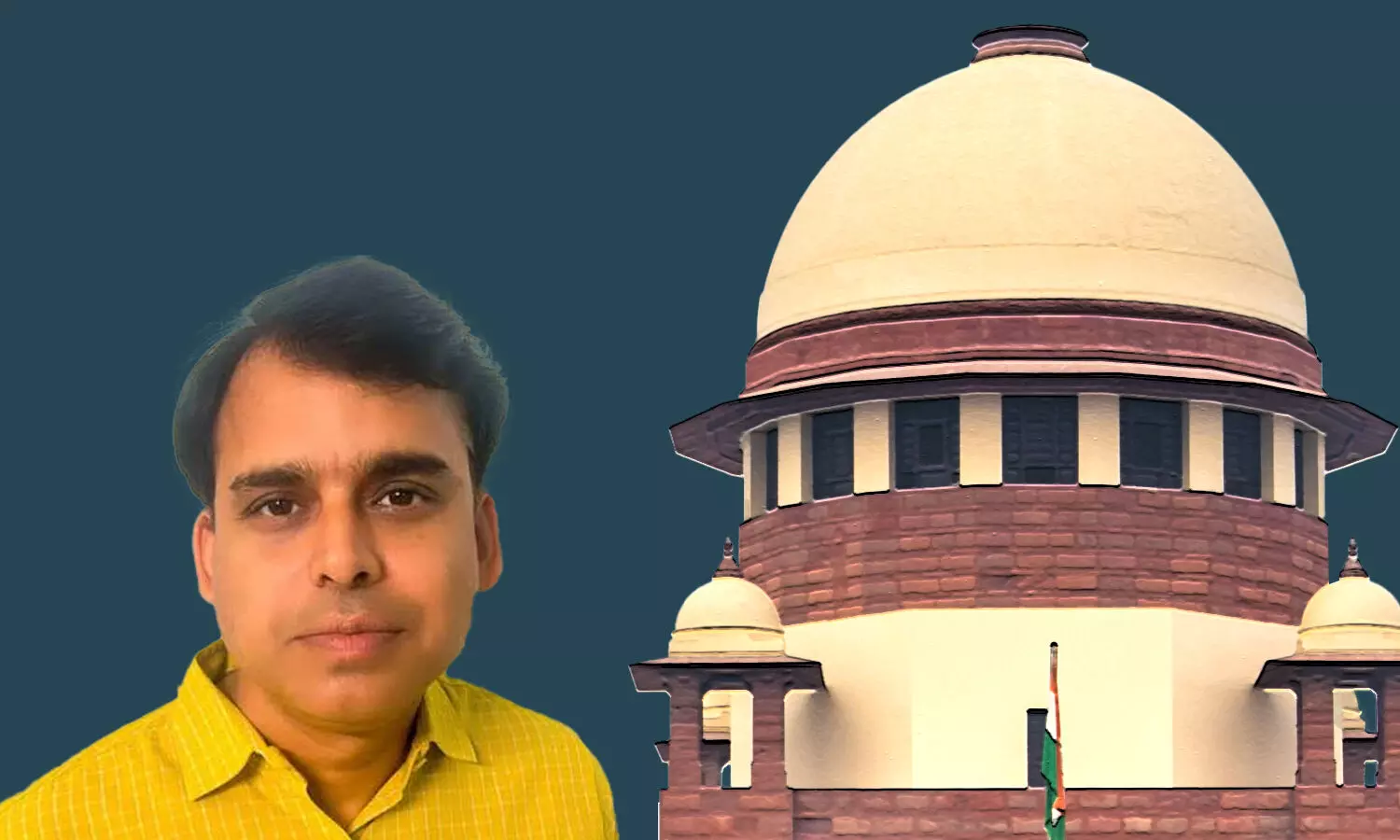
Supreme Court Directs Ghaziabad Police To Justify Digital Data Requests From X In Abhishek Upadhyay's Road Rage Case
 |
|The Court orally remarked that the advancement of technology has made things complex and created complicated challenges for an accused, for a victim, and for the investigating agencies.
The Supreme Court has directed the Ghaziabad Police to file an affidavit explaining the necessity and scope of seeking extensive digital data—including IMEI numbers and social media records from platforms like X —in connection with an FIR registered against journalist Abhishek Upadhyay.
Upadhyay, who previously reported on alleged donation irregularities at Ayodhya's Ram temple, submitted that the road rage case is a concocted attempt by law enforcement to harass him for his independent journalism.
The bench emphasized that while scientific investigation is necessary, a constitutional balance must be maintained to prevent arbitrary digital surveillance, ordering that no retrieved personal information be made public pending further directions.
Previously, the Court had granted interim protection from arrest to Upadhyay. The Court had directed that no coercive action be taken against Upadhyay in the current FIR or any potential future FIRs, while instructing authorities to supply him with a copy of the FIR registered at Indirapuram Police Station.
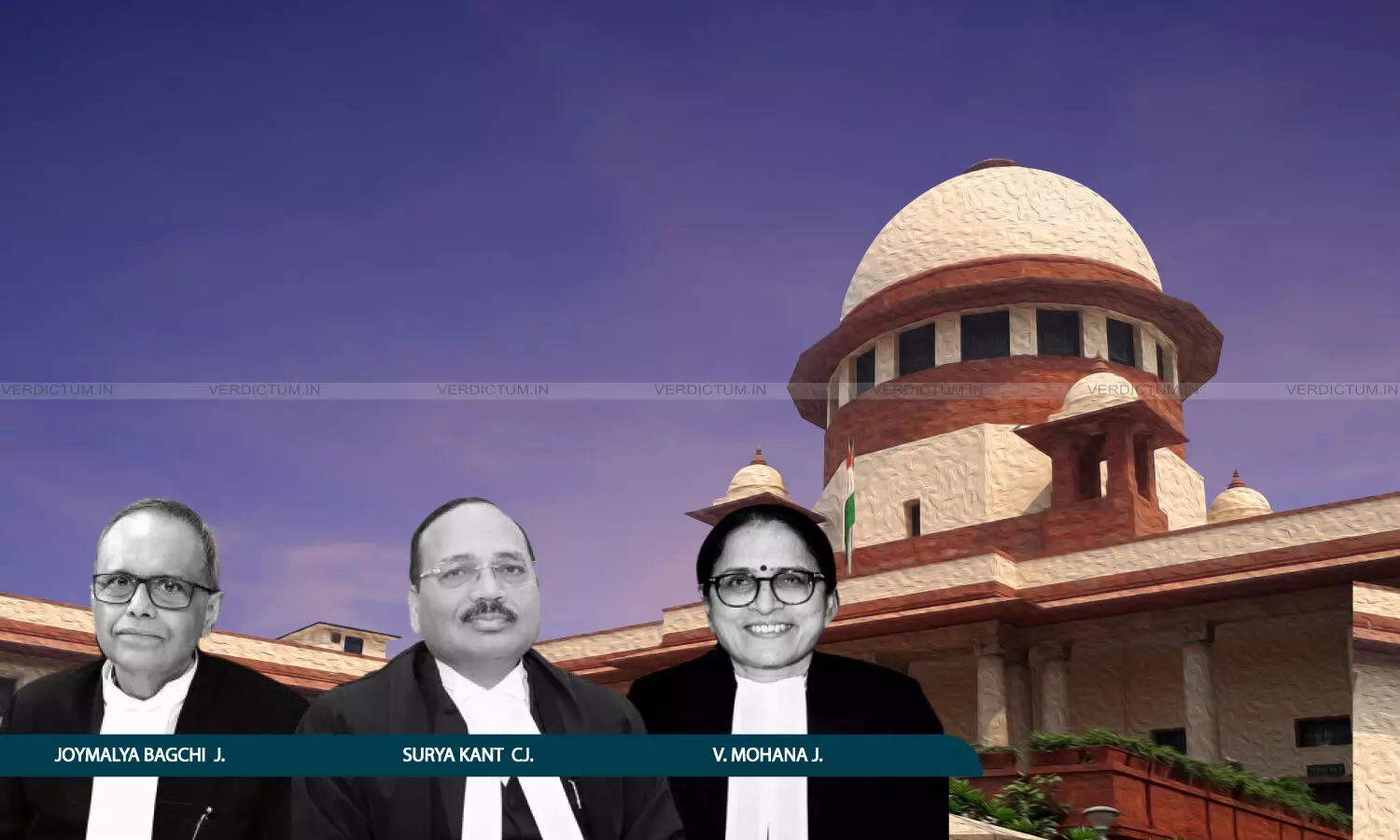
The Bench comprising Chief Justice Surya Kant, Justice Joymalya Bagchi and Justice V Mohana ordered, "In IA 264132 and 264130, issue notice. Mr Thakur, learned standing counsel, accepts notice. The Commissioner of Police, Ghaziabad, may file an affidavit clarifying what kind of information is required to be furnished by X (formerly Twitter) for the purpose of the investigation in FIR No. 678/2026 or any other FIR registered earlier against the petitioner. However, no such information shall be brought into the public domain till further orders. Post the matter on Tuesday."
Senior Advocate Pradeep Rai appeared for the Petitioner.
The Court asked Ghaziabad Police, "Now that you have filed an affidavit of compliance regarding serving the FIR, etc., also file an affidavit explaining how information from X is required and what kind of information is necessary for taking the investigation to a logical conclusion. We will do that."
The plea by Upadhyay claimed that the FIR is based on concocted allegations against him and is an attempt to harass him for his independent journalistic work. In the plea, he has contended that the FIR copy has not been supplied to him and that the police were forcing nearby shopkeepers to delete the CCTV visuals of the relevant time.
Upadhyay sought quashing of the FIR, or in the alternative, its investigation be transferred to an independent agency other than the Uttar Pradesh Police.
Rai submitted that police authorities across multiple jurisdictions had broadly requested digital records, including IMEI numbers, social media data from platforms such as X and Facebook, and YouTube activity spanning an entire year.
He said, "After submission of these FIRs and all, what they have done, they have requested X and other social media to give the details of IMEI numbers, to give the details of their entire internet and digital rights. This is an opportunity that after D.K. Basu in 1997, there was nothing. Proper guidelines have to be issued. Technology has traveled for the last 30 years...In those 30 years, now the majority of surveillance and the majority of instructions have to be traced through the internet, through digital rights. It’s an accident case, and having the account of X—in an accident case, having the account of their Facebook, YouTube, and other details of where he posted, what was the IMEI number. In between, what happened, the police of around 15 police stations raided the house in Nizamuddin."
He added that there is a need for some guidelines to be issued which can be annexed with D.K. Basu, and those guidelines have to be in all police stations.
Chief Justice remarked, "Advancement of technology has made things really complex and created very complicated challenges for an accused, for a victim, and for the investigating agencies as well. If they don’t resort to scientific methods of investigation, the courts will accuse them by saying, "Your investigation is very poor, you don’t follow norms, and despite the fact that such glaring information was available, you didn’t collect it."..Suppose somebody is a victim; the victim will also accuse by saying, "You are not investigating so-and-so things, and therefore, my rights as a victim are being violated." The accused will say, "It's all my privacy rights, and therefore, right to privacy." Now, how to—some balance will have to be drawn somewhere."
Rai submitted that the entire problem is that investigating agencies give the impression that they are more royal than the king. He urged the Court to pass directions concerning digital rights across the country.
Justice Bagchi asked the Counsel of the Respondent, "In a road rage case, why would you require the digital footprint of the accused?"
Counsel responded, "This is news to me; this has not been placed on record by him...kindly see the nature of the sweeping allegations this gentleman makes. In the very same petition, one annexure which he places on record makes a sweeping allegation that a particular gentleman, a government engineer, was taking a 40% commission in the construction of a particular temple...Now, with these kinds of sweeping statements made across the board, you are actually tainting and blemishing people without any evidence on record. Is that fair? I mean, is there any substantial basis for him to say so?...He names the concerned engineer and says that in the construction of a particular temple, this engineer was taking a 40% commission. Now, what happens to the reputation of this man? Obviously, this person has to hold his horses. There has to be some basis. If he is talking about the regulation of police, what about the regulation of this kind of journalism?"
The respondent further argued that the petitioner had made unverified, sweeping defamatory allegations against public officials without adequate evidentiary backing, underscoring the need for accountability in journalism alongside police regulation. However, the court questioned the necessity of seeking extensive digital history and IMEI data over an extended timeframe in the context of a localized road rage investigation.
The court emphasized that while law enforcement may access digital records strictly necessary to take an investigation to its logical conclusion, agencies must ensure complete confidentiality regarding non-relevant personal data retrieved during the process.
The Court remarked, "Before you look into Instagram, Facebook, or anything else and lay hands on so much confidential information belonging to a person, if that is brought on record, it may violate the right to privacy. But if you rely only upon what is relevant for taking the investigation to a logical conclusion and maintain complete confidentiality about the rest, it may be permissible. However, these guarantees and responsible statements must come from both sides."
The Court agreed to hear the plea challenging an FIR lodged against him by the Ghaziabad police.
Upadhyay, who runs a YouTube channel, claimed a police team reached his residence late on August 20 and told him that a case had been registered at Indirapuram police station following allegations of road rage and abusive behaviour.
According to Upadhyay, the alleged incident took place on August 18 near Shipra Mall in Ghaziabad, when a motorcyclist allegedly touched his car.
He said the man subsequently called the police emergency helpline 112 and an FIR was registered later. He alleged that the police team had come to his residence possibly to arrest him, and he requested Ghaziabad police to release CCTV footage of the alleged incident.
According to his plea, Upadhyay has previously reported on alleged irregularities involving donations to the Ram temple in Ayodhya and alleged corruption in the Uttar Pradesh government.
Cause Title: Abhishek Upadhyay v. State of Uttar Pradesh [W.P.(Crl.) No. 339/2026]