Breaking: Supreme Court Directs RBI, States & Banks to Implement Urgent SOPs And Money Restoration Measures To Tackle “Digital Arrest” Scams
 |
|The Court directed the RBI to formally adopt and circulate a Standard Operating Procedure (SOP) for banks to place temporary debit holds on accounts linked to mule activities and cyber fraud.
The Supreme Court issued comprehensive interim directions to streamline investigation, account freezing, and victim restitution.
Reviewing the Fourth Status Report submitted by the Indian Cybercrime Coordination Centre (I4C), which highlighted a significant decline in reported cases alongside ₹18.05 crore already restored to victims, the Apex Court directed the Reserve Bank of India to issue a mandatory Standard Operating Procedure for temporary debit holds on suspect accounts within four weeks.
The Court further mandated all States and Union Territories to operationalize their Cybercrime Coordination Centres, adopt e-Zero FIR mechanisms, and ensure that adjudicating authorities expeditiously disburse recovered funds back to victims.
The Court was hearing the matter concerning the "digital arrest" scam targeting an elderly couple in Haryana. In October, 2025, the Court had taken suo motu cognizance and emphasized that the present case is not a solitary instance and the same is happening across the country.
The directions herein concern, inter alia, investigation by the Central Bureau of Investigation (CBI), opening of new bank accounts, misuse of SIM cards and SIM boxes, cooperation by intermediaries, grievance redressal, restoration of defrauded money, and institutional coordination.
The Bench of Chief Justice Surya Kant, Justice Joymalya Bagchi and Justice V Mohana directed, "While the progress reported at this juncture is appreciable, the mechanisms already put in place require wider adoption, faster disposal, and continued follow-up. We accordingly deem it appropriate to issue the following interim directions: 1.The Reserve Bank of India (RBI) shall, within four weeks, formally adopt and circulate the Standard Operating Procedure (SOP) prescribing the action to be taken by banks for placing temporary debit holds on amounts or accounts linked to mule activity and cyber-enabled fraud. A copy of the final SOP shall be furnished to I4C and to the Registrar General of all High Courts."
"2. All States, Union Territories, and Law Enforcement Agencies are directed to expeditiously adopt and operationalise the two modules, namely:
(i) Grievance Redressal and Money Restoration Modules under the MHA SOP concerning NCRP-CFCFRMS; and
(ii) Freezing and Restoration of Money and Grievance Redressal Module dated 2nd January, 2026", the Court added.
The Court directed, "3. The Registrar General of all High Courts shall bring the Grievance Redressal mechanism to the notice of the courts and other adjudicating authorities dealing with the freezing of bank accounts in cyber-fraud cases. An aggrieved person may ordinarily be encouraged to avail of that mechanism in the first instance, though it shall not be a bar to any prosecution, statutory, or other legal remedies...The next status report to be filed shall apprise us of a State-wide and bank-wide statement of grievances registered and disposed of, the number of restoration orders issued, the number of restorations completed, and the total amounts restored."
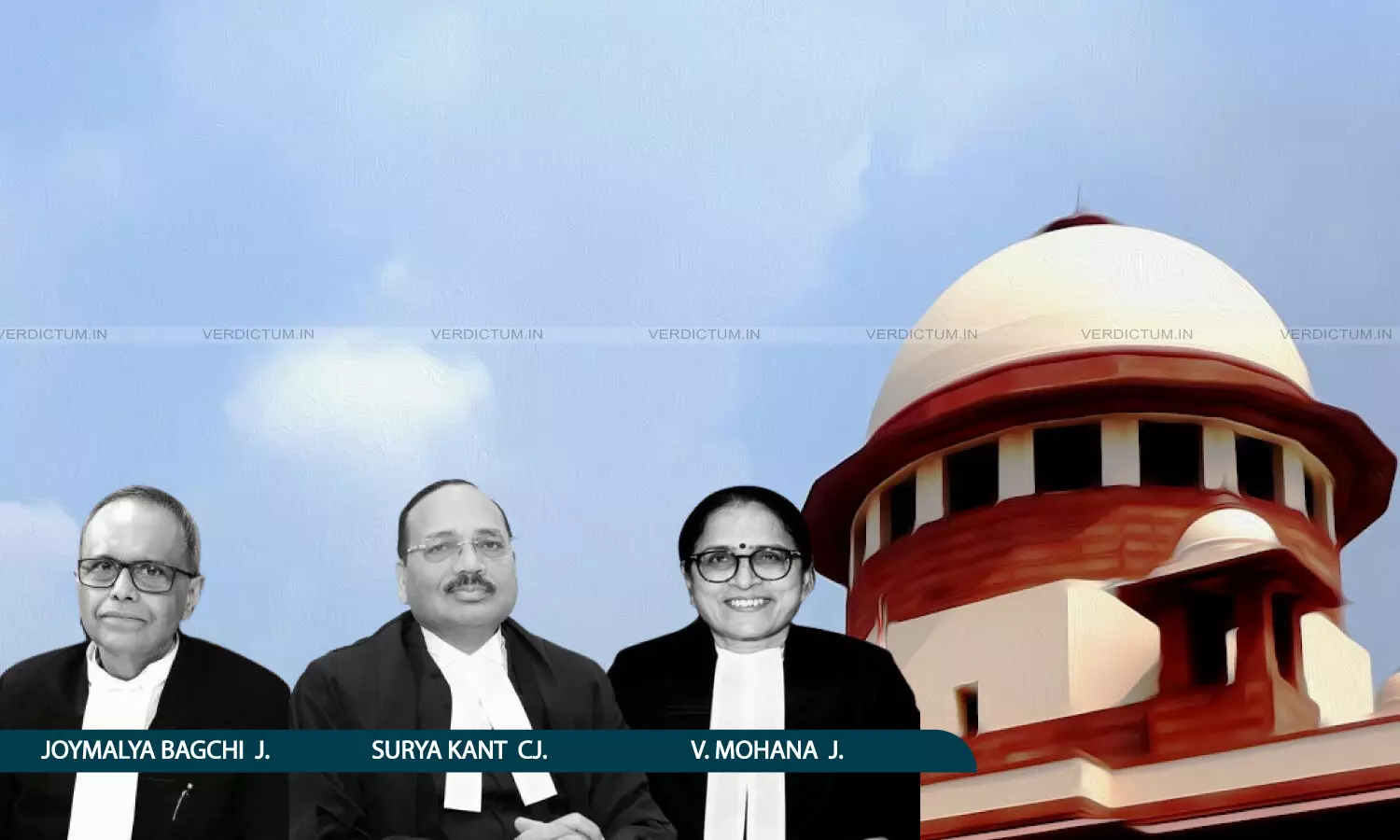
Senior Advocate NS Nappinai appeared as Amicus Curiae, while Attorney General R. Venkataramani and Solicitor General Tushar Mehta appeared for the Respondents
A senior citizen couple, who have been defrauded of their life savings through a “digital arrest” scam had written to the Supreme Court. The victims alleged that they were contacted by persons impersonating CBI officers, ED officials and judicial authorities through telephone and video calls. The fraudsters displayed forged orders of the Supreme Court through WhatsApp and video conferencing. Under threat of arrest and property seizure, based upon those forged documents, the victims were coerced to transfer Rs.1,05,50,000 through multiple bank transactions.
The Court directed that the remaining States and Union Territories are directed to take immediate steps to notify and operationalise their State Cybercrime Coordination Centres within four weeks. It also said that the remaining States and UTs shall also take steps to adopt the e-Zero FIR mechanism in consultation with I4C. The Ministry of Home Affairs shall provide the requisite assistance in this regard.
"For the expeditious disposal of matters relating to the freezing of bank accounts arising out of cyber-enabled financial frauds, the Inter-Departmental Committee is directed to issue necessary directives, advisories, and instructions to all States, Union Territories, Ministries, and Government Departments to undertake and promote public awareness programmes regarding cybercrimes, the Grievance Redressal and Money Restoration Modules, as well as the Freezing and Restoration of Money and Grievance Redressal SOP dated 2nd January, 2026", the Court ordered.
The Court directed the Inter-Departmental Committee to consult with intermediaries and banks regarding possible technological steps that may be undertaken to:
(i) Prevent digital arrests;
(ii) Assist in recovering defrauded amounts;
(iii) Assist in the investigation of digital arrest cases; and
(iv) Cooperate and discharge their obligations under all relevant laws for due compliance with the law.
The Court said, "We deem it appropriate to direct all State Legal Services Authorities to immediately formulate schemes for public awareness on the prevention of digital arrests, cybercrimes, and cybersecurity, as well as for providing legal assistance to victims in recovering defrauded amounts...The Inter-Departmental Committee is directed to discuss the proposal of a shared liability and victim compensation framework, along with a timeframe for submitting the same, if possible."
The Attorney General placed on record the Fourth Status Report dated 3rd August, 2026, filed by the Indian Cybercrime Coordination Centre (I4C), Ministry of Home Affairs (MHA). The report incorporated the deliberations of the fourth and fifth meetings of the Inter-Departmental Committee held on 11th May, 2026, and 14th July, 2026, respectively, along with the action taken by the concerned Ministries, regulators, investigating agencies, Telecom Service Providers (TSPs), and intermediaries.
The report primarily stated that the number of complaints received on the National Cybercrime Reporting Portal (NCRP) pertaining to digital arrest scams has sharply declined from 1,23,672 in 2024 to 58,239 in 2025, and has further reduced to 16,377 for the period ending 30th June, 2026. The corresponding reported defrauded amounts have also substantially reduced. While this trend is certainly encouraging, there is no gainsaying that continued monitoring remains indispensable.
As per the Fourth Status Report, it is recorded that the Memorandum of Understanding (MoU) for data sharing between the Reserve Bank Innovation Hub (RBIH) and I4C was executed on 11th May, 2026. Further, the Grievance Redressal Mechanism Portal now covers 1,23,590 branches across 69 banks. Additionally, the Money Restoration Mechanism Portal has 57 participating banks, and all 36 States and Union Territories have completed restoration in 36,290 cases, amounting to an aggregate sum of ₹18.05 crore.
"We are informed that the e-Zero FIR mechanism is operational in 19 States, while only 14 States have notified their State Cybercrime Coordination Centres. Similarly, the Telecommunications (Radio Equipment Provision and Authorisation) Rules, 2025 have been notified, while the Telecommunications (User Identification) Rules, 2025 are at the final stage of notification", the Court said in its order.
It also observed, "So far as the investigation by the CBI is concerned, the report reveals that the investigative agency has presently registered 10 digital arrest cases and several related cases. In one investigation, it identified 238 victims across 67 first-layer bank accounts, involving transactions of approximately ₹80 crore, and conducted searches at 93 locations across 16 States. It is further stated that the Inter-Departmental Committee has requested the CBI to examine the feasibility of lowering the existing threshold of ₹10 crore and to consider taking up cases involving the same organised network where the cumulative fraud exceeds the prescribed threshold."
The Court finally ordered, "All adjudicating authorities—including the RBI, Ombudsmen, Consumer Protection Fora, FEMA/jurisdictional authorities, Jurisdictional Courts, and Law Enforcement Agencies—are directed to ensure that recovered amounts are disbursed to victims of digital arrests in an expeditious manner...The Inter-Departmental Committee shall continue to coordinate the implementation of the above measures and consult intermediaries and banks on technological steps for prevention, recovery, and investigation. A fresh consolidated status report detailing the progress shall be filed prior to the next date of hearing."
On November 3, 2025, the Court said that it needed to deal with digital arrest cases with an iron hand as it expressed shock over the scale of such cybercrime cases in the country, with over Rs 3000 crore allegedly extorted from victims, including senior citizens.
The Court had also asked the CBI to carry out a unified pan-India probe into digital arrest scam cases and asked the RBI as to why it was not using Artificial Intelligence to find out and freeze bank accounts used by cyber criminals. It had issued notice to the Reserve Bank of India (RBI) and sought its response as to why Artificial Intelligence (AI) or machine learning technology was not employed to freeze bank accounts used in cyber fraud cases.
The Court had described the siphoning of over Rs 54,000 crore by digital frauds as absolute "robbery or dacoity" and asked the Centre to draft a standard operating procedure in consultation with stakeholders like the RBI, banks and the Department of Telecommunications to deal with such cases.
Cause Title: In Re Victims of Digital Arrest Related To Forged Documents [SMW(Crl) No. 3/2025]