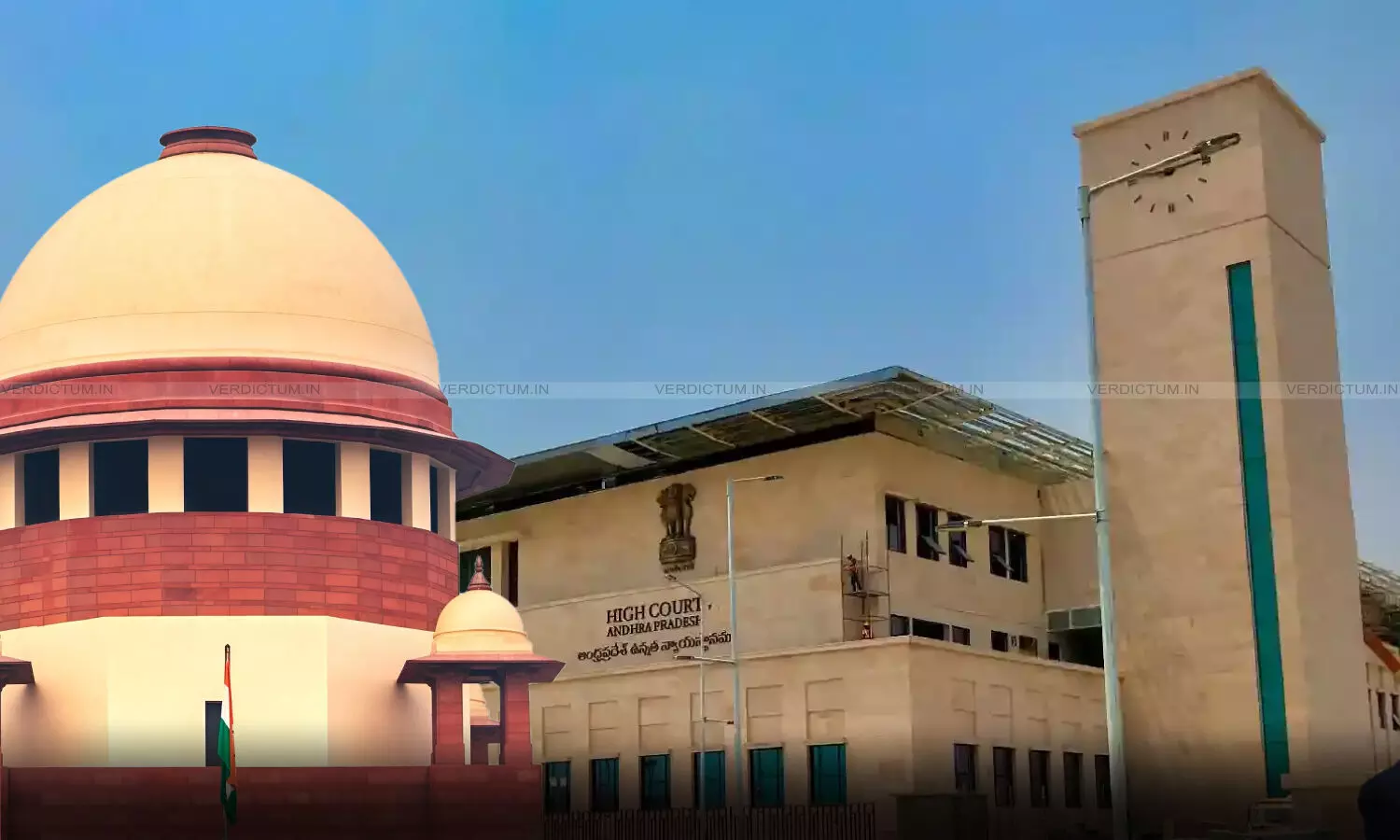
Supreme Court Says No Further Action Is Warranted In Case Involving Young Lawyer And AP High Court Judge; Urges Judiciary To Nurture Junior Advocates With Patience
 |
|The Court further institutionalized the resolution of professional conflicts by directing the establishment of Grievance Redressal Committees across the judicial hierarchy.
The Supreme Court has concluded that no further action is warranted against Justice Tarlada Rajasekhar Rao of the Andhra Pradesh High Court following an incident involving the oral threat of custody against a junior advocate.
While perusing a detailed report from the Chief Justice of the Andhra Pradesh High Court, the Apex Court noted that the confrontation—triggered by a disagreement over a judicial precedent and a case file inadvertently falling to the ground—had been amicably resolved between the parties prior to the dissemination of a viral, decontextualized video.
Despite disposing of the pleas filed by the Bar Council of India (BCI) and the Supreme Court Bar Association (SCBA), the Court utilized the occasion to remind the judiciary of its "institutional obligation" to treat young entrants with compassion and dignity, stressing that judges must act as mentors to ensure the integrity and growth of the legal profession.
The Bench of Chief Justice Surya Kant and Justice Joymalya Bagchi observed, "We are thus of the view that the incident in question does not warrant any further action at our end. At the same time, we consider it appropriate to observe that members of the judiciary at all levels ought to exhibit patience, compassion, and a spirit of encouragement, particularly towards young entrants to the legal profession...The present juncture necessitates that young law graduates emerging from a wide variety of institutions are encouraged to join the Bar, especially at the level of trial and district courts, where they have to imbibe the foundational principles of legal practice."
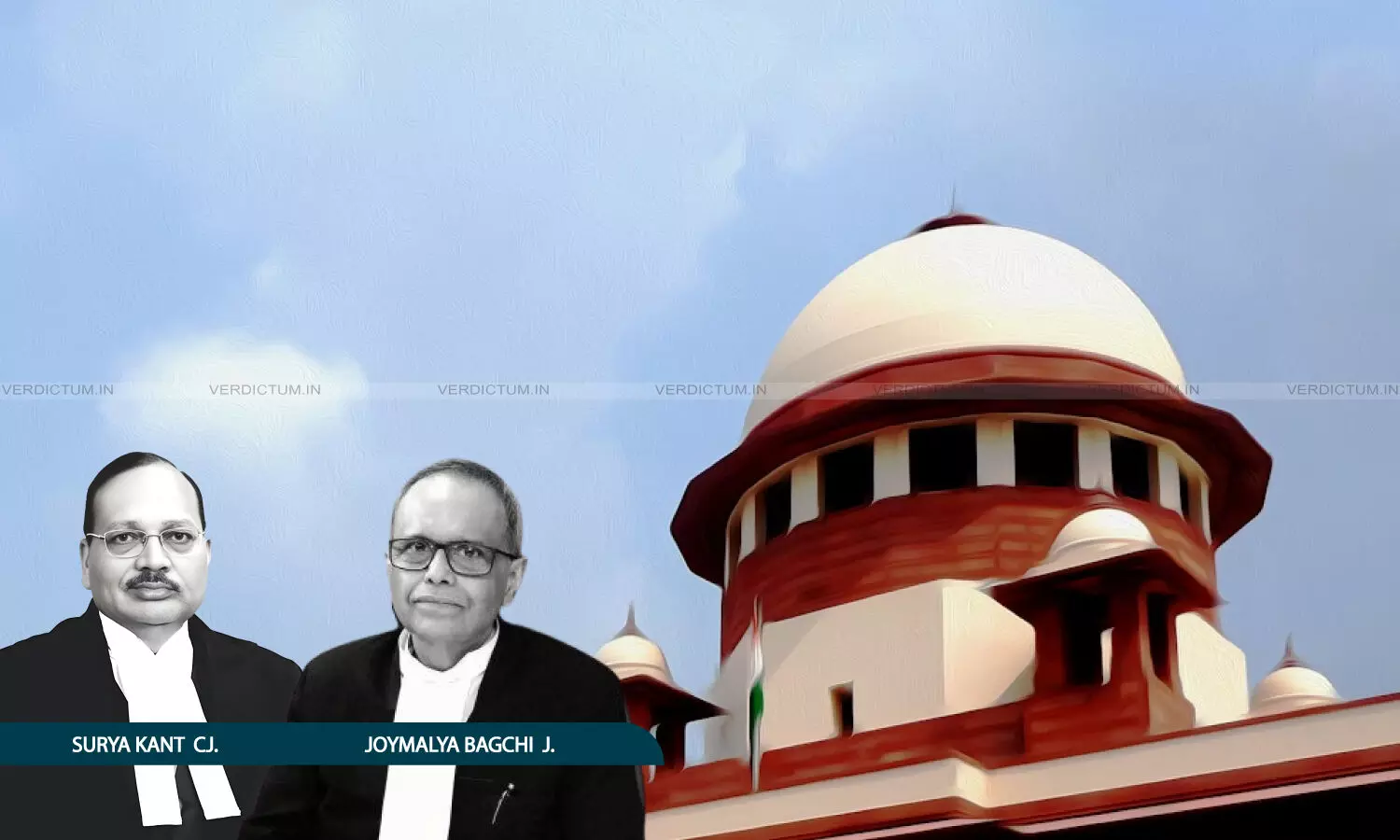
Senior Advocate Vikas Singh appeared for the Supreme Court Bar Association.
The Court said, "The communication reveals that the incident originated from a disagreement between the learned judge and the young counsel regarding a judicial precedent applicable to the matter under consideration. The situation escalated when the learned judge formed an impression that the young counsel, in a state of frustration, had deliberately struck his file against the podium, whereas the young counsel kept on explaining that the file had inadvertently slipped from his hands. The report of the learned Chief Justice further revealed that the verbal exchange that ensued was recorded by an unidentified individual who then circulated it on social media."
The Court perused a detailed report submitted by the Chief Justice of the Andhra Pradesh High Court and heard submissions from the Senior Counsel appearing for the Supreme Court Bar Association (SCBA).
The Court observed that the controversy originated from a disagreement over a judicial precedent, during which a case file inadvertently fell from the hands of a young advocate. While the Judge initially construed the incident as a deliberate act of impropriety and made certain oral observations regarding police custody, the Bench noted that these remarks were never translated into a formal judicial order.
"The report records that the Hon'ble Chief Justice interacted with the young counsel, who affirmed that the misunderstanding had been amicably resolved and no complaint was lodged before the Bar Council or any other forum. In fact, the Andhra Pradesh High Court Advocates’ Association also addressed the Chief Justice of their High Court, informing that the matter stood amicably settled with their intervention", the Court said.
It was further placed on record that the misunderstanding was amicably resolved between the parties prior to the video’s circulation.
The Bench took note of the proactive measures initiated by the Chief Justice of the High Court, including the constitution of a five-judge committee and a grievance redressal cell to foster cordial Bar-Bench relations. In light of these developments and the report's clarification that no executable directions for custody were ever passed, the Apex Court held that the incident did not warrant any further judicial or administrative action at this stage.
The Court ordered, "From the material placed before us, it appears that the learned judge, in the course of proceedings, sought to draw the attention of the young counsel to a reported decision which was supporting his case, whereas the young counsel insisted on placing reliance on another precedent which the learned judge thought was inapplicable to the facts of the case in hand. It further appears that in the course of exchange, the case file of the young counsel fell to the ground, which was not attended by any deliberate intent. The learned judge, however, appears to have construed the same as an act of impropriety, leading to certain strong oral observations, which were eventually not incorporated in the judicial order; consequently, no occasion arose to issue any executable direction. The matter thus stood concluded at that stage."
However, the Court utilized the occasion to emphasize the institutional obligation of the Bench to nurture young members of the legal profession with patience and compassion. The CJI remarked that the strength of the judiciary remained intrinsically dependent on a robust and encouraged Bar.
"While it is certainly the solemn duty of the senior members of the Bar to inculcate in young advocates ethical values, discipline, professional commitment, and a habit of continuous learning, the responsibility does not rest with the Bar alone. The Bench is equally entrusted with the obligation of nurturing a robust and ethical legal profession that fosters competence, integrity, and a sense of duty so that every young lawyer is guided to first recognize their role as an officer of the court and thereafter as a representative of the clients", it said.
The Court also lauded the SCBA for its recent initiatives in integrating new entrants and called upon the Bar Council of India (BCI) and State Bar Councils to implement structured orientation programs on a pan-India basis.
Finally, the Court expressed concern over the role of social media and the press in the dissemination of de-contextualized video clips. The Bench made an unequivocal observation that such selective reporting could cause unwarranted prejudice to judicial institutions.
Consequently, the Court urged the media to exercise a heightened sense of responsibility and to play a proactive role in ensuring that courtroom proceedings are reported with the necessary context and accuracy.
The Court concluded, "The dissemination of decontextualized video clips without presenting the full background in which certain expressions may have been made has the potential to cause unwarranted prejudice to the institutions as well as to the administration of justice. We therefore expect that the media will also play a very proactive role with a heightened sense of responsibility to appreciate the need to discharge their obligation in a manner that is fair, balanced, and conducive to the larger public interest in collaboration with the Bar and Bench. We deem it appropriate to trust upon all the High Courts to constitute Grievance Redressal Committees which must associate representatives of the Bar Associations and the Bar Council at the High Court level."
The Court directed that such Grievance Redressal Committees should also be constituted at the district and taluka level with a fair representation from the members of the Bar. In such an institutionalized mechanism, it will ensure that the issues that may arise between the members of the Bar or the judiciary are amicably, effectively, and timely resolved in a congenial atmosphere, it added.
Following the unprecedented rift within the legal fraternity over the conduct of Justice Tarlada Rajasekhar Rao, the Bar Council of India (BCI) and the Supreme Court Bar Association (SCBA) moved to the Supreme Court seeking urgent judicial intervention to address what they describe as a "grave assault on the dignity of the legal profession" and the "erosion of judicial temperament."
On Monday, May 6, 2026, an incident occurred in the courtroom of Justice Tarlada Rajasekhar Rao at the Andhra Pradesh High Court during a hearing regarding a Look Out Circular. A disagreement arose when a junior advocate continued to argue after the judge indicated an inclination to defer the proceedings. The situation escalated when the advocate allegedly placed a file down loudly, which the judge interpreted as an act of defiance.
Justice Rao then orally directed that the young lawyer be taken into police custody for 24 hours. Despite the advocate apologizing with folded hands and begging for mercy, the judge remained firm in his rebuke. The video of the part of the proceedings where the direction was passed went viral on social media. However, what led to such an order being passed was not clear from the video.
The Bar Council of India wrote a letter, on May 6, 2026, to the Chief Justice of India. It expressed that such actions raise grave questions about judicial temperament, fairness, and proportionality. While a judge may correct or caution an advocate, sending a young member of the profession to custody for a procedural lapse is viewed as grossly inappropriate and damaging to the Bar's confidence in the judiciary. The BCI emphasized that advocates are officers of the court who should be entitled to correction without humiliation, as the relationship between the Bench and the Bar must be founded on mutual respect and institutional grace.
The Supreme Court Bar Association (SCBA) also expressed "deep concern and shock" regarding the incident and emphasized that the relationship between the Bench and the Bar must be built on mutual respect, dignity, and institutional balance. The SCBA warned that actions leading to the "fear, humiliation, or intimidation" of junior advocates could severely undermine the independence of the Bar and the efficiency of the justice delivery system.
Consequently, the association urged the Chief Justice of India to take institutional cognizance of the matter, review the records, and implement corrective measures to preserve public confidence and maintain cordial Bar-Bench relations.
Cause Title: Bar Council of India v. High Court of Andhra Pradesh [W.P.(C) No. 602/2026] and Supreme Court Bar Association v. High Court of Andhra Pradesh [W.P.(C) No. 604/2026]