Polluter Pays Principle Can’t Be Invoked Absent Link To Damage: Supreme Court Sets Aside NGT Order Against Art Of Living In Yamuna Floodplain Matter
 |
|The Apex Court found that the National Green Tribunal overlooked material showing that the event site was already in a dilapidated condition before it was handed over to the appellant.
The Supreme Court has held that the polluter pays principle cannot be invoked against a project proponent unless a causal link is established between its actions and the alleged environmental degradation.
The Court, upon making these observations, set aside the National Green Tribunal’s judgment against Art of Living, run by Vyakti Vikas Kendra India, in relation to the World Culture Festival held on the Yamuna floodplains, and directed the refund of ₹5 crore deposited with the Delhi Development Authority.
The Court was hearing a civil appeal challenging the common judgment of the National Green Tribunal, Principal Bench, New Delhi, in proceedings concerning allegations that the World Culture Festival organised on the Yamuna floodplains had caused environmental damage and degradation.
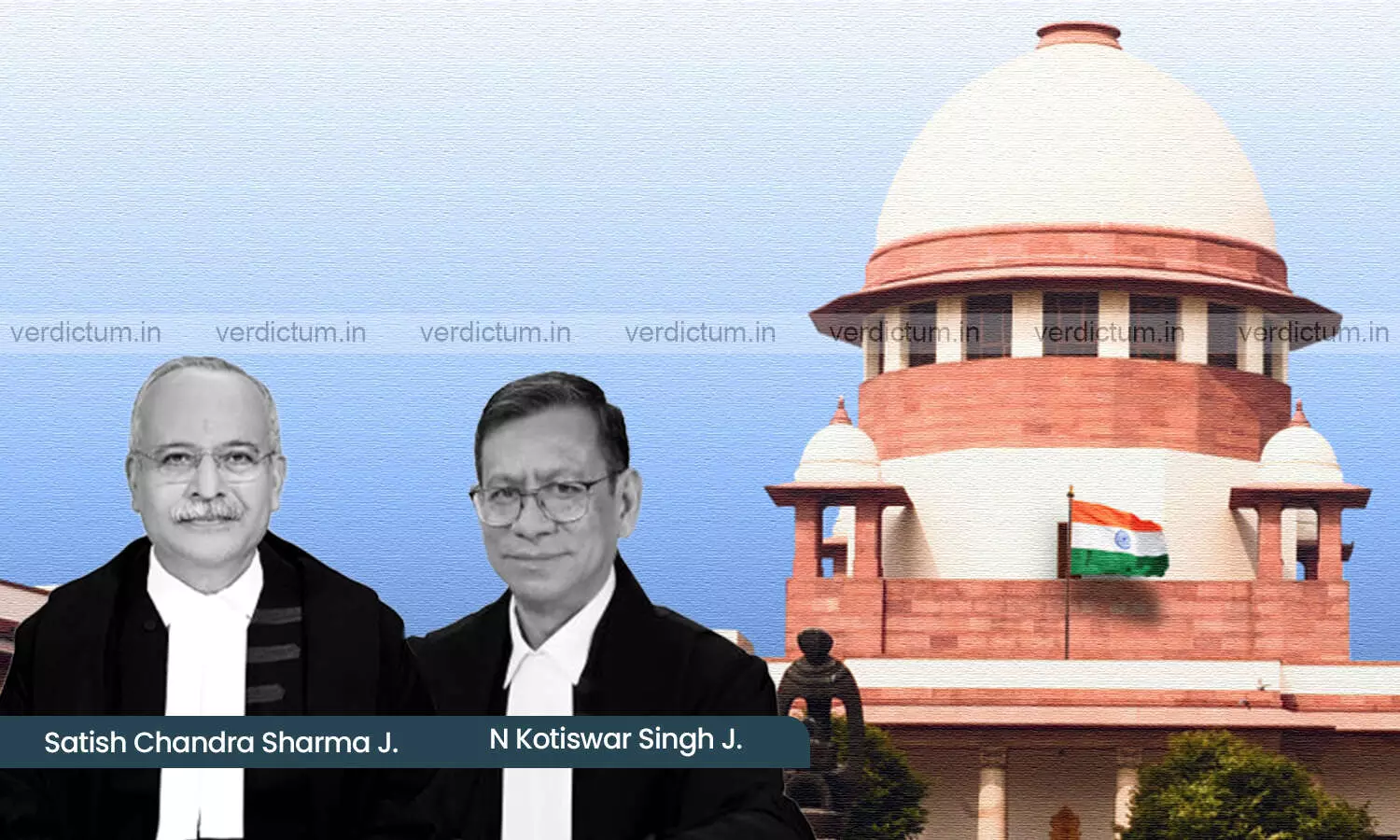
A Bench of Justice Satish Chandra Sharma and Justice Nongmeikapam Kotiswar Singh observed: “… the applicability of this principle is contingent upon various factors and the foremost factor is the causation of real damage. Further, the establishment of a causal link between the actions of the project proponent and the resultant environmental degradation is equally necessary. In other words, the alleged person must be a ‘polluter’ before it is held absolutely liable in law. No doubt, if this link is established, no excuse matters.
However, the Bench added: “the principle cannot be invoked unless the degradation is attributable to the alleged person. In the present case, the causal link has not been established by any standard. In fact, there is ample material on record to show that the event site was already in a dilapidated condition prior to its handing over to the appellant.”
Senior Advocate Nikhil M. Sakhardande appeared for the appellant; Senior Advocates Sanjay Parik and Additional Solicitor General Aishwarya Bhati appeared for the respondents.
Background
The proceedings arose from applications filed before the National Green Tribunal against the World Culture Festival, organised on the active floodplains of the Yamuna River in Delhi. The applications alleged violation of an earlier NGT judgment concerning environmental concerns associated with the river Yamuna and its floodplains, and alleged that the event had damaged the floodplains and wetlands.
The NGT appointed an expert committee before the event. The committee submitted an interim report opining that the proposed event would damage the floodplains and that rectification would require ₹100-120 crore. The Tribunal passed an interim order permitting the event to go ahead, subject to deposit of ₹5 crore as environmental compensation and an undertaking that the organiser would bear the cost of restoration if damage was found after the event.
The appellant complied with the interim order without prejudice to its rights and contentions. A subsequent order of the Tribunal clarified that the interim order was only interim and that all rights and contentions of the parties were left open.
After the event, the Tribunal directed the expert committee to submit a complete report on environmental damage, compensation and restoration. The committee concluded that the event had severely damaged the floodplain, but did not quantify restoration cost. In a later report, it suggested a rehabilitation plan with physical and biological components. Another committee comprising government officials later submitted a report, but the Tribunal rejected it on the ground that it had exceeded its jurisdiction by commenting on the nature of damage instead of only suggesting an action plan.
The Tribunal ultimately held the appellant responsible for restoration and restitution of the floodplain, directed DDA to carry out restoration and other works, and directed utilisation of the ₹5 crore deposited by the appellant. The appellant challenged this before the Supreme Court, contending that the event site had already been in a damaged condition, that the committee reports were unreliable, that the interim order had been wrongly treated as final, and that rehabilitation could not be equated with restoration.
Court's Observations
The Court first clarified the scope of adjudication. It recorded that the event was held on the active floodplains of Yamuna after permissions were obtained from the concerned authorities, including DDA, which was responsible for the Yamuna floodplains in the capital.
The Court observed: “Be it noted, the legality of the permission granted by DDA to hold the event in question is not the issue before us. We feel constrained to express this in clear terms, at the threshold itself, because the Tribunal has dealt with the vires of the permission granted by DDA in some detail in the impugned judgment and we fail to understand the rationale for it.”
It held that the only issue was whether the appellant had caused damage to the Yamuna floodplain by organising the event and, consequently, whether it was responsible for restoration or rehabilitation.
The Court found that the appellant had written to DDA soon after allotment of the site, stating that construction material and debris were lying there, and DDA permitted removal of the material. This communication pre-dated the NGT proceedings.
The Court observed: “The whole basis of the lis before the Tribunal was the causation of damage by the appellant and not mere existence of damage on the floodplain. The first report on the basis of which the Tribunal went on to return a finding of guilt against the appellant was, in our opinion, inadequate to justify such a finding.”
The Court further recorded that earlier material in the Yamuna matter showed non-implementation of earlier rehabilitation directions and indicated that the site was already damaged before it was handed over to the appellant.
The Court held that the NGT’s interim order had a cascading effect on the later proceedings, because the Tribunal proceeded on a conclusive assumption that extensive damage had been caused by the appellant.
The Court observed: “The findings in an interim order are interim for a reason, and the plain and simple reason is that such findings are not based on full analysis of facts and evidence. If an interim order is supposed to be treated as binding in a permanent sense and is not to be questioned in the course of a proceeding, it ceases to be an interim order and assumes finality.”
The Court noted that the interim order itself was clarified to be without prejudice to rights and contentions. It therefore held that the appellant could not be faulted for seeking to revisit the issue before the Tribunal.
The Court found that the Tribunal relied on a satellite image and expert committee observations without testing them against contemporaneous material already on record.
The Court observed: “In a judicial proceeding, it was expected of the Tribunal to have tested the report and solitary satellite image with other contemporaneous evidence on record before giving a stamp of judicial approval to the opinion of the committee.”
It found that the committee’s later report admitted limitations in assessing the ecological status of the site before the event and in determining the state to which restoration had to be carried out. The Court said that this effectively questioned the committee’s own earlier assessment of the pre-event condition.
The Court held that the Tribunal erred in equating rehabilitation with restoration while exercising powers under Section 15 of the National Green Tribunal Act, 2010.
The Court observed: “In our view, the Tribunal fell in error in equating the distinct concepts of rehabilitation and restoration. Going by its plain meaning in the context of environmental jurisprudence, rehabilitation refers to complete reparation of the affected area in a manner that it becomes fully functional and provides optimum ecological services. Restoration, however, refers to a process whereby the affected area is simply brought back to its original state, regardless of how optimum the original state was.”
The Court held that the matter concerned alleged environmental damage by one party and compensation for restoration of the area to its original state, not full-fledged rehabilitation of the floodplain.
The Court held that the Tribunal altered the character of the dispute by directing recovery of costs for a proposed biodiversity park from the appellant.
It observed: “Whereas, it is no one’s case that any biodiversity park was in existence at the event site allotted to the appellant. The proposal of biodiversity park at the Yamuna floodplain was a result of the Tribunal’s judgment dated 13.01.2015 and it was a standalone responsibility of the concerned public authorities/DDA.”
The Court held that the Tribunal burdened the appellant with the task of developing something that it never destroyed.
The Court also considered the report of the committee comprising government officials, which found that the site was covered with grass, portions were under water, there was no debris at the site, no significant wetland or water body was found in the event area, and there was not much difference in the condition of the area before and after the event.
The Court observed: “Therefore, the third report effectively nullified the allegations of damage and removed the taint of causing damage/degradation from the event organized by the appellant. However, the Tribunal rejected this report on the ground that the committee was not supposed to report on damage, and was only tasked to propose an action plan.”
The Court held that, as a neutral fact-finding body, the Tribunal ought to have considered all relevant material while deciding liability.
The Court examined Section 17 of the National Green Tribunal Act, 2010 and disagreed with the manner in which no-fault liability had been invoked.
The Court observed: “Sub-section (3) of the provision specifically applies to the cause of an accident. The Tribunal has relied upon Section 17(3) of the Act, however, it is quite evident that we are not dealing with the consequences of any accident. The word “accident” would refer to cases involving hazards, such as gas leak, etc.”
At the same time, the Court accepted that the polluter pays principle has a settled place in environmental jurisprudence and that a polluter must be held absolutely liable for environmental degradation caused by it. However, it held that this principle could not be applied without attributing degradation to the alleged polluter.
The Court agreed with the Tribunal’s observations regarding DDA’s conduct in granting permission for the event on an active floodplain.
The Court observed: “The manner in which permission was granted by DDA to hold the event on an active floodplain of the river cannot be approved. It was not only avoidable, but was also not consistent with the precautionary principle and doctrine of public trust.”
It further held that DDA was bound to act as the agency responsible for rehabilitation and ecological maintenance of the Yamuna floodplain, and to take preventive steps against further deterioration. However, since permission granted by DDA was not the subject matter before the Court and rehabilitation had already been assigned to DDA, no further direction was required.
Conclusion
The Supreme Court set aside the NGT’s judgment and all consequential and interim actions taken against the appellant. It held that the appellant was entitled to refund of ₹5 crore deposited with DDA in compliance with the Tribunal’s interim order, and directed DDA to refund the amount within four weeks.
The Court clarified that DDA shall continue rehabilitation work at the Yamuna floodplains as per the proposed plan and directions issued by the Tribunal from time to time. It also clarified that it had not altered the responsibilities entrusted to DDA concerning management or rehabilitation of the Yamuna floodplains. The appeal was disposed of along with pending applications.
Cause Title: Vyakti Vikas Kendra India v. Manoj Misra (Dead) & Ors. (Neutral Citation: 2026 INSC 910)
Appearances
Appellant: Senior Advocate Nikhil M. Sakhardande with Advocate Rohini Musa, AOR, Advocates Shubhra Swami, Nipun Katyal, Manan Sharma and Dhananjay Kumar
Respondents: Senior Advocate Sanjay Parik with Advocates Rahul Choudhary, Srishti Agnihotri, Tara Elizabeth Kurien, K.V. Bharathi Upadhyaya, AOR, Itisha Awasthi, D.P. Singh and Anchal Kanthed; Senior Advocate Kailash Vasdev with Advocate Nitin Mishra, AOR, Advocates Mitali Gupta, Neoma Vasdev, Umrao Singh Rawat, Anushka Mamgain and Shivani Sethi; Additional Solicitor General Aishwarya Bhati with Advocates Gurmeet Singh Makker, AOR, Suhasini Sen, Merusagar Samantaray, Ishaan Sharma, Rohan Gupta and T.S. Sabrish