Madras High Court Allows Bars & Hotels To Claim Refund Of Liquor License And Privilege Fees For Closure During COVID Lockdown
 |
|The High Court held that although the relevant rules did not create a standalone right to a proportionate refund without surrender of licence, the pandemic justified limited equitable relief upon proof of non-transaction of business.
The Madras High Court has allowed bars and hotels holding F.L.III liquor licences to claim refund or adjustment of liquor licence and privilege fees for the period during which they were prevented from carrying on business due to Covid-19 restrictions.
The Court clarified that the refund was being permitted on equitable considerations and not as a statutory entitlement under Rule 24-A of the Tamil Nadu Liquor (License and Permit) Rules, 1981, since the licensees had been prevented from transacting business for reasons beyond their control.
The Court was hearing a batch of writ appeals filed by the State of Tamil Nadu and the Commissioner of Prohibition and Excise against a common order of a Single Judge allowing writ petitions filed by F.L.III licensees seeking refund of license and privilege fees for the period when their bars/hotels remained closed due to the COVID-19 lockdown.
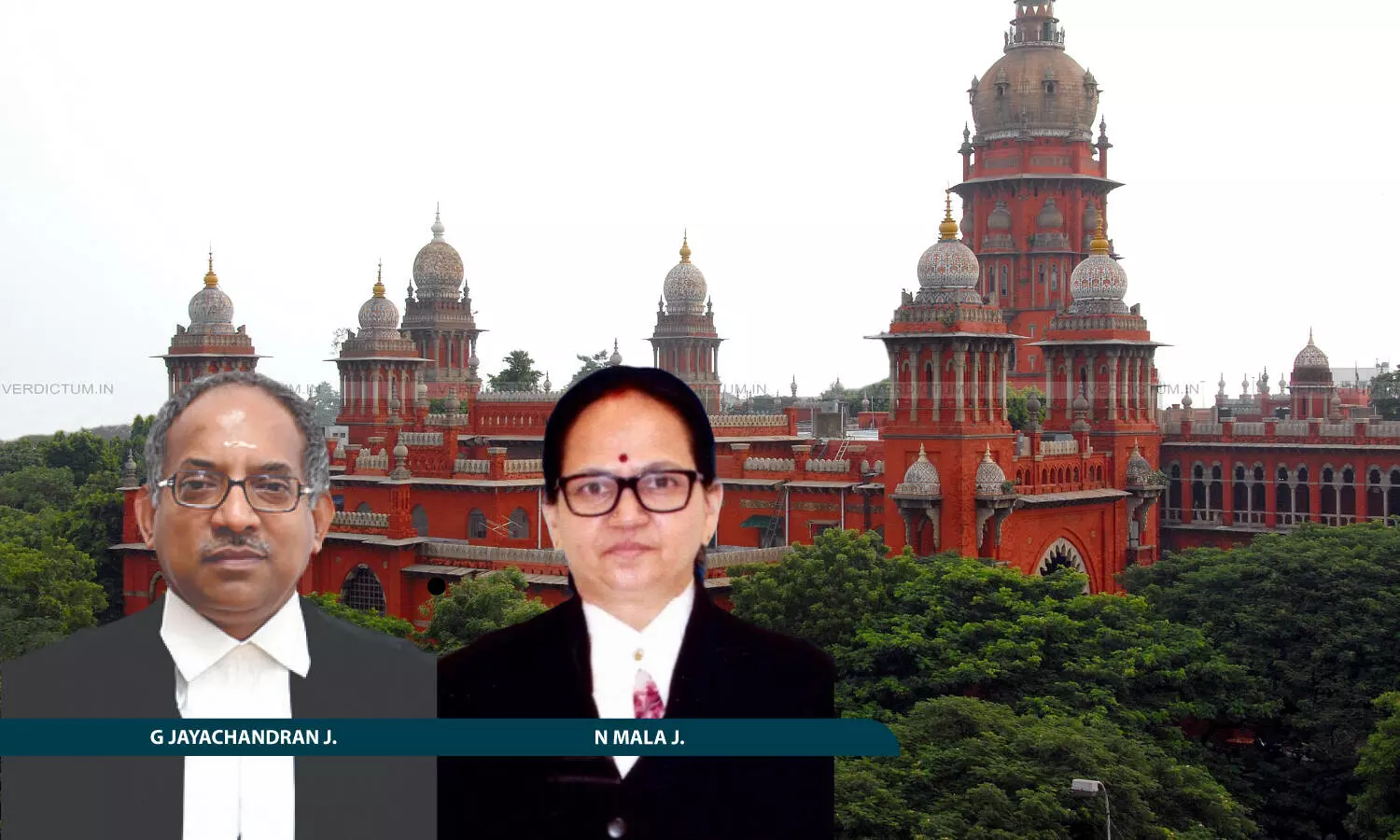
A Bench of Justice G. Jayachandran and Justice N. Mala observed: “Even though we find that the respondents are not entitled to claim refund of license and privilege fee under the proviso to Rule 24-A, in view of the peculiar facts and circumstances of the cases, we are inclined to allow the petitioners claim for refund on equity and for limited period”.
The Bench further added: “In the light of the above discussions, we are of the view that in equity and not in law, the respondents are entitled for refund/adjustment of the license fee and the privilege fee for the limited period of 171 days, without surrendering the licenses, since they were prevented from transacting business due to the Covid pandemic and for reasons beyond their control.”
Additional Advocate General T. Gowthaman appeared for the appellants. Advocate N.C. Thirumalai Balaji appeared for the respondents.
Background
The respondent licensees, all holders of F.L.III licences running bars/hotels, had approached the High Court seeking refund of licence and privilege fees for the period during which they were forced to close business because of COVID-19 lockdown restrictions.
The Single Judge allowed the writ petitions by interpreting the proviso to Rule 24-A as enabling refund of proportionate licence and privilege fees even without surrender of the licences. The State challenged that view, arguing that Rule 24-A required surrender of licence and proof of non-transaction of business.
The State submitted that the proviso could not be read as a substantive or standalone provision and that the refund ordered by the Single Judge had overlooked the mandatory condition of surrender. The licensees, on the other hand, argued that they were unable to transact business not because of any default on their part, but because government lockdown notifications prevented them from exploiting the licences.
Court’s Observations
The Court held that Rule 24-A was introduced to deal with cases where licensees did not intend to conduct business and were willing to surrender their licences. It found that the proviso could not be read independently so as to erase the requirement of surrender under the main rule.
The Court observed: “We find, upon a reading of the main provision in Rule 24-A, that the application for refund of the license fee/privilege fee is to be accompanied by the license granted to the licensee. Therefore, from the main enactment, it is clear that the refund is subject to the surrender of license and the proof of non-transaction of business under the license.”
It further held that the proviso was only an exception relating to the quantum of refund and not a separate source of entitlement.
The Court remarked: “The main provision in effect amounts to an “all-or-nothing” rule. In our view, the proviso was added out of equity with the intent to enable those who transacted some business, and wanted to surrender the license permanently, to avail partial/proportionate refund. The mischief sought to be remedied by the proviso was to permit only a partial/proportionate refund on surrender of license after the licensee had transacted some business.”
The Bench held that accepting the licensees’ interpretation of the proviso would create a conflict with the main provision and defeat the legislative intent behind Rule 24-A.
The Court underscored: “Keeping in view, the nature of the license and privilege fee, the interpretation sought to be placed by the learned counsel for the respondents, if accepted, would not merely qualify/except the main provision, but would virtually supplant it. Such a construction, in our considered view, would do violence to the scheme of the provision, for the principal provision is concerned with the surrender of license and the consequent refund of the license fee, while the proviso merely regulates the quantum of refund under the circumstances mentioned therein.”
The Bench also accepted the State’s submission that the proviso could not be used to claim proportional refund for temporary closure without surrendering the licence.
The Court noted that license and privilege fees were not collected merely for sale of liquor but also for possession, relying on the principle that the State holds exclusive privilege over trade in intoxicating liquor.
The Court observed: “It is to be noted here that the license fee and privilege fee are collected for not only trading in liquor, but also for possession of the same. The Hon'ble Supreme Court in a catena of judgments [Har Shankar’s case (1975) 1 SCC 737, Khoday Distilleries case (1995) 1 SCC 574 & Issac Peter’s case 1994 SCC (4) 104] categorically declared that the State holds exclusive privilege over trade in intoxicating liquor and fee paid by the licensees is neither a tax or simple service fee, but is a consideration paid to acquire the States exclusive privilege, in not only transacting the business of sale of liquor, but also to hold and possess the same.”
It added that Rule 24-A was not meant to compensate licensees for temporary closures where they later resumed business under the same licence.
Despite rejecting the legal interpretation adopted by the Single Judge, the Court found that Covid-19 was an exceptional circumstance and that the licensees had been prevented from doing business for reasons beyond their control.
The Court held: “Covid-19 pandemic was an exceptional global phenomenon resulting in prohibition of all activities across the country, save those specifically exempted. The failure of the respondents to transact business during the Covid period, is not because of any fault on their part, but was a result of the force majeure situation created by the pandemic which affected humans across the globe. The relevant dates submitted by the appellants and referred to above, clearly shows that Bars remained closed for 171 days.”
On that basis, the Court held that the respondents could claim partial/proportionate refund for 171 days, subject to proof that they had not transacted business during that period.
Conclusion
The High Court allowed the writ appeals and set aside the Single Judge’s orders.
However, it granted liberty to the respondent licensees to approach the Commissioner of Prohibition and Excise for refund of license and privilege fee for 171 days only.
The respondents were directed to submit claim petitions within two weeks. The Commissioner was directed to consider the claims with supporting evidence and, if satisfied that they were genuine, pass orders on merits preferably within 12 weeks. No costs were imposed.
Cause Title: State of Tamil Nadu & Anr. v. The Suguna Vilasa Sabha & Connected Matters
Appearances
Appellants: Additional Advocate General T. Gowthaman, assisted by Government Advocate K. Surendar/K. Surender
Respondents: Advocates N.C. Thirumalai Balaji, A. Suresh, V. Sudhan, D. Kalaiselvi, A.B. Jeeva and K. Ganesan, assisted by Abinu Monisha