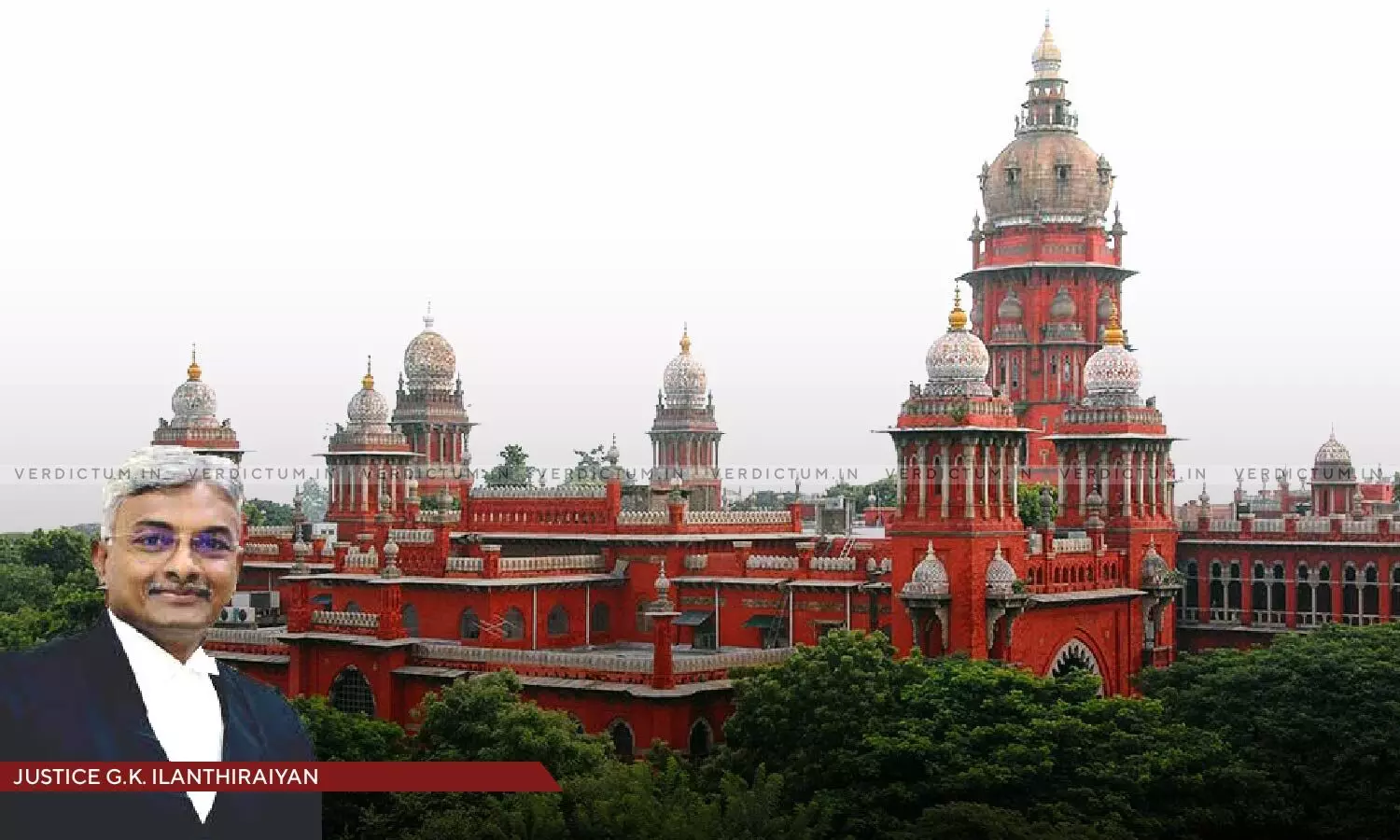
Justice GK Ilanthiraiyan, Madras High Court
Police Must Issue Written Summons U/S 179 BNSS And Record Enquiry Minutes To Avoid Harassment Allegations: Madras High Court
 |
|The Court said it would normally not interfere with a police investigation under Section 528 BNSS, but added that it cannot “turn a blind eye” when harassment under the guise of investigation is brought to its notice.
The Madras High Court has issued guidelines requiring police officers to summon persons named in a complaint or witnesses through written summons under Section 179 of the Bharatiya Nagarik Suraksha Sanhita, 2023, and to record the minutes of enquiry in the police station diary.
The Court was hearing a writ petition seeking a direction to the police authorities to consider the petitioner’s representation dated June 20, 2026, alleging harassment under the guise of enquiry/investigation.
A Bench of Justice G.K. Ilanthiraiyan, while observing that “numerous petitions complaining of harassment are being reported and filed before this Court seeking for directions to refrain the police officials from harassing the persons named in a complaint”, accordingly directed that “while summoning any person named in the complaint or any witness to the incident complained of, the police officer shall summon such person through a written summon under Section 179 of the Bharatiya Nagarik Suraksha Sanhita, specifying a particular date and time for appearing before them for such an enquiry/investigation.”
The petitioner was represented by M/s. L. Infant Dinesh, while Government Counsel R. Ganesh Kumar appeared for the respondents.
Background
The petitioner approached the High Court alleging that the respondent police were harassing him under the guise of an enquiry/investigation. The writ petition sought a direction to the Commissioner of Police, Deputy Commissioner of Police and Inspector of Police to consider his representation.
The Court noted that an enquiry into non-cognizable or cognizable offences falls within the unfettered powers of investigating officers, so long as such power is exercised legitimately within the framework of Chapter XIII of the BNSS.
At the same time, the Court observed that numerous petitions complaining of police harassment are being filed before it, seeking directions to restrain police officials from harassing persons named in complaints.
Court’s Observations
At the outset, the High Court observed: “An enquiry into a non cognizable offence or a cognizable offence is the unfettered powers of the Investigation Officers so long as the power to investigate/enquiry into these offences are legitimately exercised within the frame work of Chapter XIII of the Bharatiya Nagarik Suraksha Sanhita, 2023. Though the Sanhita empowers the Magistrate to be a guardian in all the stages of the police investigation, there is no power envisaging him to interfere with the actual investigation or the mode of investigation”.
The Court then reiterated that it would normally not interfere with an investigation conducted by a police officer while exercising powers under Section 528 of the BNSS.
It observed: “This Court, exercising its power under Section 528 of the Bharatiya Nagarik Suraksha Sanhita, normally would not interfere with the investigation conducted by a police officer. Nevertheless, it would also not turn a blind eye to instances of harassment by the police under the guise of investigation is brought to its notice.”
The Court noted that the term “harassment” has a wide meaning, and what may amount to harassment from the perspective of a person called for enquiry may not be viewed similarly by the police officer.
The Court observed: “The term 'harassment' by itself has a very wide meaning and hence, what could be harassment to the petitioners may not be the same to the police officer.”
To address such situations, the Court issued guidelines requiring police officers to summon persons named in a complaint or witnesses through a written summons under Section 179 of the Bharatiya Nagarik Suraksha Sanhita, 2023, and to record the minutes of enquiry in the police station diary.
The court further directed:
- “The minutes of the enquiry shall be recorded in the general diary/station diary/daily diary of the police station.”
- “The police officer shall refrain himself or herself from harassing persons called upon for enquiry/investigation.”
- “The guidelines stipulated for preliminary enquiry or registration of FIR by the Hon'ble Supreme Court in Lalita Kumari Vs. Government of Uttar Pradesh and others [2014 (2) SCC (1)] shall be strictly adhered to.”
Conclusion
The High Court disposed of the writ petition with the above directions. No costs were imposed.
Cause Title: R. Raja v. The Commissioner of Police and Others