Madras High Court Initiates Suo Motu Proceedings To Guard Coastal Environment, Quashes NGT Order On Shrimp Hatcheries For Lack Of Jurisdiction
 |
|The Court said that the NGT cannot adjudicate upon the Coastal Aquaculture Authority Act as it is excluded from its statutory schedule, but asserted the Court's independent plenary powers under Article 226 to directly examine the environmental impact of aquaculture units.
The Madras High Court allowed writ petitions filed by shrimp hatchery operators and quashed an order of the National Green Tribunal (NGT), Southern Zone, which had directed the closure of their units for lacking Coastal Regulation Zone (CRZ) clearances.
It was held that the NGT is a forum of limited statutory jurisdiction restricted entirely to the enactments listed under Schedule I of the NGT Act, 2010. Since the legislature consciously excluded the Coastal Aquaculture Authority Act, 2005 (CAA Act) from this schedule, the Tribunal completely lacked the jurisdiction to pass regulatory or adverse orders against coastal aquaculture businesses.
However, emphasizing that the lack of statutory jurisdiction by the NGT did not dilute the gravity of the environmental concerns raised, the High Court invoked its own expansive, unfettered plenary powers under Article 226 of the Constitution of India to take suo motu cognizance of the matter.
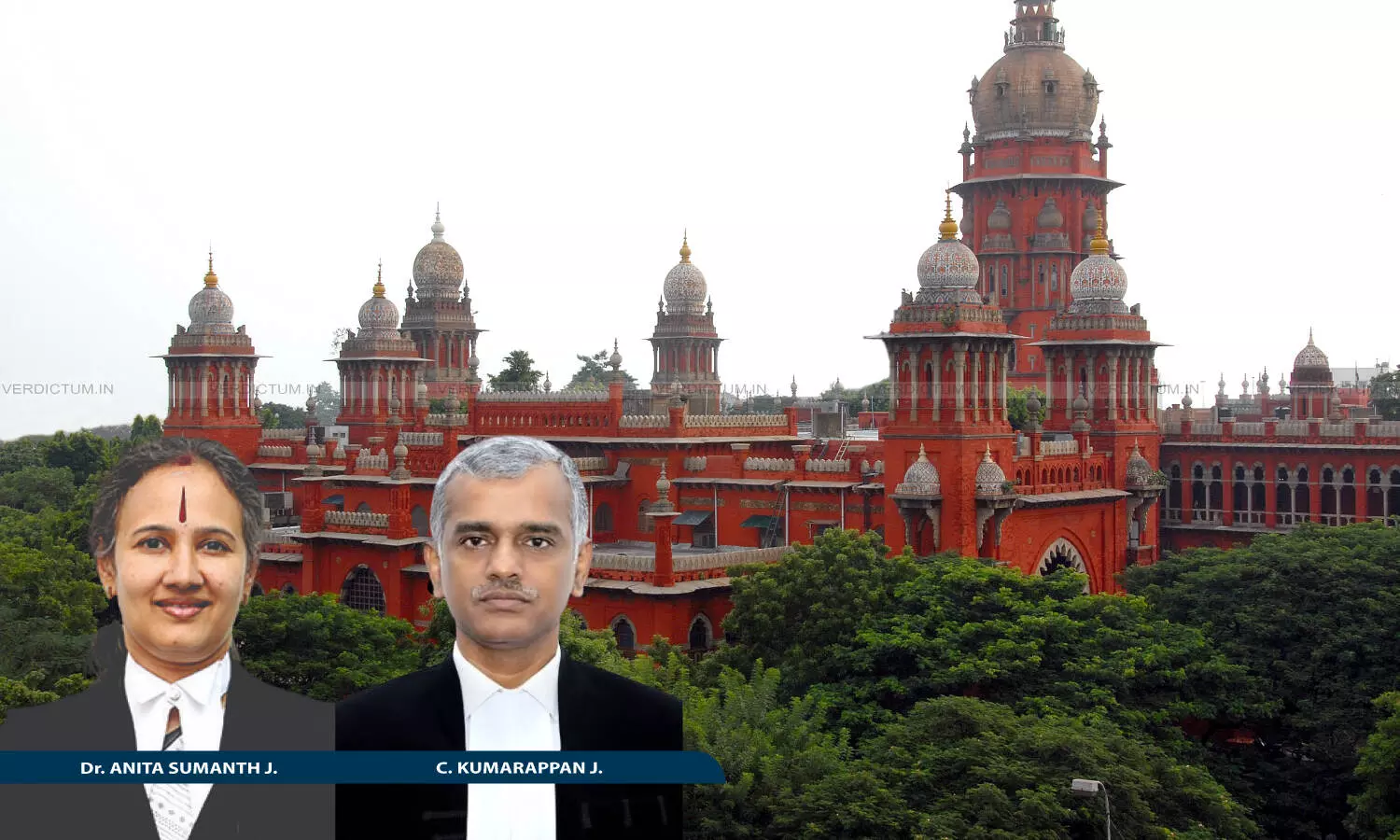
The Division Bench of Justice Anitha Sumanth and Justice C Kumarappan observed, "This Court, under Article 226 of the Constitution is not deterred from assuming jurisdiction suo moto, as we are of the considered view that the issue identified by the NGT is one of enormous importance qua the coastal environment...For the above reasons, we issue notice suo moto to the respondents to address this Court on the issue of whether coastal aquaculture units (i) ought to seek and obtain approval under the CRZ Notifications, (ii) the extent of interplay of the CAA Act with general environmental laws including but not restricted to the Environmental Protection Act 1986 and (iii) any other issue that is incidental, ancillary and supplementary to the aforesaid issues."
Senior Advocate V. Raghavachari appeared for the Petitioners, while Special Government Pleader C. Harsha Raj appeared for the Respondents.
Brief Facts of the Case
The petitioners, who were engaged in running shrimp hatcheries, filed writ petitions under Article 226 of the Constitution of India seeking a writ of Certiorari to quash an order passed by the National Green Tribunal (NGT), Southern Zone, Chennai. The NGT, via its impugned order, had directed the removal of the hatcheries for failing to obtain approvals under the Coastal Regulation Zone (CRZ) Notifications, ordered them to pay environmental compensation, and directed the authorities to further regulate their businesses. Aggrieved by these directions, which they claimed severely prejudiced their business interests, the petitioners challenged the jurisdiction and validity of the NGT's order before the High Court.
Contentions of the Parties
The petitioners contended that the impugned order was passed in gross violation of the principles of natural justice as they were never given an opportunity of being heard by the NGT. They argued that coastal aquaculture activities were exclusively governed by the Coastal Aquaculture Authority Act (CAA Act), which served as a self-contained and complete code. The petitioners pointed out that the CAA Act was consciously excluded from Schedule I of the National Green Tribunal Act, meaning the NGT lacked the statutory jurisdiction to adjudicate upon or regulate coastal aquaculture activities.
The State Government & Coastal Zone Management Authority supported the view that the statutory authority constituted under the CAA Act was the appropriate body to regulate the construction and operation of aquaculture farms and hatcheries. They submitted that CRZ notifications permitted hatcheries beyond 500 meters from the High Tide Line, and stated that a formal clarification was awaited from the Central Government regarding clearance requirements.
The Tamil Nadu Pollution Control Board conceded that the NGT lacked jurisdiction under the CAA Act, it argued that its own powers to monitor and control air and water pollution were entirely independent of and concurrent with the Coastal Aquaculture Authority.
Observations of the Court
On the issue of jurisdiction, the High Court observed that the National Green Tribunal (NGT) is a forum of limited statutory jurisdiction and does not possess a general power of judicial review comparable to that of a Constitutional Court under Article 226 of the Constitution of India. Relying on settled legal principles laid down by the Supreme Court, the Court noted that the statutory domain of the NGT is strictly restricted to the enactments explicitly enumerated in Schedule I of the National Green Tribunal Act, 2010. Since the Coastal Aquaculture Authority Act, 2005 (CAA Act) was consciously excluded from the said Schedule, the Court held that the NGT had no authority to extend its jurisdiction to encompass or adjudicate upon regulatory matters falling within the ambit of the CAA Act.
While acknowledging that the NGT is empowered to initiate suo motu proceedings to discharge its environmental functions, the Court emphasized that such power does not equate to a waiver of the fundamental principles of natural justice and fair play. It observed that the NGT had increasingly engaged in a practice of unilateral decision-making and passing ex parte adverse orders, which routinely faced stays from the Apex Court, thereby rendering its environmental safeguarding efforts counterproductive.
The Court noted that the NGT was procedurally bound to issue proper notice and afford a meaningful opportunity of being heard to any affected party before passing orders that cause them grave prejudice. Because the NGT failed to issue even a public notice to the impacted aquaculture units, the Court observed that the impugned order suffered from a gross violation of due process.
In light of the finding that the NGT completely lacked jurisdiction over the scheduled subject matter, the Court observed that remanding the matter back to the Tribunal would be futile. Consequently, the first two issues were answered in favor of the petitioners, and the impugned order of the NGT was set aside. However, the Court observed that its decision on jurisdiction did not in any manner dilute the magnitude, gravity, or environmental importance of the underlying issues identified by the NGT concerning coastal aquaculture.
"In the present matter, in light of our conclusion that the NGT can address only those enactments enumerated in the Schedule to the Act, the question of remanding the matters to the NGT does not arise. However, since we are of the unambiguous view that the issue taken up by the NGT merits serious consideration, we have taken recourse to an alternate methodology for dealing with the same", the Court said.
Exercising its plenary powers under Article 226 of the Constitution of India, which are not fettered by statutory schedules, the High Court determined that the preservation of the coastal environment warranted immediate judicial attention. The Court therefore refrained from deciding the merits of the CRZ clearances at this stage and instead took suo motu cognizance of the cause.
It concluded, "Our decision concerning the absence of jurisdiction by the NGT, does not, in any way, deflect from, or dilute the magnitude and importance of the issue identified by the NGT for attention."
The Registry was directed to number the matter as a fresh suo motu writ petition and place it before the Chief Justice for appropriate scheduling, while issuing notices to the respondents to address the Court on the interplay between the CAA Act, CRZ Notifications, and general environmental laws.
Cause Title: M/s.Golden Marine Harvest v. The National Green Tribunal and Ors. and other connected matters [Neutral Citation:2026:MHC:1814]
Appearances:
Petitioners: Senior Advocate V.Raghavachari with Advocates Kamalesh
Respondents: Special Government Pleader C. Harsha Raj