Kerala High Court Holds That Limitation Of 90 Days Will Apply To Writ Petitions Under Article 226 Challenging AFT's Decisions
 |
|Section 30 of the Armed Forces Tribunal Act, 2007, prescribes a period of 90 days for filing an appeal before the Supreme Court.
The Kerala High Court has dismissed a writ petition filed by the Union of India challenging an order of the Armed Forces Tribunal (AFT), Kochi, which granted disability pension to a retired Army Havildar for having been filed much after the ninety days prescribed under Section 30 of the AFT Act, 2007, for filing an appeal.
The Bench noted that the discretionary writ jurisdiction under Article 226 of the Constitution of India cannot be exercised to resurrect a cause of action that has become unenforceable due to the law of limitation or to bypass the statutory remedy of appeal.
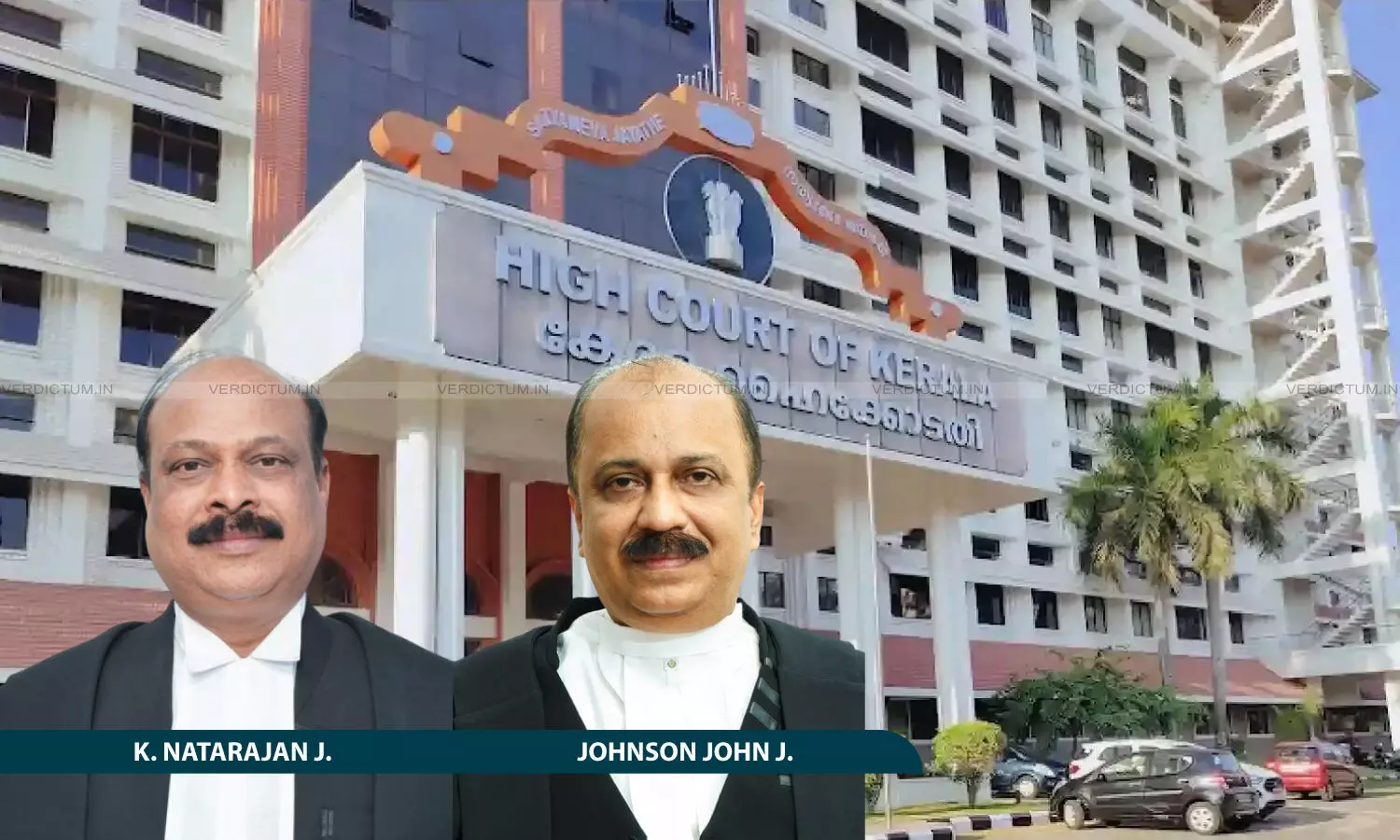
A Division Bench comprising Justice K. Natarajan and Justice Johnson John observed, “…the petitioners cannot reagitate an issue finally decided by a competent forum and attained finality, by filing an inordinately belated writ petition and that the discretionary jurisdiction under Article 226 of the Constitution of India cannot be exercised to resurrect a cause of action which has become unenforceable on account of law of limitation. We have no doubt that entertaining such a belated writ petition would be contrary to public policy that it is for the public good that there be an end to litigation and that the maxim interest reipublicae ut sit finis litium…”.
The Court held, "The period prescribed for preferring an appeal is ninety days from the date of the decision or order and admittedly, in this case, the petitioners have not preferred any appeal as provided under Section 30 of the Act. Therefore, it can be seen that the present writ petition was filed after the expiry of the statutory period prescribed for filing an appeal."
Advocate C. Dinesh appeared for the petitioners and Advocate T.R. Jagadeesh appeared for the respondent.
The respondent, Ex-Havildar Binu C., served in the Indian Army for 26 years before being discharged on June 30, 2019. At the time of his release, the Release Medical Board assessed his medical condition, "Primary Hypertension," at 30% disability for life. However, the Board concluded that the condition was neither attributable to nor aggravated by military service as it was detected while posted at a peace station.
Aggrieved by the denial of the disability element of pension, the veteran approached the Armed Forces Tribunal (Regional Bench, Kochi). On August 23, 2023, the AFT ruled in his favour, directing the authorities to grant him a disability pension at 30%, rounded off to 50% for life from his date of discharge.
The Union of India belatedly challenged this AFT order before the Kerala High Court in May 2024, after a delay of 606 days in re-filing.
The Bench highlighted that Section 30 of the Armed Forces Tribunal Act, 2007 provides a specific statutory mechanism to appeal AFT orders before the Supreme Court within 90 days. The petitioners failed to avail this statutory appeal within the prescribed timeframe and instead approached the High Court through a belated writ petition long after the period of limitation had expired.
Addressing the substantive claim, the High Court observed that under Regulation 423 of the Regulations for Medical Services for Armed Forces, 1983 and settled principles in Dharamvir Singh v. Union of India (2013) 7 SCC 316 and Sukhvinder Singh v. Union of India (2014) 14 SCC 364, a service member is presumed to be in sound health upon entry into service if no disability is recorded at that time.
“In the Medical Board opinion, the reasons stated for the conclusion that the disability is neither attributable to nor aggravated by military service is that the onset of the ID was in peace station and that the ID is a lifestyle metabolic disease. But, Regulation 423(a) of the Regulations, 1983 and the decision of the Honourable Supreme Court in Rajumon T.M. (supra) would show that only because the onset of the disease was in a peace station or that the disease is a lifestyle disorder, the same cannot be accepted as sufficient reason to deny the attributability of disease to military service”, it noted further.
Therefore, on finding no merit or jurisdictional error justifying interference under Article 226 of the Constitution of India, the High Court dismissed the writ petition, confirming the AFT's direction to pay the disability pension.
Case Details: Union of India & Ors. v. Ex Havildar Binu C. (Neutral Citation: 2026:KER:63807)
Appearances:
Petitioners: C. Dinesh, Advocate.
Respondent: T.R. Jagadeesh, Adi Narayanan, Manasi Jagadeesh, Advocates.