Investigating Officer Functions, In Essence, As A Pre-Trial Judge: Karnataka High Court Issues Guidelines On Recording Of Statement U/S 164(5) CrPC In POCSO & SC/ST Act Cases
 |
|Acting on "recurring infirmities" noticed across a considerable number of appeals, the Court directed circulation to the Judicial Academy and, through the DGP, to every Investigating Officer in Karnataka, while acquitting a Home Guard sentenced to life.
The Karnataka High Court has held that an Investigating Officer, before filing a final report, is under a solemn legal obligation to satisfy himself of the existence of sufficient material to proceed against an accused, functioning in essence as a "pre-trial judge", and has laid down six specific directions to ensure that statements recorded under Section 164(5) CrPC are properly perused, preserved and furnished to the accused in every case involving offences under the POCSO Act and the SC/ST (Prevention of Atrocities) Act.
The directions were issued after the Bench recorded that it had, over a considerable number of similar appeals, repeatedly noticed the same infirmities, Investigating Officers filing chargesheets without perusing victims' Section 164(5) statements, and trial courts failing to furnish copies of such statements to the accused as mandated under Section 207(iv) CrPC.
The Court directed that its judgment be circulated to all officers presiding over criminal trials, placed before the President of the Karnataka Judicial Academy for dissemination among trainee judges, and forwarded to the Additional Chief Secretary, Home Department, for circulation through the Director General and Inspector General of Police to every investigating officer in the State. In the case at hand, the Court set aside the conviction and acquitted the appellant, a Home Guard who had been sentenced to life imprisonment for kidnapping, aggravated penetrative sexual assault and an offence under the SC/ST (PoA) Act.
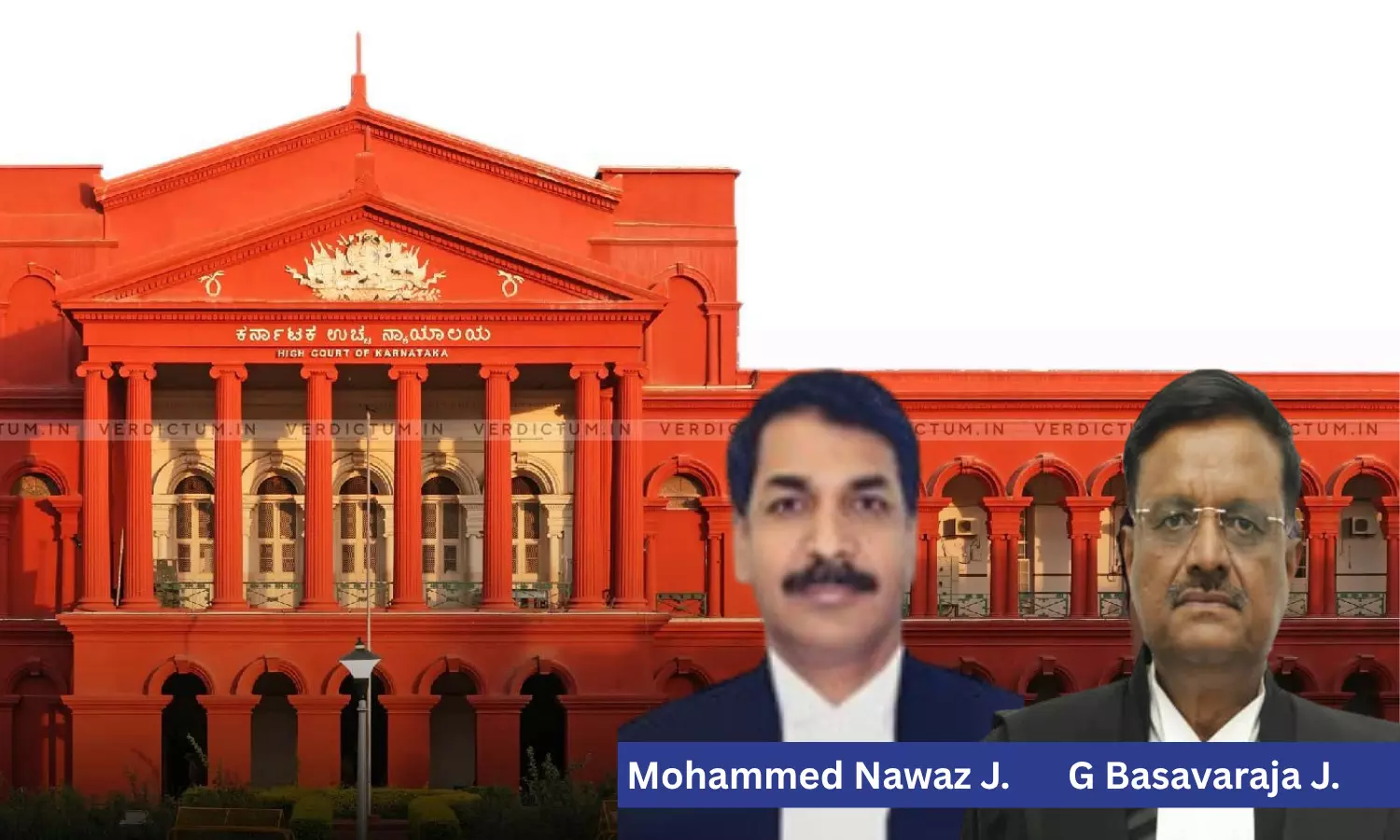
A Bench of Justice Mohammad Nawaz and Justice G. Basavaraja while hearing a criminal appeal under Section 374(2) Cr.P.C. against the judgment of the Additional District and Sessions Judge, Kolar, noted, “…Having regard to the mandatory character of Section 207(iv) Cr.P.C., corresponding to Section 230(iv) of the BNSS, 2023, and in light of the decisions of the Hon'ble Supreme Court referred to above, we consider it necessary to issue the following guidelines for the guidance of officers conducting criminal trials…It bears reiteration that the Investigating Officer functions, in essence, as a pre-trial judge, and is under a solemn legal obligation, before submission of any final report, to satisfy himself as to the existence of sufficient material to proceed against the accused. It is only thereafter, upon due application of mind, that a charge-sheet or final report may properly be filed”.
Advocate Tigadi Veeranna Gadigeppa appeared for the appellant and Vijay Kumar Majage, SPP-II appeared for the respondent, while N.S. Sampangiramaiah, appeared as Amicus Curiae.
The Bench passed the following guidelines:
- Upon recording of the statement under Section 164(5) Cr.P.C., corresponding to Section 183(5) of the BNSS, 2023, it shall be the duty of the Magistrate to preserve the same in safe custody;
- Before submission of the charge-sheet or final report, it shall be the duty of the Investigating Officer to peruse the statement of witnesses recorded under Section 164(5) Cr.P.C., corresponding to Section 183(5) of the BNSS, 2023;
- Upon an application being made by the Investigating Officer for a certified copy of the statement recorded under Section 164(5) Cr.P.C., corresponding to Section 183(5) of the BNSS, 2023, it shall be the duty of the concerned Magistrate/Special Judge to issue the same without delay;
- Upon obtaining the certified copy of the statement recorded under Section 164(5) Cr.P.C., corresponding to Section 183(5) of the BNSS, 2023, it shall be the duty of the Investigating Officer to apply his mind as to whether the said statement supports or is contrary to the case of the prosecution;
- Where the witness has not deposed anything against the accused in the statement recorded under Section 164(5) Cr.P.C., corresponding to Section 183(5) of the BNSS, 2023, it shall be the duty of the Investigating Officer to satisfy himself that sufficient material, independent of such statement, exists to justify filing of the charge-sheet against the accused.
- Upon appearance of the accused before the learned Magistrate/Sessions Judge/Special Judge, it shall be the duty of such Judge to furnish all documents as required under Section 207(iv) Cr.P.C., including the copy of the statement recorded under Section 164(5) Cr.P.C., corresponding to Section 183(5) of the BNSS, 2023
The prosecution's case was that the appellant, then deputed for law-and-order duty in Kolar, developed an acquaintance with the victim that led to her leaving home with him in May 2019 and travelling to Bellary District, where sexual intercourse was alleged to have taken place.
Following a missing-person complaint by the victim's mother, the two were traced, the victim's statement was recorded under Section 161 CrPC, she underwent medical examination, and she was produced before the jurisdictional Magistrate for a statement under Section 164(5) CrPC. The investigating officer subsequently filed a chargesheet under Sections 363 and 376(2)(n) IPC, Section 6 of the POCSO Act, and Section 3(2)(v) of the SC/ST (PoA) Act.
The trial court convicted the appellant on all counts, sentencing him to life imprisonment under the SC/ST (PoA) Act along with rigorous imprisonment under the other provisions, prompting the present appeal on grounds including unproved age of the victim, discrepancies in witness testimony, and non-furnishing of the Section 164(5) statement to the defence.
Examining the record, the Court found that the victim's Section 164(5) statement, recorded on oath shortly after she was traced, made no mention whatsoever of sexual assault and directly contradicted her subsequent trial testimony, yet this statement had never been furnished to the accused nor, apparently, perused by the investigating officer before the chargesheet was filed, an omission the Court held violated the mandatory requirement of Section 207(iv) Cr.P.C.
“We have noticed that, in a considerable number of cases, this mandatory requirement under Section 207(iv) Cr.P.C. is left uncomplied with, without any reasons being assigned therefor; equally, defence counsel have, in several instances, failed to bring such nonfurnishing to the notice of the Court. It is only at the stage of recording the evidence of the victim or other witnesses that the document comes to be marked as an exhibit, without the copy having ever been furnished to the accused. Where such a procedure is followed, the accused stands deprived of the valuable right to question the correctness or veracity of the statement recorded under Section 164(5) Cr.P.C…”, it noted.
Where omissions or contradictions exist between the statement under Section 164(5) Cr.P.C. and the evidence of the victim or other witnesses recorded during trial, the accused is entitled, in law, to put the same to the witness by way of contradiction under Section 145 of the Indian Evidence Act, corresponding to Section 164 of the Bharatiya Sakshya Adhiniyama, 2023. Nonfurnishing of the copy of the statement recorded under Section 164(5) Cr.P.C. thus constitutes a violation of the accused's fundamental right to a fair trial guaranteed under Article 21 of the Constitution of India…”, it noted further.
The Court also found that the prosecution had failed to prove the victim's minority through the best available evidence, having omitted to collect her SSLC marks card despite her own admission of having appeared for that examination, warranting an adverse inference under Illustration (g) to Section 114 of the Evidence Act.
Cause Title: V. Amaresh @ Ambarish v. State of Karnataka & Anr., Criminal Appeal No.366 of 2021
Appearances:
Appellant: Tigadi Veeranna Gadigeppa, Advocate.
Respondent: Vijay Kumar Majage, SPP-II, N.S. Sampangiramaiah, Amicus Curiae.