Wife Cannot Invoke Senior Citizens Act To Seek Maintenance Against Husband Who Is Himself A Senior Citizen: Karnataka High Court
 |
|The Court observed that the Act is a beneficial legislation intended to protect senior citizens from neglect and abuse, and cannot be used as an adversarial tool against them
The Karnataka High Court has held that a complaint filed by a wife against her husband under the Maintenance and Welfare of Parents and Senior Citizens Act, 2007, is not maintainable where the husband is himself a senior citizen.
The Court observed that the statute is designed to secure maintenance and protection for senior citizens from their children or relatives and does not confer jurisdiction upon authorities under the Act to adjudicate matrimonial or property disputes between spouses.
The Court was hearing a writ petition challenging orders passed by the Assistant Commissioner and Deputy Commissioner directing the entry of the wife's name in the revenue records and granting relief under the Senior Citizens Act.
The husband contended that the authorities had exceeded their jurisdiction by entertaining a complaint filed by his wife and by adjudicating issues relating to property rights despite civil proceedings between the parties having already attained finality.
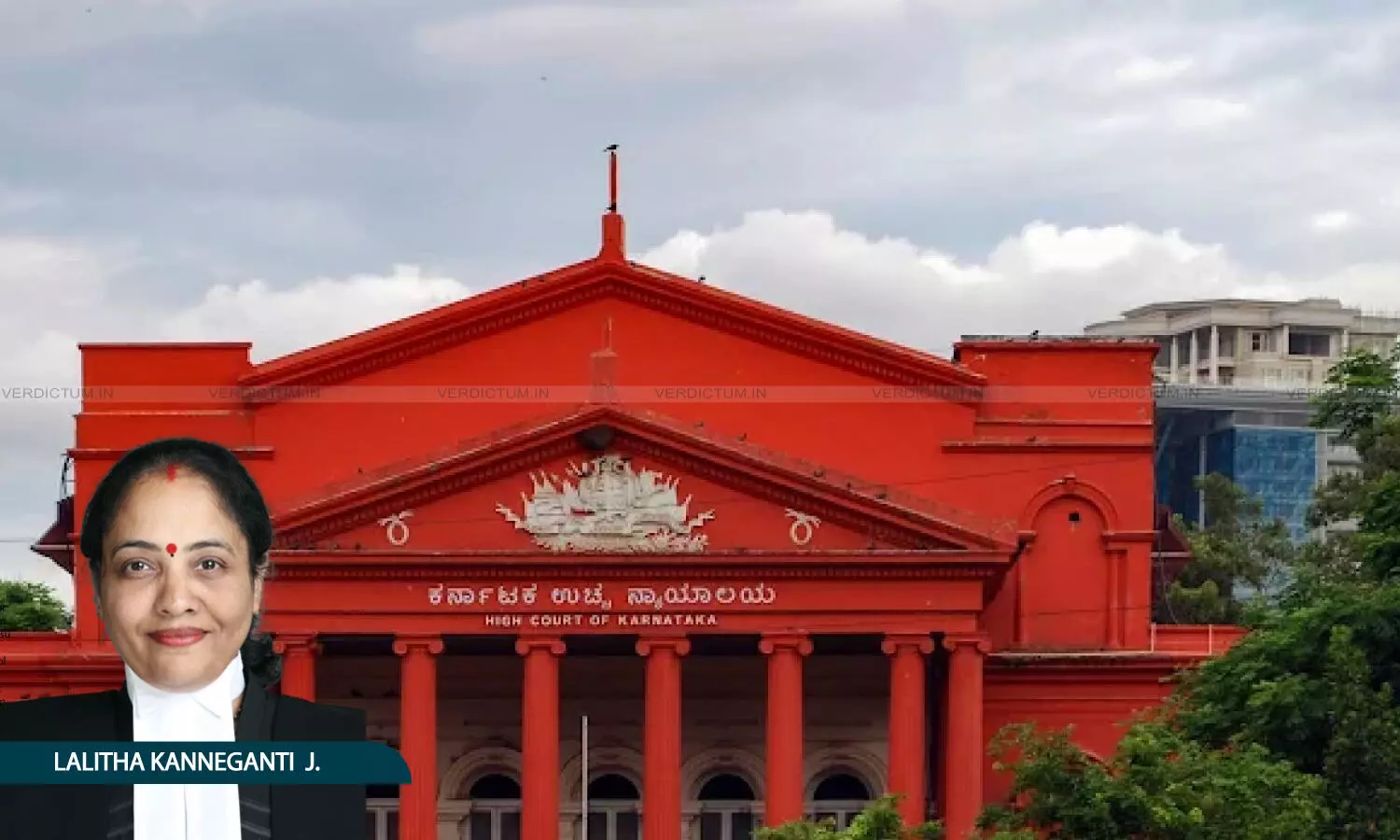
A Bench of Justice Lalitha Kanneganti observed: “A bare perusal of the object of the Act and also the definitions, particularly section 4 of the Act, makes it crystal clear that the dispute raised in this case is between the petitioner and the 3rd respondent/wife, doesn't fall under the scheme of the Maintenance and Welfare of Parents and Senior Citizens Act, 2007. The wife cannot seek the relief under the Act by filing a complaint against the husband, who is a senior citizen. The Act is beneficial and protective insofar as senior citizens are concerned, but not adversarial against senior citizens.”
Advocate S.V. Prakash appeared for the petitioner, while Additional Government Advocate Mahantesh Shettar appeared for the official respondents.
Background
The dispute arose between an elderly husband and wife who had lived together for several decades and had children from the marriage. The husband approached the High Court challenging orders passed by authorities under the Maintenance and Welfare of Parents and Senior Citizens Act, 2007, which had granted relief in favour of his wife and directed entry of their names jointly in revenue records relating to certain properties.
The record before the Court disclosed that civil litigation concerning the family properties had already been adjudicated by competent civil courts. The Court noted that proceedings relating to partition and subsequent property claims had culminated in judgments which had attained finality. It was also brought on record that the wife had pursued other legal remedies, including maintenance proceedings and civil litigation concerning property rights.
Aggrieved by the orders passed under the Senior Citizens Act, the husband approached the High Court, contending that the authorities lacked jurisdiction to entertain such a complaint and to determine property disputes between spouses under the guise of proceedings under the Act.
Court's Observations
The Court examined the object and scheme of the Maintenance and Welfare of Parents and Senior Citizens Act, 2007 and observed that it was enacted to protect elderly persons by ensuring maintenance and care from children and relatives responsible for their welfare.
Referring to Section 4 of the Act, the Court noted that the statutory framework enables senior citizens and parents unable to maintain themselves to seek maintenance from their children or, in the case of childless senior citizens, from relatives who would inherit their property. The legislation is therefore protective in nature and intended to safeguard senior citizens from neglect and abuse.
After examining the statutory scheme, the Court held that the wife did not fall within the category of persons entitled to invoke the Act against her husband.
The Bench observed: “The wife does not fall within the class of persons entitled to initiate proceedings against the husband. If the wife has any grievance against the husband, there are other remedies available to her.”
According to the Court, the Act was never intended to be used by one senior citizen spouse against another for adjudication of disputes concerning maintenance, property rights or matrimonial grievances. Such disputes must be pursued through remedies specifically available under the relevant legal framework.
The High Court further found that the authorities under the Act had exceeded the jurisdiction conferred upon them by entertaining the wife's request for mutation of her name in respect of property disputes that had already been the subject matter of civil litigation.
The Court observed: “That apart, when the disputes between the parties have attained finality in respect of a particular property, the application filed by the wife before the respondents seeking the relief that her name should be mutated is beyond the powers conferred on respondent Nos.1 and 2 under the provisions of the Act. It is very unfortunate that both the 1st and 2nd respondents exceeded their jurisdiction and entertained this application.”
The Bench held that authorities exercising powers under the Senior Citizens Act cannot disregard binding civil court determinations and undertake adjudication of title or property rights.
Emphasising the limited nature of powers conferred under the legislation, the Court held that the jurisdiction of authorities under the Act is summary in character and confined to issues relating to maintenance, protection and, in certain situations, eviction.
The Court observed: “The jurisdiction conferred on the respondents Nos. 1 and 2 under the Act is summary in nature, confined to maintenance, protection and eviction in certain circumstances. The Act is not intended to decide complex civil or matrimonial disputes. An authority exercising powers under a particular statute must act within the four corners of the statute and cannot assume jurisdiction which is not vested in it.”
The Bench further held that orders passed beyond the scope of the statutory scheme are vitiated by jurisdictional error and liable to be set aside.
The Court also cautioned authorities functioning under the Senior Citizens Act to remain conscious of the object of the legislation and prevent its misuse in family disputes involving property and financial expectations.
The Bench observed: “The Act is protection-focused, but like any other legal tool, it is exploited and used strategically by parties, where there is a family conflict mixed with property and financial expectations. The respondent/authorities under the Act shall be mindful of this while exercising the jurisdiction under the Act and shall ensure that there is no abuse of process.”
Conclusion
Finding that the impugned orders suffered from jurisdictional error, the Court set aside the orders passed by the authorities and allowed the writ petition.
Cause Title: H.V. Lingappa v. The Deputy Commissioner & Others (Neutral Citation: 2026:KHC:17880)
Appearances
Petitioner: S.V. Prakash, Advocate.
Respondents: Mahantesh Shettar, AGA; H.P. Leeladhar, Advocate