Gujarat High Court Quashes GST Orders After Officer Relies On AI-Generated Non-Existent Judgments
 |
|The petitioner had pointed out that the judgments referred to in the order either did not exist or did not match the citations and ratio relied upon.
The Gujarat High Court has quashed a series of GST proceedings after finding that a State Tax Officer had relied upon non-existent and irrelevant judgments generated using Artificial Intelligence (AI).
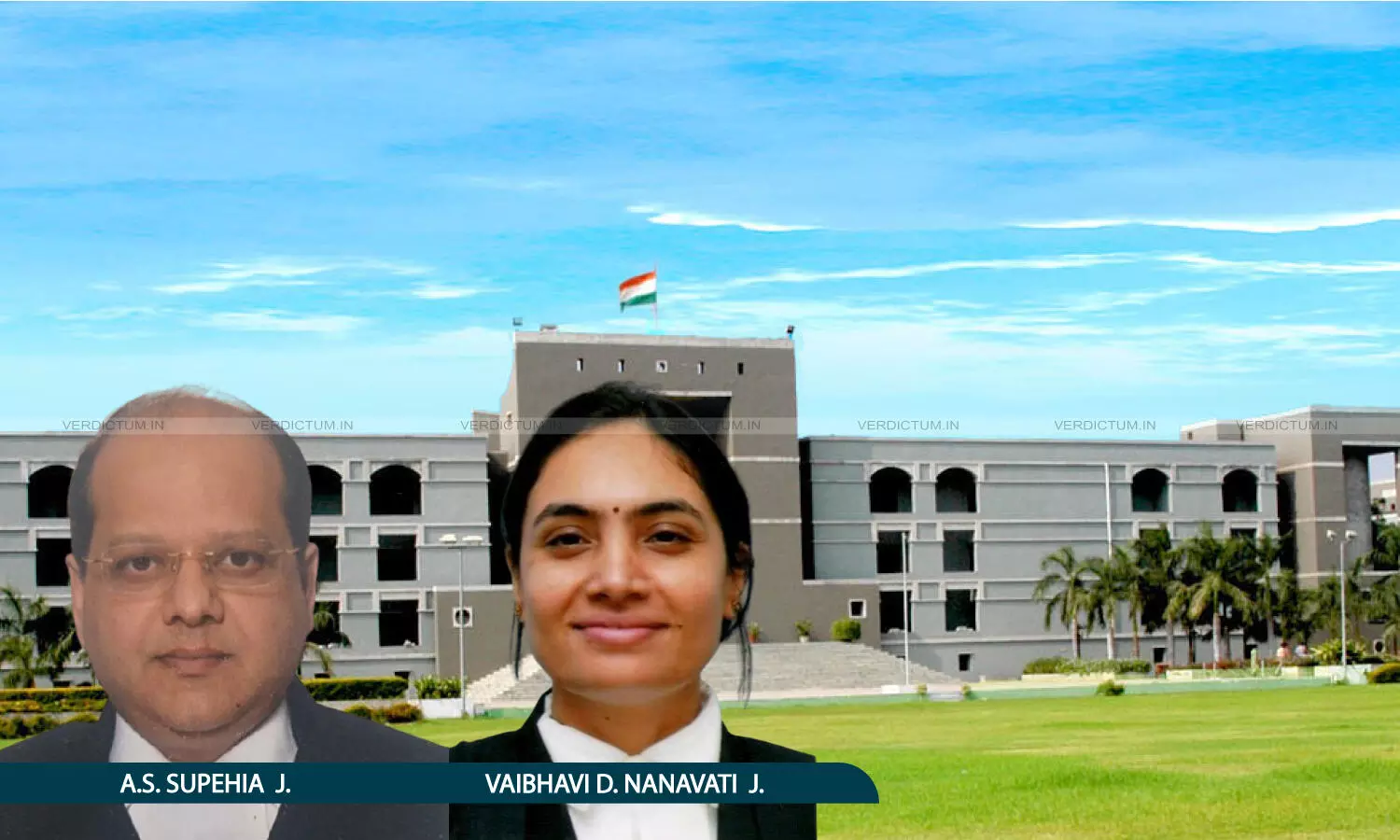
A Division Bench of Justice A.S. Supehia and Justice Vaibhavi D. Nanavati held, “We direct that the instructions dated 18/08/2026, which we have incorporated in our order shall be scrupulously followed, and any violation of the instructions would amount to contempt of this Court, in view of the directions issued by us..”
The Court had earlier observed that the impugned order appeared to have been passed by the State Tax Officer by placing reliance exclusively on AI-generated case laws.
Advocate Hardik V Vora appeared for the Petitioners and Advocate Raj Tanna appeared for the Respondents.
The petitioner had pointed out that the judgments referred to in the order either did not exist or did not match the citations and ratio relied upon.
The State Tax Officer had passed the impugned order, subsequently tendered an unconditional apology. In his affidavit, he stated that he was a probationary officer and that, due to his lack of experience, the mistake had happened. He also stated that he had used AI in drafting the order and in referring to the non-existent and irrelevant judgments.
The Court was also informed that the officer had attended a training programme on the subject of “usage of Artificial Intelligence (AI) in Drafting SCA and adjudication/appellate order” conducted on August 18, 2026.
Following the Court's earlier order, the Additional Commissioner of State Tax (Admin), Gujarat State, Ahmedabad, issued instructions to the Joint Commissioners of State Tax, Division-1 to 12, concerning the use of AI by adjudicating and quasi-judicial authorities.
The instructions state that AI is to assist authorities and that any case law, statutory provision, rule, circular or notification identified through AI must be independently verified by the Authority using primary official sources before being incorporated in an order.
The instructions further require authorities to ensure accurate citation of judgments, confirm their relevance, verify the authenticity of the source and their current legal status, and ensure that judgments have not been overruled by a higher judicial forum.
Where an AI tool paraphrases a ratio, the officer must locate the original paragraph and reproduce it verbatim in the order before relying upon it.
The instructions also state that judgments cited by a taxpayer must be duly considered and discussed, and where such a judgment is not applicable, reasons must be recorded in the order.
The authorities were specifically told that use of AI or other technological tools must be accompanied by appropriate human oversight, as AI tools are not always reliable due to concerns regarding their accuracy, transparency and the unknown nature of underlying information.
The instructions emphasise that orders must reflect independent legal reasoning and the officer's own application of mind to the law and facts. AI output may assist in reasoning but cannot substitute it.
The ultimate responsibility for the correctness of an order, the instructions state, lies with the issuing authority, irrespective of the technological tools used.
The instructions further provide that failure to follow them, including passing orders based on unverified AI content, would amount to misconduct and may attract disciplinary action.
On the merits of the petition, the State authorities informed the Court that they intended to revise the entire orders impugned in the petition by resorting to Section 108 of the GST Act, 2017, and that a fresh order would be passed. The authorities also stated that, if considered appropriate, the orders could be set aside and a fresh show cause notice issued to the petitioner.
The High Court accordingly quashed and set aside the show cause notice. The respondent authority was directed to issue a fresh notice to the petitioner.
Cause Title: Faiz Enterprise v. State Tax Officer, & Anr., [2026:GUJHC:53490-DB]