Holding Equivalent Civil Post Does Not Confer Right to Substantive Military Rank; Army Promotion Norms Prevail: Delhi High Court
 |
|The Court set aside AFT direction granting Brigadier and Major General ranks to Survey of India officer on equivalence basis; administrative equivalence and military promotion are separate.
The Delhi High Court has held that conferment of substantive military rank is inseparable from the statutory promotion framework governing the Indian Army, and that holding a civil post declared equivalent to a higher military rank under the Survey of India (Group A) Service Rules, 1989 does not create an enforceable right to such substantive rank in the absence of satisfaction of Army promotion norms including medical eligibility and selection requirements.
The Court held that administrative equivalence between civil posts and military ranks operates within the administrative domain to maintain parity of status and facilitate inter-departmental functioning, whereas substantive military rank represents formal placement within the command, responsibility and seniority framework of the Armed Forces, two distinct concepts that cannot be conflated.
The Court further held that the 1989 Rules do not expressly or impliedly abrogate Army promotion norms applicable to officers, and that harmonious construction requires the two regimes to operate within their respective spheres, the 1989 Rules governing service conditions within the Survey of India cadre and Army Regulations independently administering conferment of military rank.
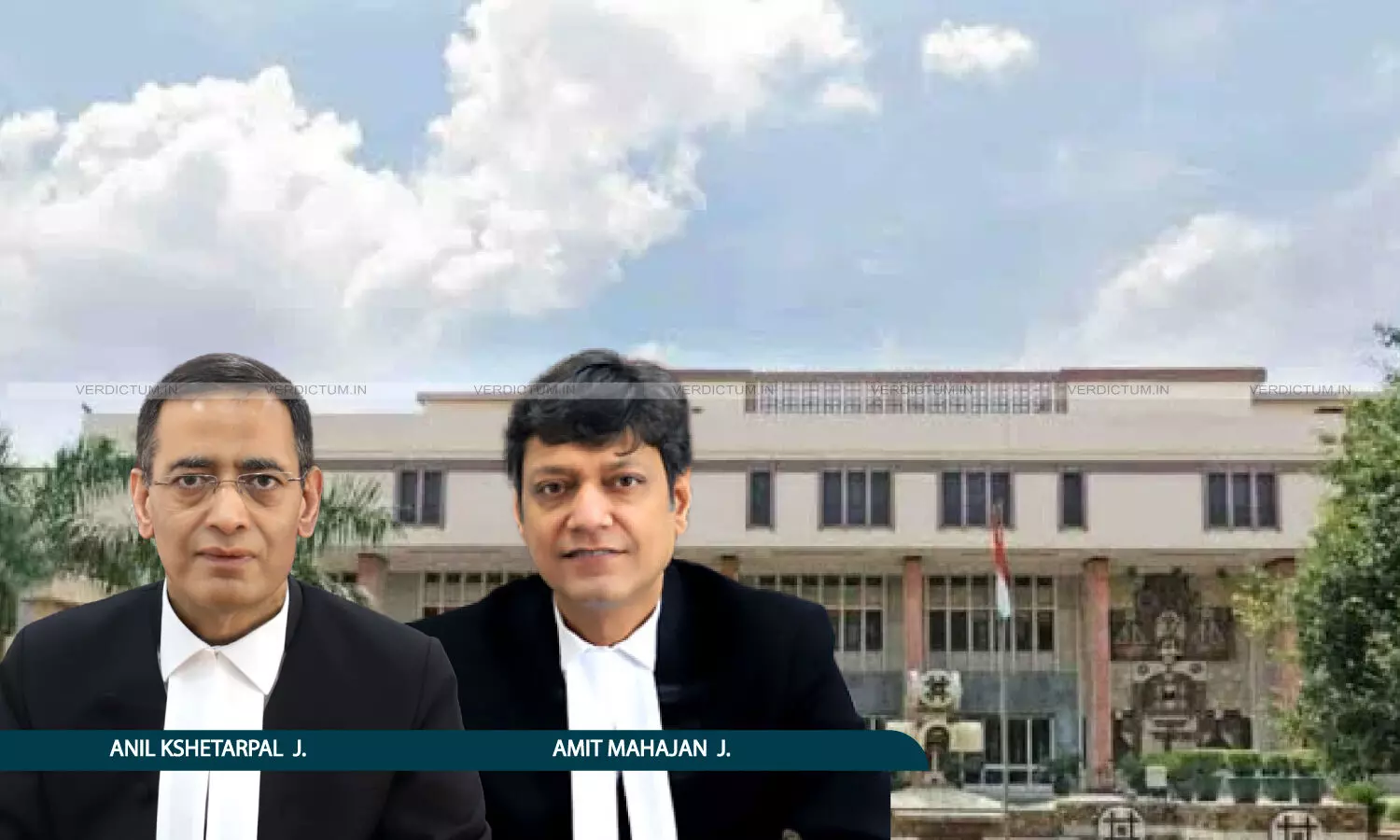
A Division Bench comprising Justice Anil Kshetarpal and Justice Amit Mahajan allowing a writ petition filed by the Union of India and setting aside the order of the Armed Forces Tribunal, observed, “…conferment of substantive military rank is inseparable from the statutory promotion framework governing the Army. Holding an equivalent civil appointment or completion of qualifying service does not create an enforceable right to substantive rank absent satisfaction of promotion norms, including medical eligibility and selection requirements”.
“…Equivalence operates within the administrative domain to maintain parity of status and facilitate inter-departmental functioning within the SoI structure. Substantive rank in the Army, however, represents formal placement of an officer within the command, responsibility and seniority framework of the Armed Forces. It determines eligibility for appointments, authority structure and integration within the military hierarchy. Such an arrangement cannot be divorced from the promotion system through which it is regulated”, it noted further.
Farman Ali, CGSC appeared for the petitioner and Advocate Aditya Singh Puar appeared for the respondent.
The respondent, Colonel Amardeep Singh, was originally commissioned in the Corps of Engineers and thereafter permanently seconded to the Survey of India Group A Service in April 2005.
Under the equivalence framework in the 1989 Rules, the post of Additional Surveyor General at Level 14 corresponds to the rank of Major General, and the post of Director at Level 13 corresponds to the rank of Brigadier.
The respondent was promoted to Additional Surveyor General with effect from February 2020 pursuant to ACC approval and a Presidential Gazette Notification. His claim for conferment of substantive ranks of Brigadier and Major General was rejected by the Army on the ground that he was placed in a low medical category (SHAPE-2) and did not satisfy promotable medical standards under Army Regulations.
The AFT allowed his application and directed conferment of both ranks with original seniority. The Union of India challenged this before the High Court.
The Court found that the AFT had proceeded on the erroneous assumption that civil promotion under the 1989 Rules necessarily carried entitlement to equivalent substantive military rank, thereby rendering Army promotion standards inapplicable to Defence Stream Officers, a consequence neither contemplated by the statutory framework nor compatible with uniform military administration.
The Court also noted that the respondent's case had already been reconsidered by the Military Secretary Branch pursuant to prior court directions, and a reasoned order in February 2023 was passed after obtaining the requisite medical opinion, which the AFT failed to take into account.
“The Tribunal, while allowing the OA, proceeded on the assumption that civil promotion under the 1989 Rules necessarily carried entitlement to equivalent substantive military rank. In the considered opinion of this Court, such an approach, overlooks the regulatory distinction between administrative equivalence and military promotion and effectively renders Army promotion standards inapplicable to DSOs, a consequence neither contemplated by the statutory framework nor compatible with uniform military administration”, the Bench noted.
The respondent's reliance on the doctrine of parity, based on certain similarly placed officers being reverted at higher ranks, was also rejected, the Court observing that Article 14 of the Constitution of India does not recognise negative equality and mere differing outcomes absent demonstrable parity do not establish hostile discrimination.
The impugned AFT order was set aside, with liberty to the competent military authorities to consider the respondent's case afresh if he is found eligible upon change of relevant circumstances.
Cause Title: Union of India & Ors v. Col. Amardeep Singh (Neutral Citation: 2026:DHC:5204-DB)
Appearances:
Petitioners: Farman Ali, CGSC, Usha Jamnal, Tanya, Advocates, with Col. Sarika, Maj Tarun Pillai, Maj. Anish Muralidhar.
Respondent: Aditya Singh Puar and Parthsarthi Hirani, Advocates.